
Artemis II Lunar Flyby Breaks Apollo 13 Distance Record
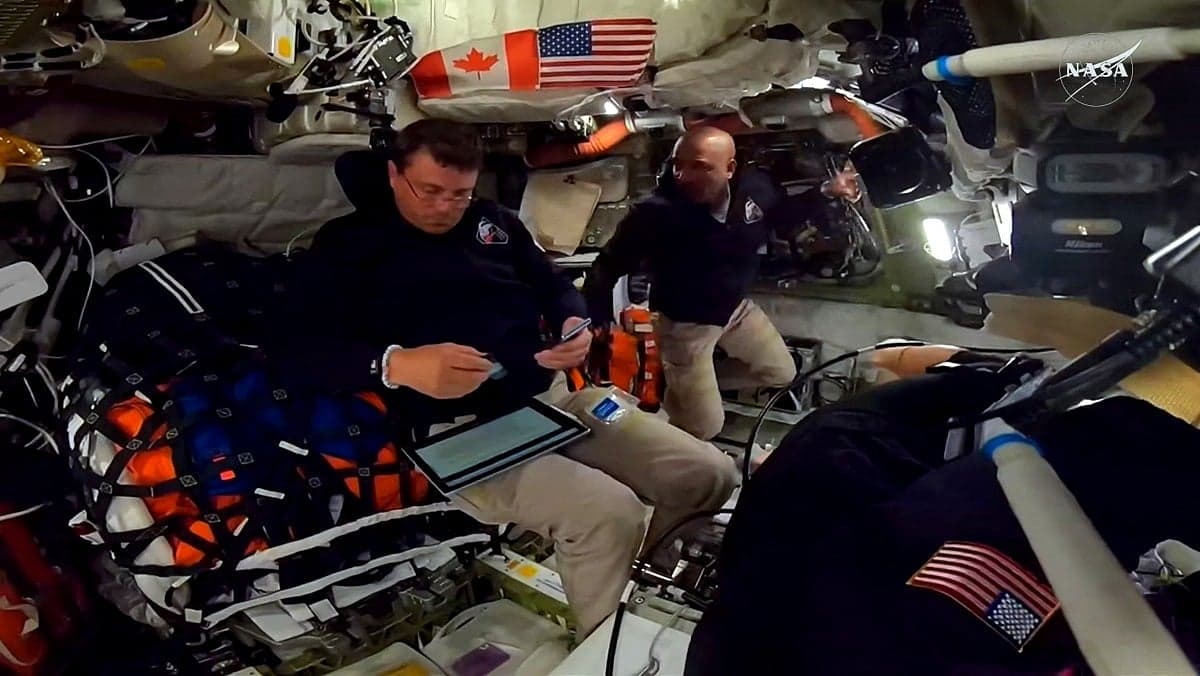
Here's what it means for you.
The Artemis II mission signals a new era in space exploration, enhancing opportunities for investment and innovation in the global space economy.
Why it matters
This milestone reinforces the United States' leadership in space exploration and boosts international collaboration in lunar missions.
What happened (in 30 seconds)
- Artemis II launched on April 1, 2026, from Kennedy Space Center, marking a significant leap in human spaceflight distance.
- The crew surpassed Apollo 13's record, reaching a maximum distance of 252,760 miles from Earth on April 6, 2026.
- The mission documented unique lunar views and experienced a 40-minute communication blackout while behind the Moon.
The context you actually need
- Artemis II is part of NASA's Artemis program, initiated in 2017, aimed at establishing a sustainable human presence on the Moon and beyond.
- Apollo 13's record was set in 1970 during a mission that faced an in-flight emergency, showcasing the resilience and adaptability of space missions.
- The Artemis program builds on previous successes, including the uncrewed Artemis I mission in 2022, which validated the Orion spacecraft and Space Launch System (SLS) for future crewed missions.
What's really happening
The Artemis II mission represents a significant advancement in human space exploration, specifically in testing deep-space capabilities. By surpassing Apollo 13's distance record, NASA not only celebrates a technical achievement but also sets the stage for future lunar landings and potential Mars missions. The mission's trajectory, a free-return flyby, minimizes fuel consumption while allowing for critical system checks and data collection, essential for planning subsequent missions.
The crew, consisting of four astronauts, documented their journey with real-time observations, including breathtaking views of the Moon's far side and a total solar eclipse. This mission serves as a vital test for the Orion spacecraft and SLS, ensuring that both systems are ready for more complex operations, including lunar landings and potential human habitation.
Moreover, the Artemis II mission is a part of a broader strategy to reassert U.S. leadership in space amidst increasing global competition. Countries like China and Russia are ramping up their space programs, making it crucial for the U.S. to demonstrate its capabilities and foster international partnerships. The collaboration with international partners, such as Canada's CSA, highlights a collective effort to explore lunar resources and establish a sustainable presence on the Moon.
The implications extend beyond mere exploration; they touch on economic opportunities in the burgeoning space sector. As nations invest in space technologies, industries related to aerospace, telecommunications, and even tourism are likely to see growth. The Artemis program, particularly through initiatives like the Lunar Gateway, aims to create a platform for international collaboration, potentially leading to new markets and job creation in the space economy.
In summary, Artemis II is not just a mission; it is a pivotal moment that intertwines technological advancement, international cooperation, and economic potential, setting the stage for humanity's next steps into the cosmos.
Who feels it first (and how)
- Aerospace engineers and scientists: Increased demand for innovative technologies and systems to support lunar and deep-space missions.
- Investors in the space sector: Heightened interest in companies involved in space exploration and technology, potentially leading to increased funding and stock value.
- Educational institutions: Opportunities for STEM programs to engage students with real-world applications of space science, inspiring the next generation of scientists and engineers.
- International space agencies: Enhanced collaboration and shared resources among countries participating in lunar exploration initiatives.
What to watch next
- Future Artemis missions: Keep an eye on the timeline for Artemis III, which aims to land astronauts on the Moon, as it will further test technologies and partnerships.
- International partnerships: Watch for announcements regarding collaborations with other nations, particularly in lunar resource utilization and research.
- Investment trends in space technology: Monitor shifts in funding and stock performance in aerospace companies as the lunar economy gains traction.
Artemis II successfully surpassed Apollo 13's distance record, achieving 252,760 miles from Earth.
Increased investment in space technology and infrastructure as interest in lunar exploration grows.
The long-term impact of Artemis II on international space policy and collaboration frameworks.
Frequently Asked Questions
- Why it matters?
- This milestone reinforces the United States' leadership in space exploration and boosts international collaboration in lunar missions.
- What happened (in 30 seconds)?
- Artemis II launched on April 1, 2026, from Kennedy Space Center, marking a significant leap in human spaceflight distance. The crew surpassed Apollo 13's record, reaching a maximum distance of 252,760 miles from Earth on April 6, 2026. The mission documented unique lunar views and experienced a 40-minute communication blackout while behind the Moon.
- What's really happening?
- The Artemis II mission represents a significant advancement in human space exploration, specifically in testing deep-space capabilities. By surpassing Apollo 13's distance record, NASA not only celebrates a technical achievement but also sets the stage for future lunar landings and potential Mars missions. The mission's trajectory, a free-return flyby, minimizes fuel consumption while allowing for critical system checks and data collection, essential for planning subsequent missions. The crew,
- Who feels it first (and how)?
- Aerospace engineers and scientists: Increased demand for innovative technologies and systems to support lunar and deep-space missions. Investors in the space sector: Heightened interest in companies involved in space exploration and technology, potentially leading to increased funding and stock value. Educational institutions: Opportunities for STEM programs to engage students with real-world applications of space science, inspiring the next generation of scientists and engineers. International
- What to watch next?
- Future Artemis missions: Keep an eye on the timeline for Artemis III, which aims to land astronauts on the Moon, as it will further test technologies and partnerships. International partnerships: Watch for announcements regarding collaborations with other nations, particularly in lunar resource utilization and research. Investment trends in space technology: Monitor shifts in funding and stock performance in aerospace companies as the lunar economy gains traction.
Focused political reporting and governmental affairs.
"NBC News is a mainstream media outlet known for comprehensive national and international news coverage with a centrist to slightly left-leaning editorial tone."
— A47 Editor
Artemis II crew breaks record for farthest humans have traveled beyond Earth
The Artemis II crew has set a new record for the farthest distance humans have traveled from Earth, surpassing the previous record of 248,655 miles set by Apollo 13 in 1970. This milestone was achieved during their ongoing mission, which launched on ...
UAE-based newspaper covering Gulf politics, society, and international developments.
"Gulf News is one of the UAE’s most prominent English-language publications."
— A47 Editor
It's time for Artemis II to break Apollo 13's distance record. What to know about the moon flyby
NASA's Artemis II mission successfully launched on April 1, 2026, marking the first crewed journey to the Moon in over 50 years. The mission aims to break the distance record set by Apollo 13, as it embarks on a lunar flyby with four astronauts aboar...
A curated Gulf News feed featuring major stories across news, business, opinion, and lifestyle.
"Gulf News is a major UAE newspaper whose featured stories feed reflects a broad editorial mix shaped for a Gulf audience."
— A47 Editor
It's time for Artemis II to break Apollo 13's distance record. What to know about the moon flyby
NASA's Artemis II mission successfully launched on April 1, 2026, marking the first crewed journey to the Moon in over 50 years. The mission aims to break the distance record set by Apollo 13, as it embarks on a lunar flyby with four astronauts aboar...
International coverage of politics, security, and social issues.
"Global News is a mainstream Canadian outlet with a centrist editorial stance, focusing on factual reporting."
— A47 Editor
Artemis II breaks distance record with daring moon flyby that included a solar eclipse
NASA's Artemis II mission has achieved a historic milestone by breaking the record for the farthest distance humans have traveled from Earth, surpassing 406,000 kilometers during a lunar flyby on April 6, 2026. The crew, consisting of one Canadian an...