
Gold Prices Rise Following Iran's Reopening of Strait of Hormuz Amid Ceasefire
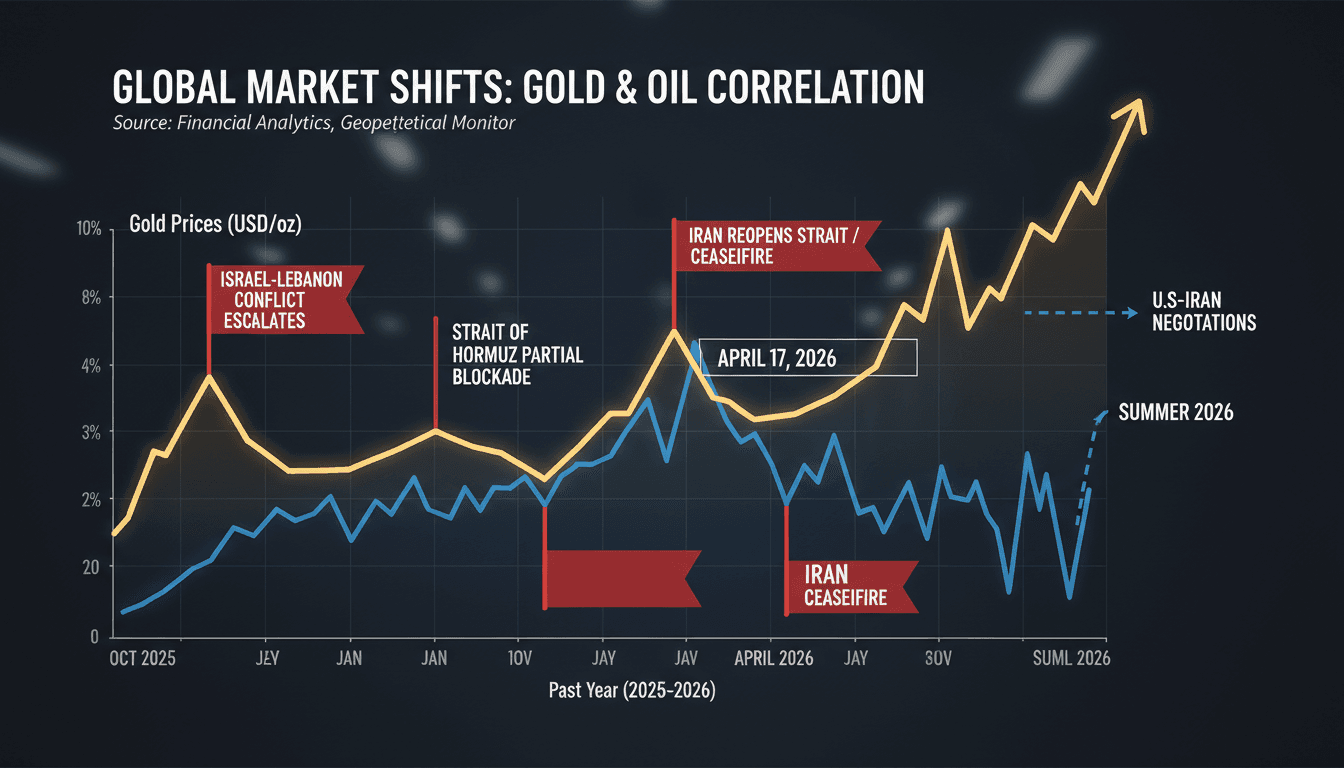
Here's what it means for you.
If you’re invested in commodities or affected by fuel prices, the recent developments in the Strait of Hormuz could have immediate financial implications for you.
Why it matters
The reopening of the Strait of Hormuz alleviates oil supply fears, impacting global commodity prices and inflation rates.
What happened (in 30 seconds)
- Iran announced the temporary reopening of the Strait of Hormuz for commercial vessels on April 17, 2026.
- Gold prices surged over 1% amid a weakening U.S. dollar and ongoing geopolitical tensions.
- Oil prices plummeted by 9% as supply concerns eased, following a ceasefire announcement between Israel and Lebanon.
The context you actually need
- The Strait of Hormuz is a critical chokepoint for 20% of global oil trade, making its accessibility vital for market stability.
- Prior to this announcement, the Strait was effectively closed due to escalating U.S.-Iran tensions, leading to oil prices exceeding $120 per barrel and inflationary pressures worldwide.
- The recent ceasefire between Israel and Lebanon, facilitated by U.S. diplomacy, aims to create a conducive environment for broader negotiations on U.S.-Iran nuclear agreements and sanctions relief.
What's really happening
The reopening of the Strait of Hormuz on April 17, 2026, marks a significant moment in the ongoing U.S.-Iran conflict, which escalated dramatically in late February 2026. Following joint U.S.-Israeli military strikes on Iranian nuclear and military sites, Iran restricted access to the Strait, causing severe disruptions in oil supply and pushing prices above $120 per barrel. This situation not only affected oil markets but also triggered inflationary pressures globally, impacting everything from fuel costs to consumer goods.
The announcement by Iranian Foreign Minister Abbas Araghchi on X, declaring the Strait "completely open" for commercial vessels during a 10-day ceasefire, immediately shifted market dynamics. Gold prices reacted positively, rising 1.1% to $4,843 per ounce, while futures climbed 1.4% to $4,876 per ounce. This rise in gold prices can be attributed to a combination of a weakening U.S. dollar and persistent geopolitical uncertainties, which often drive investors toward safe-haven assets like gold.
The broader implications of this event extend beyond immediate price reactions. The temporary reopening of the Strait is a signal of potential diplomatic thawing between the U.S. and Iran, with analysts noting that the situation remains volatile. The U.S. is expected to engage in talks regarding a $20 billion asset release in exchange for uranium curbs, which could further influence market stability.
For Dubai residents, the implications are particularly relevant. With oil prices now settling below $90 per barrel, the UAE can expect relief from prior inflationary pressures caused by supply shortages. The resumption of oil exports via ADNOC will stabilize the local economy and reduce energy import dependencies, benefiting both consumers and businesses.
However, the temporary nature of the ceasefire and the reopening raises questions about the sustainability of these market shifts. Investors and consumers alike should remain vigilant as the geopolitical landscape continues to evolve.
Who feels it first (and how)
- Investors in commodities: Immediate fluctuations in gold and oil prices affect investment portfolios.
- Consumers in Dubai: Lower oil prices can lead to reduced fuel costs and inflation relief.
- Global businesses: Companies reliant on oil imports may see changes in operational costs and pricing strategies.
What to watch next
- U.S.-Iran negotiations: Upcoming talks regarding the $20 billion asset release could further influence market stability and investor confidence.
- Gold price volatility: Continued geopolitical tensions may lead to fluctuations in gold prices, impacting investment strategies.
- Oil supply dynamics: Watch for any changes in oil production levels and export policies from the UAE and Iran, which could affect global oil prices.
The Strait of Hormuz is temporarily open for commercial vessels, easing immediate oil supply fears.
Gold prices will remain volatile as geopolitical tensions persist and negotiations unfold.
The long-term sustainability of the ceasefire and its impact on U.S.-Iran relations remains uncertain.
Frequently Asked Questions
- Why it matters?
- The reopening of the Strait of Hormuz alleviates oil supply fears, impacting global commodity prices and inflation rates.
- What happened (in 30 seconds)?
- Iran announced the temporary reopening of the Strait of Hormuz for commercial vessels on April 17, 2026. Gold prices surged over 1% amid a weakening U.S. dollar and ongoing geopolitical tensions. Oil prices plummeted by 9% as supply concerns eased, following a ceasefire announcement between Israel and Lebanon.
- What's really happening?
- The reopening of the Strait of Hormuz on April 17, 2026, marks a significant moment in the ongoing U.S.-Iran conflict, which escalated dramatically in late February 2026. Following joint U.S.-Israeli military strikes on Iranian nuclear and military sites, Iran restricted access to the Strait, causing severe disruptions in oil supply and pushing prices above $120 per barrel. This situation not only affected oil markets but also triggered inflationary pressures globally, impacting everything from
- Who feels it first (and how)?
- Investors in commodities: Immediate fluctuations in gold and oil prices affect investment portfolios. Consumers in Dubai: Lower oil prices can lead to reduced fuel costs and inflation relief. Global businesses: Companies reliant on oil imports may see changes in operational costs and pricing strategies.
- What to watch next?
- U.S.-Iran negotiations: Upcoming talks regarding the $20 billion asset release could further influence market stability and investor confidence. Gold price volatility: Continued geopolitical tensions may lead to fluctuations in gold prices, impacting investment strategies. Oil supply dynamics: Watch for any changes in oil production levels and export policies from the UAE and Iran, which could affect global oil prices.
Oil, metals, and agriculture: supply/demand headlines, OPEC chatter, inventories, and price action.
"Solid tape for energy and metals traders tracking macro and micro catalysts."
— A47 Editor
Gold prices rise after Iran temporarily opens Strait of Hormuz
Gold prices have risen following Iran's announcement that the Strait of Hormuz is temporarily open to commercial traffic, signaling a potential easing of geopolitical tensions that have impacted global markets. This development comes amid ongoing dip...
Regional and international reporting focused on Middle Eastern politics, diplomacy, and economics.
"Asharq Al-Awsat is a Saudi-owned international newspaper reflecting mainstream Gulf political perspectives."
— A47 Editor
Gold Holds Steady, Eyes Fourth Weekly Gain on US-Iran Peace Deal Hopes
Gold prices have remained steady as investors anticipate a potential peace deal between the United States and Iran, marking a possible fourth consecutive weekly gain. This stability comes amidst fluctuating geopolitical tensions and economic indicato...
Pan-Arab political news and analysis.
"Al-Quds Al-Arabi is a London-based Arabic newspaper known for political coverage."
— A47 Editor
الذهب يتجه لمكاسب للأسبوع الرابع مدعوما بآمال انتهاء حرب إيران
Gold prices have stabilized significantly, aiming for gains for the fourth consecutive week, supported by hopes for a peace agreement between the United States and Iran, which alleviates concerns over rising inflation and potential increases in U.S. ...
Global markets, investing, and macroeconomics from a premier financial newsroom.
"Bloomberg is respected for in-depth financial reporting and data-driven analysis."
— A47 Editor
Gold Jumps to One-Month High as Iran Says Hormuz Completely Open
Gold prices surged to a one-month high following Iran's announcement that the Strait of Hormuz is fully open to commercial traffic, signaling a potential easing of tensions that have affected global energy markets.
Arabic-language coverage of international news and geopolitics.
"RT Arabic is a Russian state-funded outlet often criticized for promoting Kremlin-aligned narratives."
— A47 Editor
هبوط محدود للذهب وسط آمال باستئناف المفاوضات الأمريكية الإيرانية
Gold prices experienced a limited decline on Wednesday, influenced by expectations of a resumption of negotiations between the United States and Iran. This shift in market sentiment reflects the ongoing geopolitical tensions and their impact on commo...
Arabic-language UAE newspaper coverage focused on domestic affairs, public institutions, business, society, and regional developments.
"Al Khaleej coverage generally reflects a mainstream UAE editorial lens with strong attention to public affairs, institutions, and regional developments."
— A47 Editor
الذهب يتراجع سريعاً عن أعلى مستوى في شهر
Gold prices experienced a slight decline on Wednesday after reaching a one-month high during the session, as the dollar regained some strength. The anticipation of another round of peace talks between the United States and Iran has increased risk app...