
United States and Philippines Establish 4,000-Acre Economic Security Zone to Strengthen Supply Chains
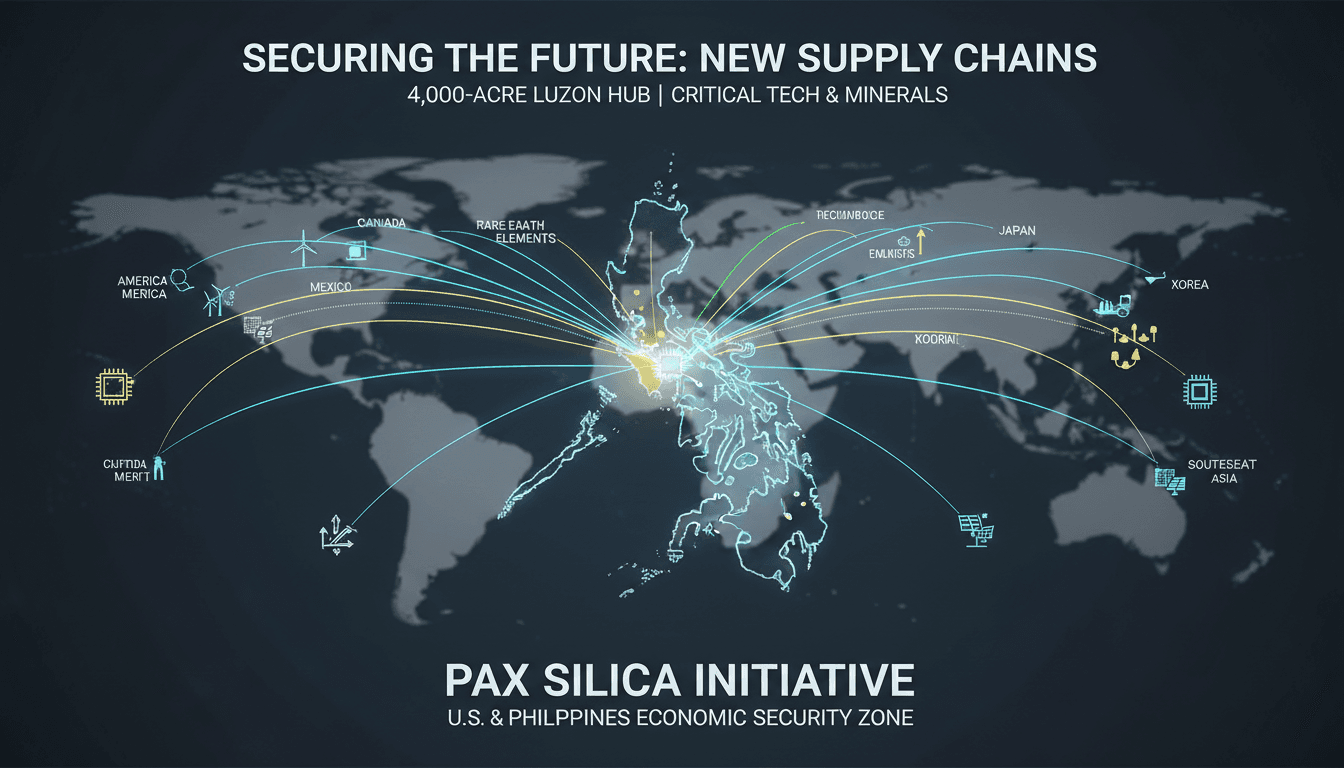
Here's what it means for you.
If you rely on technology or manufacturing, this new industrial hub could stabilize supply chains and impact pricing.
Why it matters
This initiative aims to enhance supply chain security amid rising geopolitical tensions, directly affecting global technology markets.
What happened (in 30 seconds)
- On April 16, 2026, the U.S. and the Philippines announced plans for a 4,000-acre industrial hub in Luzon.
- This hub will serve as the first AI-native industrial acceleration zone under the Pax Silica initiative.
- The Philippines became the thirteenth signatory of Pax Silica, aligning with U.S. efforts to reduce reliance on adversarial supply sources.
The context you actually need
- Pax Silica was launched in December 2025 to secure technology supply chains against rival nations, particularly China.
- The Luzon Economic Corridor is strategically important, with the Philippines enhancing military cooperation with the U.S. amid regional disputes.
- The hub's focus includes critical minerals and semiconductors, essential for modern technology and manufacturing.
What's really happening
The establishment of a 4,000-acre Economic Security Zone in the Luzon Economic Corridor marks a significant pivot in U.S.-Philippines relations, driven by the need for enhanced supply chain security. The Pax Silica initiative, which the Philippines joined as its thirteenth member, aims to create a network of allied manufacturing capabilities that can produce critical technologies and materials. This is particularly relevant as global supply chains have been increasingly strained by geopolitical tensions, especially with China’s growing influence in the Indo-Pacific region.
The U.S. Department of State's announcement highlights a strategic shift towards localized production of essential goods, such as semiconductors and critical minerals. By fostering an industrial hub that leverages AI and advanced manufacturing techniques, the U.S. and the Philippines are not only addressing immediate supply chain vulnerabilities but also positioning themselves as leaders in the technology sector. This initiative is expected to attract private sector investment, which will further stimulate economic growth in the region.
The Philippines, under President Ferdinand Marcos Jr., has been actively seeking to strengthen ties with the U.S., particularly in the context of military cooperation and infrastructure development. The Luzon Economic Corridor is seen as a vital area for economic development, and the new industrial hub is expected to create jobs and enhance the country’s strategic positioning in the global market. The commitment to ramp up infrastructure investments under the U.S.-Philippines Critical Minerals Framework is a clear indication of the long-term vision behind this initiative.
As the hub develops, it will serve as a staging platform for allied manufacturing, shaped by market demands and local advantages. This could lead to a more resilient supply chain that is less susceptible to disruptions caused by geopolitical conflicts. The focus on AI-native technologies also suggests a forward-looking approach that aligns with global trends in automation and digitalization.
Who feels it first (and how)
- Manufacturers: Companies in technology and electronics sectors will benefit from more stable supply chains.
- Workers: Job creation in the Luzon region will provide new employment opportunities.
- Investors: Increased private sector investment in the Philippines could yield significant returns.
- Consumers: End-users of technology products may see more stable prices and availability.
What to watch next
- Infrastructure developments: Monitor the progress of infrastructure investments in the Luzon Economic Corridor, as they will be crucial for the hub's success.
- Private sector engagement: Watch for announcements from companies planning to invest in the new industrial hub, which will indicate market confidence.
- Geopolitical responses: Keep an eye on reactions from China and other regional players, as their responses could influence the dynamics of supply chains.
The U.S. and the Philippines are committed to developing the 4,000-acre hub.
Increased job creation and investment in the region as the hub develops.
The long-term impact on global supply chains and pricing for critical technologies.
Frequently Asked Questions
- Why it matters?
- This initiative aims to enhance supply chain security amid rising geopolitical tensions, directly affecting global technology markets.
- What happened (in 30 seconds)?
- On April 16, 2026, the U.S. and the Philippines announced plans for a 4,000-acre industrial hub in Luzon. This hub will serve as the first AI-native industrial acceleration zone under the Pax Silica initiative. The Philippines became the thirteenth signatory of Pax Silica, aligning with U.S. efforts to reduce reliance on adversarial supply sources.
- What's really happening?
- The establishment of a 4,000-acre Economic Security Zone in the Luzon Economic Corridor marks a significant pivot in U.S.-Philippines relations, driven by the need for enhanced supply chain security. The Pax Silica initiative, which the Philippines joined as its thirteenth member, aims to create a network of allied manufacturing capabilities that can produce critical technologies and materials. This is particularly relevant as global supply chains have been increasingly strained by geopolitical
- Who feels it first (and how)?
- Manufacturers: Companies in technology and electronics sectors will benefit from more stable supply chains. Workers: Job creation in the Luzon region will provide new employment opportunities. Investors: Increased private sector investment in the Philippines could yield significant returns. Consumers: End-users of technology products may see more stable prices and availability.
- What to watch next?
- Infrastructure developments: Monitor the progress of infrastructure investments in the Luzon Economic Corridor, as they will be crucial for the hub's success. Private sector engagement: Watch for announcements from companies planning to invest in the new industrial hub, which will indicate market confidence. Geopolitical responses: Keep an eye on reactions from China and other regional players, as their responses could influence the dynamics of supply chains.
Macro commentary, policy analysis, growth/inflation themes, and global outlooks.
"Contextual macro coverage that complements day-to-day market headlines."
— A47 Editor
Philippines, US to build industrial hub to strengthen supply chain security
The Philippines and the United States have announced plans to establish an industrial hub aimed at enhancing supply chain security, reflecting a strategic partnership in response to global economic challenges. This initiative is part of broader effor...
Tech business coverage, major deals, product launches, and Silicon Valley trends.
"WSJ’s tech section offers authoritative reporting on the intersection of technology and business, including exclusive industry analysis."
— A47 Editor
U.S. to Create High-Tech Manufacturing Zone in Philippines
The United States has announced plans to establish a high-tech manufacturing zone in the Philippines, aimed at creating automated factories and utilizing local resources to develop supply chains that are resilient to disruptions from China. This init...
Global political, business, and cultural coverage from WSJ international desks.
"The Wall Street Journal offers extensive international reporting with a reputation for financial insight and a center-right editorial stance."
— A47 Editor
U.S. to Create High-Tech Manufacturing Zone in Philippines
The United States is set to establish a high-tech manufacturing zone in the Philippines, aimed at creating supply chains that are resilient against disruptions from China. This initiative will incorporate automated factories and utilize local resourc...