
UK Government Develops Contingency Plans for Food Shortages Amid Ongoing Iran War
Here's what it means for you.
If you rely on imported food, rising prices and potential shortages could impact your grocery bills significantly.
Why it matters
The ongoing conflict in Iran is disrupting global supply chains, threatening food security and inflation in the UK and beyond.
What happened (in 30 seconds)
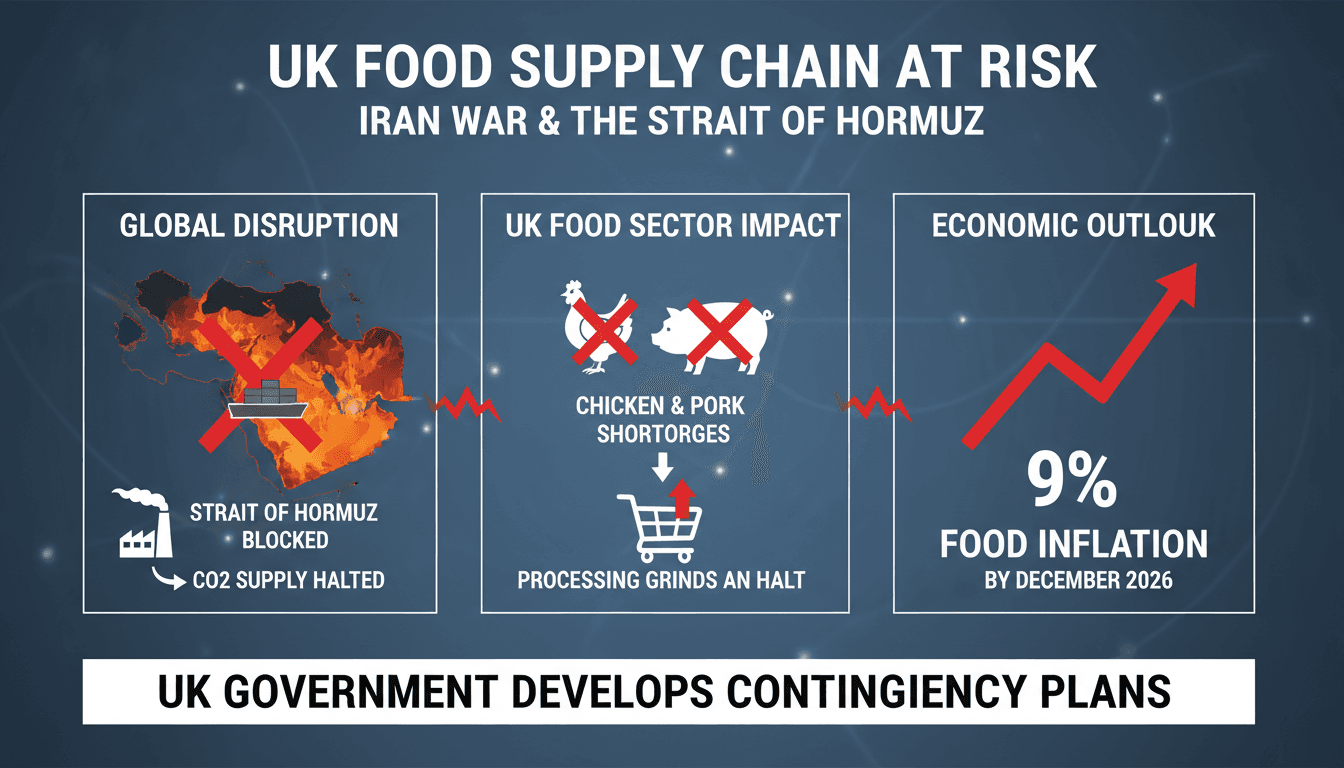
- UK officials are preparing contingency plans for potential food shortages, particularly chicken and pork, by summer 2026.
- The closure of the Strait of Hormuz by Iran has led to supply chain disruptions, particularly affecting carbon dioxide (CO2) production essential for food processing.
- Food inflation in the UK is forecasted to reach 9% by December 2026 due to these supply chain issues.
The context you actually need
- The Iran war escalated after US and Israeli strikes, leading to the closure of a critical shipping route for oil and fertilizers.
- Negotiations between the US and Iran collapsed, resulting in a naval blockade that has driven up global prices for energy and fertilizers.
- The Ensus bioethanol plant has been restarted to address CO2 shortages, which were previously highlighted as vulnerabilities during prior shortages in 2022.
What's really happening
The ongoing war in Iran has created a ripple effect that is impacting food supply chains globally. The closure of the Strait of Hormuz, a vital chokepoint for approximately 20-30% of the world's oil and significant fertilizer shipments, has led to heightened tensions and economic instability. This closure is not just a geopolitical issue; it has direct implications for food production and prices in the UK.
The UK relies heavily on imported fertilizers, which are primarily produced using natural gas. With the blockade of Iranian ports and the disruption of supply routes, the cost of fertilizers has surged, leading to increased production costs for farmers. This situation is compounded by the fact that CO2, a byproduct of fertilizer production, is essential for food processing and preservation. The Ensus bioethanol plant, which was mothballed in September 2025, has been restarted to mitigate these CO2 shortages, but the long-term sustainability of this solution remains uncertain.
As food prices rise, the National Farmers' Union has warned of impending price hikes for various crops, including cucumbers and tomatoes, within the next six weeks. Broader impacts on milk and other crops are expected in the following three to six months. The Food and Drink Federation has forecasted a 9% inflation rate for food by December 2026, which will directly affect consumers' grocery bills.
The UK government has reassured the public that these contingency plans are routine and not indicative of an immediate crisis. However, the reality is that the situation is fluid, and the potential for food shortages looms large. Retailers like Tesco have reported strong supply chains but are facing a clouded profit outlook due to these uncertainties. The International Monetary Fund (IMF) has also warned of the UK's vulnerability to recession as inflationary pressures mount.
In summary, the intersection of geopolitical conflict and supply chain vulnerabilities is creating a precarious situation for food security in the UK. As the war in Iran continues, the implications for food prices and availability will likely become more pronounced.
Who feels it first (and how)
- Consumers: Households will face higher grocery bills and potential shortages of staple foods.
- Farmers: Increased production costs and crop price volatility will impact profitability.
- Retailers: Grocery chains may struggle with supply chain disruptions and profit margins.
- Government: Officials must manage public concern and economic stability amid rising inflation.
What to watch next
- Food inflation rates: Monitoring the Food and Drink Federation's forecasts will provide insight into how quickly prices are rising.
- Supply chain disruptions: Keep an eye on shipping routes and any further developments in the Iran conflict that could exacerbate shortages.
- Government responses: Watch for any new policies or measures from the UK government aimed at stabilizing food supplies and prices.
The UK is preparing for potential food shortages due to the Iran war.
Food inflation will rise, impacting consumer prices and availability.
The long-term effectiveness of the Ensus plant's restart in mitigating CO2 shortages.
Frequently Asked Questions
- Why it matters?
- The ongoing conflict in Iran is disrupting global supply chains, threatening food security and inflation in the UK and beyond.
- What happened (in 30 seconds)?
- UK officials are preparing contingency plans for potential food shortages, particularly chicken and pork, by summer 2026. The closure of the Strait of Hormuz by Iran has led to supply chain disruptions, particularly affecting carbon dioxide (CO2) production essential for food processing. Food inflation in the UK is forecasted to reach 9% by December 2026 due to these supply chain issues.
- What's really happening?
- The ongoing war in Iran has created a ripple effect that is impacting food supply chains globally. The closure of the Strait of Hormuz, a vital chokepoint for approximately 20-30% of the world's oil and significant fertilizer shipments, has led to heightened tensions and economic instability. This closure is not just a geopolitical issue; it has direct implications for food production and prices in the UK. The UK relies heavily on imported fertilizers, which are primarily produced using natural
- Who feels it first (and how)?
- Consumers: Households will face higher grocery bills and potential shortages of staple foods. Farmers: Increased production costs and crop price volatility will impact profitability. Retailers: Grocery chains may struggle with supply chain disruptions and profit margins. Government: Officials must manage public concern and economic stability amid rising inflation.
- What to watch next?
- Food inflation rates: Monitoring the Food and Drink Federation's forecasts will provide insight into how quickly prices are rising. Supply chain disruptions: Keep an eye on shipping routes and any further developments in the Iran conflict that could exacerbate shortages. Government responses: Watch for any new policies or measures from the UK government aimed at stabilizing food supplies and prices.
UAE-based English-language newspaper covering regional politics, economics, and global affairs.
"The National reflects Emirati policy perspectives while maintaining international editorial standards."
— A47 Editor
UK planning for food shortages as Iran war causes fall in carbon dioxide supplies
The UK is preparing for potential food shortages as the ongoing war in Iran has led to a significant decrease in carbon dioxide supplies, which are essential for food production. This situation arises amidst rising global inflation and energy prices,...
Corporate news, economic trends, and markets with UK and global scope.
"BBC News is widely regarded as reputable and impartial, with a public service mandate."
— A47 Editor
UK prepares for food shortages in worst case scenario as Iran war continues
The UK government is preparing for potential food shortages by summer as a worst-case scenario emerges from the ongoing conflict in Iran. Officials have indicated that disruptions in supply chains, particularly affecting essential goods, could lead t...
United Kingdom-focused news including local politics, business, and social issues.
"BBC News is widely regarded as a reputable international news organization, known for its impartial tone and public service mandate."
— A47 Editor
UK prepares for food shortages in worst case scenario as Iran war continues
The UK government is preparing for potential food shortages by summer as a worst-case scenario emerges from the ongoing conflict in Iran. Officials have indicated that disruptions in supply chains, particularly affecting essential goods, could lead t...
UK and international business news, economics, and corporate coverage.
"The Guardian’s business section covers finance and markets with a progressive editorial tone."
— A47 Editor
UK could face gaps on supermarket shelves by summer if Iran war continues
The UK is preparing for potential shortages in supermarkets this summer due to ongoing disruptions caused by the Iran war, particularly affecting the supply of carbon dioxide essential for food production. Ministers are developing contingency plans f...
International coverage from The Guardian's global desks.
"The Guardian is known for its progressive editorial stance and in-depth analysis."
— A47 Editor
UK could face gaps on supermarket shelves by summer if Iran war continues
The UK is preparing for potential shortages in supermarkets this summer due to ongoing disruptions caused by the Iran war, particularly affecting the supply of carbon dioxide essential for food production. Ministers are developing contingency plans f...