
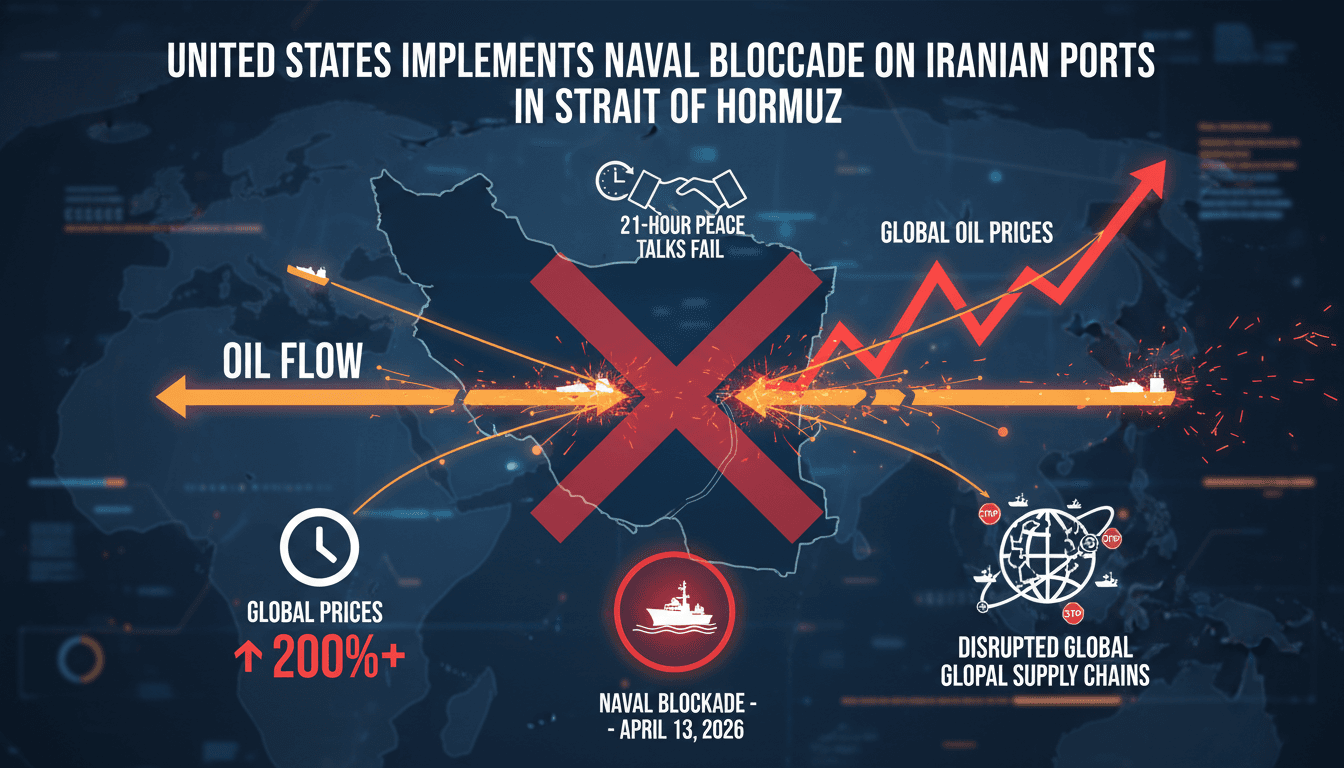
United States Implements Naval Blockade on Iranian Ports in Strait of Hormuz
Here's what it means for you.
If you rely on global energy markets, the US blockade could lead to higher fuel prices and supply chain disruptions.
Why it matters
The blockade threatens to escalate tensions in a critical chokepoint for global oil trade, impacting energy prices and international shipping.
What happened (in 30 seconds)
- The US initiated a naval blockade of Iranian ports in the Strait of Hormuz on April 13, 2026, following failed ceasefire talks.
- Ship traffic plummeted, with only two vessels exiting the strait on the first day of the blockade, compared to a pre-war average of 140.
- Oil prices surged above $100 per barrel, reflecting heightened risks to global energy shipping and market instability.
The context you actually need
- The blockade is a response to Iran's restrictions on the Strait of Hormuz, a vital passage for 20-30% of global oil trade.
- Ceasefire negotiations collapsed after 21 hours of talks in Islamabad, leading to the US's decisive military action.
- Iran's military has threatened retaliation, labeling the blockade as piracy and warning of severe consequences for US actions in the region.
What's really happening
The US naval blockade of Iranian ports in the Strait of Hormuz marks a significant escalation in the ongoing US-Iran war that began on February 28, 2026. This conflict has already disrupted global oil supplies, with OPEC output dropping nearly 8 million barrels per day in March due to the initial hostilities. The blockade was announced after a failed diplomatic effort to reach a ceasefire, which included a 21-hour negotiation session in Islamabad. President Trump set a deadline for Iran to reopen the strait unconditionally, and when that deadline passed, the US enforced the blockade against all vessels entering or exiting Iranian ports.
The Strait of Hormuz is a critical maritime route, and the blockade has immediate implications for global shipping and energy markets. On the first day of the blockade, only two laden vessels were recorded exiting the strait, a stark drop from the pre-war average of approximately 140 vessels daily. This dramatic reduction in ship traffic signals a significant disruption in the flow of oil and other goods, leading to immediate spikes in oil prices, which exceeded $100 per barrel shortly after the blockade began.
Shipping companies are responding to the heightened risks by halting operations in the Gulf, citing concerns over mines, insurance voids, and the overall uncertainty of the legal regime surrounding the blockade. The situation is further complicated by Iran's threats to retaliate against any perceived aggression, which could lead to broader military confrontations in the region.
The blockade not only affects oil prices but also has broader implications for global trade and economic stability. Countries reliant on oil imports, particularly in Europe and Asia, may face increased costs that could ripple through their economies. Additionally, the blockade raises questions about the legality of such military actions in international waters and the potential for escalating military engagements.
Who feels it first (and how)
- Energy consumers: Higher fuel prices will impact households and businesses reliant on oil.
- Shipping companies: Firms like Maersk and Hapag-Lloyd have already halted operations, affecting logistics and supply chains.
- Oil-exporting nations: Countries like Saudi Arabia may face pressure to stabilize markets amid rising prices.
- Investors: Increased volatility in oil markets could lead to shifts in investment strategies and risk assessments.
What to watch next
- Oil price fluctuations: Monitor how prices respond to ongoing tensions and supply disruptions, as they will directly affect global markets.
- Diplomatic efforts: Watch for any renewed negotiations or interventions from international bodies aimed at de-escalating the situation.
- Military developments: Keep an eye on any military actions or retaliatory threats from Iran, which could further destabilize the region.
The blockade is currently in effect, severely restricting ship traffic and elevating oil prices.
Continued volatility in global oil markets and potential for further military escalation in the region.
The long-term impacts on global trade and the effectiveness of diplomatic efforts to resolve the conflict.
Frequently Asked Questions
- Why it matters?
- The blockade threatens to escalate tensions in a critical chokepoint for global oil trade, impacting energy prices and international shipping.
- What happened (in 30 seconds)?
- The US initiated a naval blockade of Iranian ports in the Strait of Hormuz on April 13, 2026, following failed ceasefire talks. Ship traffic plummeted, with only two vessels exiting the strait on the first day of the blockade, compared to a pre-war average of 140. Oil prices surged above $100 per barrel, reflecting heightened risks to global energy shipping and market instability.
- What's really happening?
- The US naval blockade of Iranian ports in the Strait of Hormuz marks a significant escalation in the ongoing US-Iran war that began on February 28, 2026. This conflict has already disrupted global oil supplies, with OPEC output dropping nearly 8 million barrels per day in March due to the initial hostilities. The blockade was announced after a failed diplomatic effort to reach a ceasefire, which included a 21-hour negotiation session in Islamabad. President Trump set a deadline for Iran to reope
- Who feels it first (and how)?
- Energy consumers: Higher fuel prices will impact households and businesses reliant on oil. Shipping companies: Firms like Maersk and Hapag-Lloyd have already halted operations, affecting logistics and supply chains. Oil-exporting nations: Countries like Saudi Arabia may face pressure to stabilize markets amid rising prices. Investors: Increased volatility in oil markets could lead to shifts in investment strategies and risk assessments.
- What to watch next?
- Oil price fluctuations: Monitor how prices respond to ongoing tensions and supply disruptions, as they will directly affect global markets. Diplomatic efforts: Watch for any renewed negotiations or interventions from international bodies aimed at de-escalating the situation. Military developments: Keep an eye on any military actions or retaliatory threats from Iran, which could further destabilize the region.
UAE-based English-language newspaper covering regional politics, economics, and global affairs.
"The National reflects Emirati policy perspectives while maintaining international editorial standards."
— A47 Editor
Risks to shipping high as US begins Strait of Hormuz blockade
The United States has initiated a blockade of the Strait of Hormuz, a vital maritime route for global oil shipments, following the collapse of peace talks with Iran that lasted 21 hours. This blockade, announced by President Donald Trump, aims to int...
Oil, metals, and agriculture: supply/demand headlines, OPEC chatter, inventories, and price action.
"Solid tape for energy and metals traders tracking macro and micro catalysts."
— A47 Editor
Oil tankers steer clear of Hormuz ahead of US blockade
Oil tankers are avoiding the Strait of Hormuz following the U.S. announcement of a blockade, which escalates tensions in the region amid failed negotiations between the U.S. and Iran. This blockade is a response to the breakdown of peace talks, highl...
Pan-Arab news coverage spanning politics, business, sports, and regional affairs.
"Asharq Al-Awsat reflects a broad Arab editorial perspective with strong attention to regional geopolitics."
— A47 Editor
تأهب عند «هرمز»: ناقلات النفط تغير مسارها قبيل الحصار الأميركي
Global oil tankers have begun to proactively alter their routes away from the Strait of Hormuz ahead of the impending implementation of a U.S. maritime blockade. This shift comes as tensions rise in the region, prompting shipping companies to take pr...