
Trump Issues Warning to Iran Over Proposed Oil Tolls in Strait of Hormuz
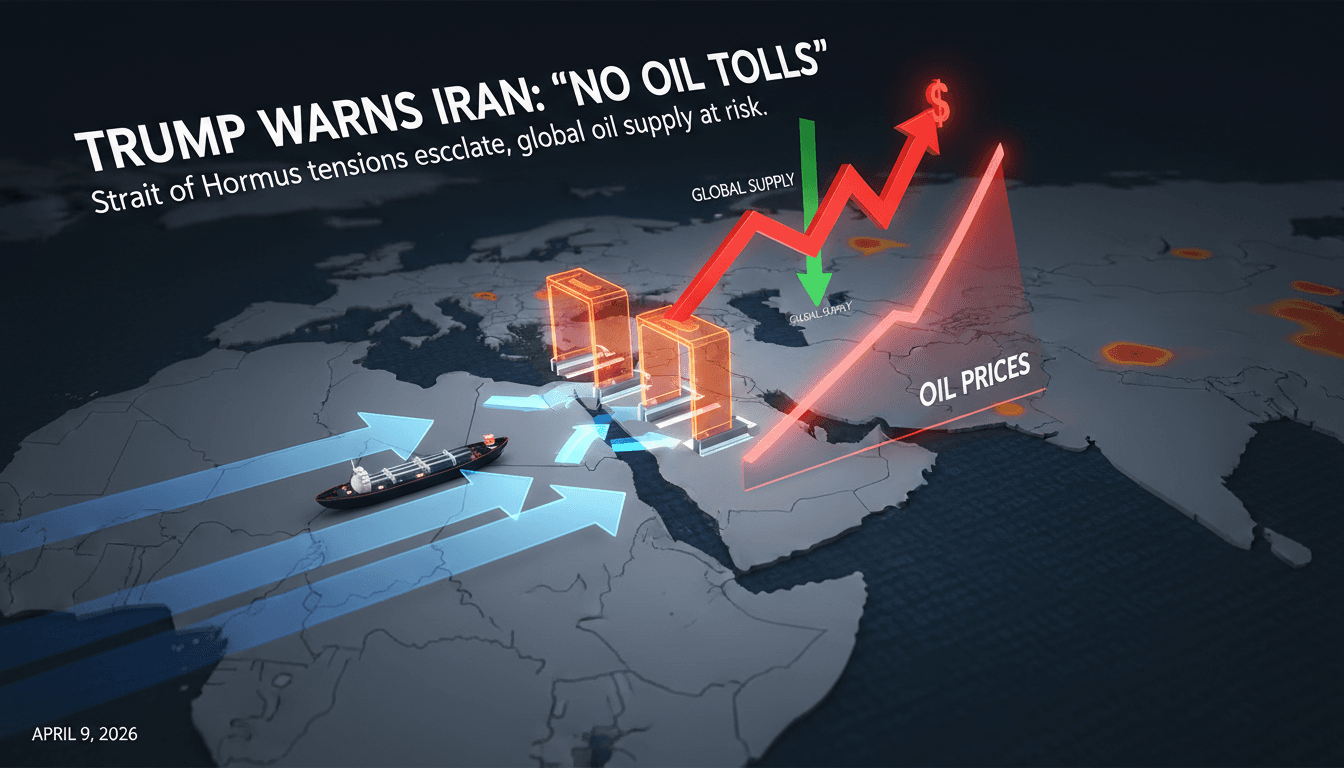
Here's what it means for you.
Rising oil prices could impact your fuel costs and overall inflation, especially if tensions escalate in the Gulf.
Why it matters
The Strait of Hormuz is crucial for global oil supply, with any disruptions potentially leading to significant economic repercussions.
What happened (in 30 seconds)
- On April 9, 2026, President Donald Trump warned Iran against imposing tolls on oil tankers in the Strait of Hormuz.
- Iran has proposed fees of approximately $1 per barrel, payable in cryptocurrency, amid rising U.S.-Iran tensions.
- Oil prices increased following Trump's statement, reflecting market uncertainty and geopolitical risks.
The context you actually need
- The Strait of Hormuz is a vital passage for 20-30% of global seaborne oil trade, making it a focal point for international energy security.
- Iran's military actions and demands for tolls come after a series of confrontations with U.S. forces, raising fears of further escalation.
- Trump's shift from proposing U.S. tolls to outright opposition signals a hardening stance that could influence global oil markets and diplomatic relations.
What's really happening
The Strait of Hormuz has long been a flashpoint in U.S.-Iran relations, and the recent escalation of hostilities has put it back in the spotlight. Reports of Iran imposing tolls on oil tankers have emerged amid a backdrop of military exchanges and a fragile ceasefire. The proposed fees, estimated at $1 per barrel, are intended to fund Iranian operations amidst ongoing sanctions and the costs associated with conflict.
Trump's warning on Truth Social reflects a significant pivot in U.S. policy. Initially, he suggested a joint venture with Iran to charge tolls, but now he has taken a firm stance against any Iranian fees. This shift indicates a desire to assert U.S. influence in the region while maintaining the flow of oil through this critical passageway. The potential for Iranian enforcement of these tolls could lead to increased military presence and further confrontations, raising the stakes for all parties involved.
The implications of these developments extend beyond immediate military concerns. Shipping firms are already reporting heightened insurance premiums due to the increased risk of transit through the Strait. Oil prices have reacted to Trump's statement, reflecting market anxiety over potential disruptions. If Iran proceeds with its tolls, it could set a precedent for other countries to impose similar fees, fundamentally altering the economics of global oil trade.
Moreover, the situation is exacerbated by the ongoing economic pressures in the UAE and other Gulf states, where rising fuel costs are already straining consumers. The UAE, heavily reliant on oil imports and exports, could see inflationary pressures mount if oil prices continue to rise due to geopolitical tensions.
In summary, the interplay of military actions, economic incentives, and global oil supply dynamics creates a complex landscape where the actions of one country can ripple across the globe, affecting everything from fuel prices to international relations.
Who feels it first (and how)
- Shipping companies: Facing increased insurance premiums and operational costs due to heightened risks.
- Consumers in the UAE: Experiencing rising fuel prices and inflation as oil costs fluctuate.
- Investors in energy markets: Watching closely for price volatility and potential shifts in supply dynamics.
What to watch next
- Iran's response: How Iran reacts to Trump's warning could determine the next phase of U.S.-Iran tensions and impact oil prices.
- Oil price trends: Continued fluctuations in oil prices will signal market reactions to geopolitical developments in the region.
- Shipping insurance rates: Changes in insurance premiums for vessels transiting the Strait of Hormuz will indicate perceived risks and influence shipping costs.
The Strait of Hormuz is critical for global oil shipments, with 20-30% of seaborne oil trade passing through.
Oil prices will remain volatile as geopolitical tensions continue to evolve.
The long-term effects of Iran's proposed tolls on global oil trade and regional stability.
Frequently Asked Questions
- Why it matters?
- The Strait of Hormuz is crucial for global oil supply, with any disruptions potentially leading to significant economic repercussions.
- What happened (in 30 seconds)?
- On April 9, 2026, President Donald Trump warned Iran against imposing tolls on oil tankers in the Strait of Hormuz. Iran has proposed fees of approximately $1 per barrel, payable in cryptocurrency, amid rising U.S.-Iran tensions. Oil prices increased following Trump's statement, reflecting market uncertainty and geopolitical risks.
- What's really happening?
- The Strait of Hormuz has long been a flashpoint in U.S.-Iran relations, and the recent escalation of hostilities has put it back in the spotlight. Reports of Iran imposing tolls on oil tankers have emerged amid a backdrop of military exchanges and a fragile ceasefire. The proposed fees, estimated at $1 per barrel, are intended to fund Iranian operations amidst ongoing sanctions and the costs associated with conflict. Trump's warning on Truth Social reflects a significant pivot in U.S. policy. I
- Who feels it first (and how)?
- Shipping companies: Facing increased insurance premiums and operational costs due to heightened risks. Consumers in the UAE: Experiencing rising fuel prices and inflation as oil costs fluctuate. Investors in energy markets: Watching closely for price volatility and potential shifts in supply dynamics.
- What to watch next?
- Iran's response: How Iran reacts to Trump's warning could determine the next phase of U.S.-Iran tensions and impact oil prices. Oil price trends: Continued fluctuations in oil prices will signal market reactions to geopolitical developments in the region. Shipping insurance rates: Changes in insurance premiums for vessels transiting the Strait of Hormuz will indicate perceived risks and influence shipping costs.
Arabic-language political and world news coverage for UAE readers.
"Emarat Al Youm world coverage usually presents international developments through a UAE and Arab audience lens."
— A47 Editor
ترامب: على إيران عدم فرض رسوم على ناقلات النفط التي تعبر مضيق هرمز ترامب: على إيران عدم فرض رسوم على ناقلات النفط التي تعبر مضيق هرمز
U.S. President Donald Trump stated that Iran should not impose fees on oil tankers passing through the Strait of Hormuz. This remark highlights ongoing tensions in the region regarding oil transportation and trade routes.
Arabic-language digital news outlet covering UAE, regional, and international developments with broad general-news coverage.
"Al Ain News coverage typically blends UAE-focused reporting with wider Arab regional and international news."
— A47 Editor
ترامب يحذّر إيران من فرض رسوم على الشحن عبر مضيق هرمز
On Thursday, U.S. President Donald Trump issued a warning to Iran regarding the potential imposition of tariffs on shipping through the Strait of Hormuz. This statement highlights ongoing tensions between the United States and Iran, particularly conc...