
New York Fed President Williams Addresses Inflation and Labor Market Amid Iran Conflict
Here's what it means for you.
As inflation rises due to geopolitical tensions, your purchasing power and financial planning may be impacted.
Why it matters
The ongoing Iran conflict is influencing global energy prices, which in turn affects inflation rates and economic stability.
What happened (in 30 seconds)
- John C. Williams, President of the New York Federal Reserve, discussed inflation and labor market dynamics amid the Iran war.
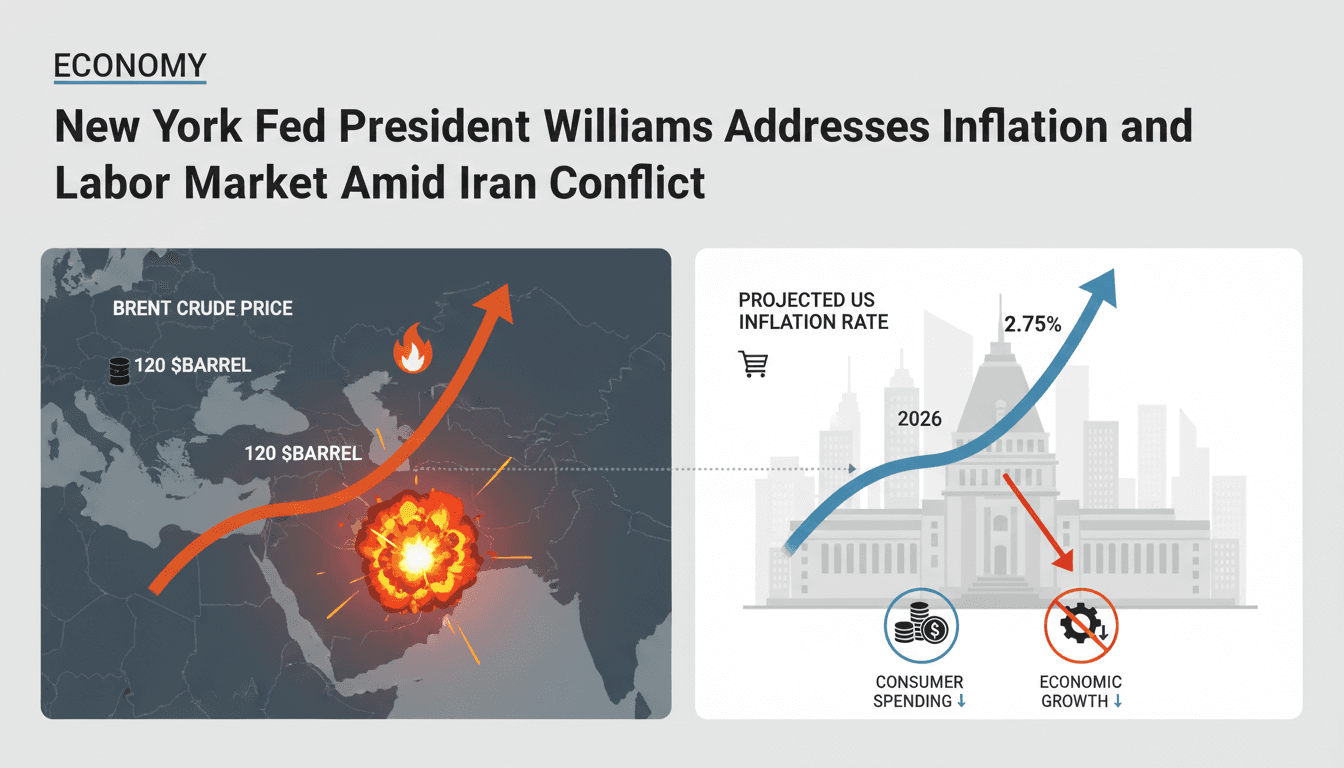
- Projected headline inflation for 2026 is approximately 2.75%, primarily driven by elevated energy prices.
- The US labor market is stable yet complex, with low hiring and firing rates contributing to a nuanced economic landscape.
The context you actually need
- The Iran war, which escalated in March 2026, has disrupted oil supplies, pushing Brent crude prices above $100 per barrel.
- Williams' previous remarks indicated a balanced approach to inflation and employment risks, emphasizing the Fed's readiness to adapt to economic changes.
- Recent Federal Open Market Committee (FOMC) rate adjustments have aimed to stabilize the economy following previous inflation episodes and trade tariffs.
What's really happening
The interview with John C. Williams sheds light on the Federal Reserve's current stance amid the complexities introduced by the Iran conflict. With Brent crude prices exceeding $100 per barrel due to disruptions in the Strait of Hormuz, the Fed is closely monitoring the situation. Williams characterized the monetary policy as "really well positioned" to respond to the evolving economic landscape.
The projected headline inflation rate of 2.75% for 2026 reflects the direct impact of rising energy costs. While this figure is elevated, core inflation remains stable, suggesting that underlying economic pressures are not escalating at the same pace. This distinction is crucial for understanding the Fed's approach to monetary policy. The stability in core inflation indicates that consumer prices, excluding volatile items like food and energy, are not experiencing significant upward pressure.
The labor market presents a mixed picture. With low hiring and firing rates, the unemployment rate remains stable, but this stability masks underlying complexities. The economy is expected to grow at a rate of 2-2.5% GDP, which, while positive, is tempered by the uncertainty introduced by the Iran conflict. The Fed's continuity in policy suggests a cautious approach, allowing for adjustments as necessary based on geopolitical developments.
As the situation unfolds, the Fed's ability to navigate these challenges will be critical. The interplay between energy prices, inflation, and labor market dynamics will shape economic conditions in the coming months. The Fed's commitment to monitoring these factors closely indicates that any shifts in policy will be data-driven, responding to real-time economic indicators rather than speculative forecasts.
Who feels it first (and how)
- Consumers: Rising inflation affects purchasing power, leading to higher costs for goods and services.
- Businesses: Companies reliant on energy may face increased operational costs, affecting profitability and pricing strategies.
- Investors: Stock market volatility can arise from shifts in Fed policy and energy prices, impacting investment portfolios.
- Expatriates in Dubai: A stronger USD due to Fed policy may pressure remittances and import costs for residents.
What to watch next
- Energy prices: Continued fluctuations in Brent crude will signal inflationary pressures and overall economic health.
- Labor market reports: Changes in hiring and firing rates will provide insights into economic stability and consumer confidence.
- Federal Reserve announcements: Any shifts in monetary policy will directly impact inflation and economic forecasts.
The Iran conflict is affecting global energy prices and inflation rates.
Continued monitoring by the Fed will lead to data-driven adjustments in monetary policy.
The long-term economic impact of the Iran conflict on global markets remains uncertain.
Frequently Asked Questions
- Why it matters?
- The ongoing Iran conflict is influencing global energy prices, which in turn affects inflation rates and economic stability.
- What happened (in 30 seconds)?
- John C. Williams, President of the New York Federal Reserve, discussed inflation and labor market dynamics amid the Iran war. Projected headline inflation for 2026 is approximately 2.75%, primarily driven by elevated energy prices. The US labor market is stable yet complex, with low hiring and firing rates contributing to a nuanced economic landscape.
- What's really happening?
- The interview with John C. Williams sheds light on the Federal Reserve's current stance amid the complexities introduced by the Iran conflict. With Brent crude prices exceeding $100 per barrel due to disruptions in the Strait of Hormuz, the Fed is closely monitoring the situation. Williams characterized the monetary policy as "really well positioned" to respond to the evolving economic landscape. The projected headline inflation rate of 2.75% for 2026 reflects the direct impact of rising energ
- Who feels it first (and how)?
- Consumers: Rising inflation affects purchasing power, leading to higher costs for goods and services. Businesses: Companies reliant on energy may face increased operational costs, affecting profitability and pricing strategies. Investors: Stock market volatility can arise from shifts in Fed policy and energy prices, impacting investment portfolios. Expatriates in Dubai: A stronger USD due to Fed policy may pressure remittances and import costs for residents.
- What to watch next?
- Energy prices: Continued fluctuations in Brent crude will signal inflationary pressures and overall economic health. Labor market reports: Changes in hiring and firing rates will provide insights into economic stability and consumer confidence. Federal Reserve announcements: Any shifts in monetary policy will directly impact inflation and economic forecasts.
Technology business and AI-related headlines.
"Data-driven tech newsroom with global scope."
— A47 Editor
Fed’s Williams on Inflation, Monetary Policy, Labor Market
New York Fed President John Williams stated that the monetary policy is currently well positioned, allowing the Federal Reserve to adopt a 'wait and see' approach regarding the economic impacts of the ongoing conflict in Iran. He shared his insights ...
Technology business news, market impacts, and innovation trends.
"Bloomberg is a premier financial and tech news provider, respected for its in-depth reporting and analytical rigor."
— A47 Editor
Fed’s Williams on Inflation, Monetary Policy, Labor Market
New York Fed President John Williams stated that the monetary policy is currently well positioned, allowing the Federal Reserve to adopt a 'wait and see' approach regarding the economic impacts of the ongoing conflict in Iran. He shared his insights ...
Global markets, investing, and macroeconomics from a premier financial newsroom.
"Bloomberg is respected for in-depth financial reporting and data-driven analysis."
— A47 Editor
Fed’s Williams Sees Monetary Policy ‘Exactly Where It Needs to Be’
New York Fed President John Williams stated that the current monetary policy is well positioned, allowing the Federal Reserve to adopt a 'wait and see' approach regarding the economic impacts of the ongoing conflict in Iran. In an interview with Mich...