
U.S. Navy Expands Naval Blockade of Iranian Ports to Interdict Contraband Shipments
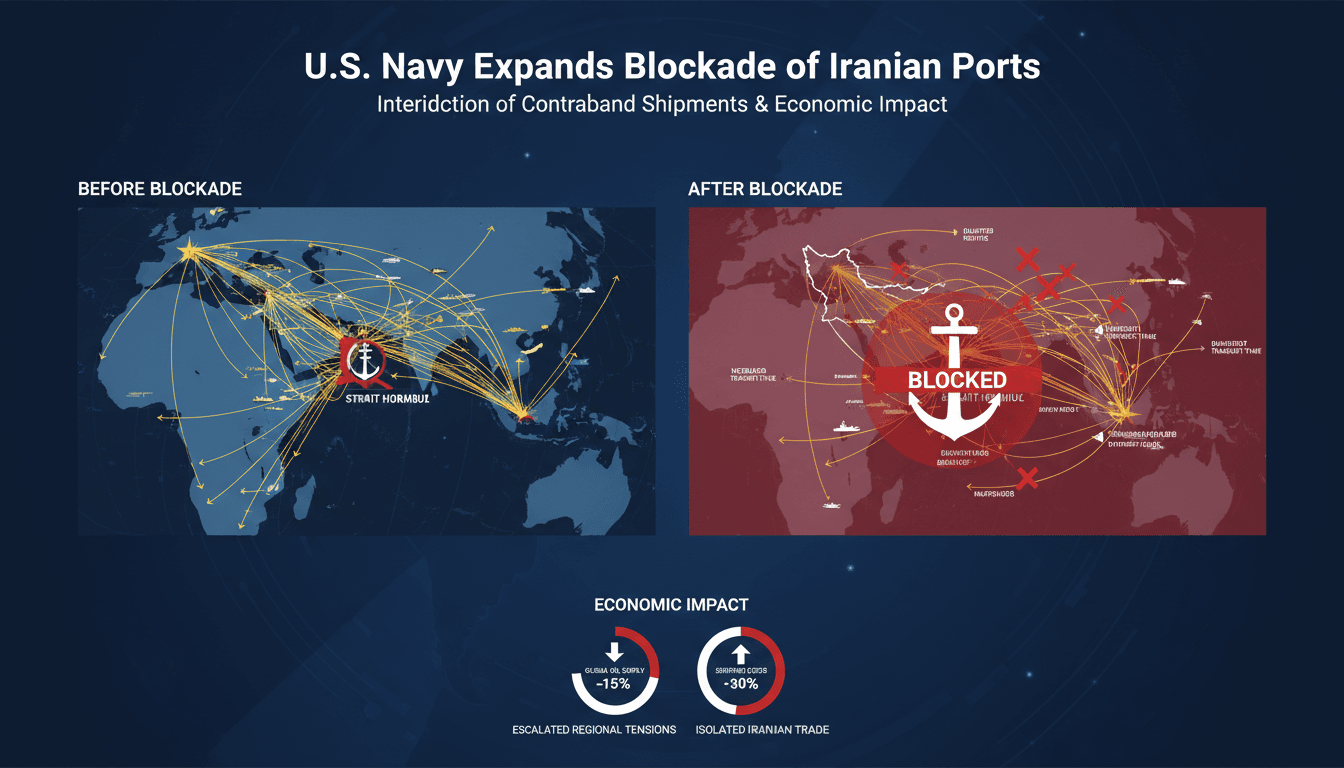
Here's what it means for you.
If you rely on global shipping routes or energy markets, this blockade could impact your costs and supply chains.
Why it matters
The U.S. Navy's blockade aims to economically isolate Iran, affecting global oil prices and shipping logistics.
What happened (in 30 seconds)
- On April 16, 2026, the U.S. Navy expanded its blockade of Iranian ports to include interdiction of suspected contraband shipments.
- The blockade, initiated on April 13, targets vessels carrying weapons, nuclear materials, and oil products linked to Iran.
- Iran's maritime trade has reportedly halted, with threats of retaliation against Gulf ports, including those in the UAE.
The context you actually need
- The blockade follows the escalation of the U.S.-Iran war, which began in early March 2026, marked by U.S. airstrikes and Iranian disruptions in the Strait of Hormuz.
- The U.S. aims to cut off Iran's smuggling networks and economic resources, particularly in the Persian Gulf and surrounding areas.
- Global oil prices are already reacting to the blockade, with a 20% risk to world supply, as diplomatic efforts for renewed talks stall.
What's really happening
The U.S. Navy's expanded blockade of Iranian ports is a strategic response to the ongoing U.S.-Iran war, which has seen escalating military actions since March 2026. The initial blockade was implemented to counteract Iranian disruptions in the Strait of Hormuz, a critical chokepoint for global oil shipments. By enforcing a strict maritime advisory, the U.S. aims to sever Iran's access to international markets and limit its ability to fund proxy activities across the region.
The blockade's expansion to include contraband interdiction reflects a shift in U.S. military strategy, allowing for more aggressive enforcement of maritime laws. This includes the right to visit, board, search, and seize vessels suspected of carrying contraband goods linked to Iran. The U.S. Central Command has reported compliance from multiple vessels within the first 48 hours of the blockade, indicating a significant impact on shipping routes.
The implications of this blockade extend beyond immediate military objectives. Economically, the blockade is designed to isolate Iran by targeting its maritime trade, which has been a lifeline for the country amid international sanctions. The U.S. aims to disrupt not only the flow of oil but also the transportation of materials that could contribute to Iran's nuclear capabilities. This multifaceted approach seeks to apply pressure on Iran's economy, potentially leading to a change in its behavior regarding nuclear enrichment and regional proxy engagements.
However, the blockade also carries risks. Iran has threatened reprisals against Gulf ports, particularly those in the UAE, which could escalate tensions further. The UAE, a key player in the region, is caught in a delicate position, balancing its economic interests with the need for security. As the blockade continues, the potential for increased shipping insurance premiums and elevated fuel prices in Dubai becomes a pressing concern for businesses reliant on stable supply chains.
The blockade's effectiveness will depend on the U.S. Navy's ability to maintain enforcement without provoking further military conflict. The ongoing situation is fluid, with shadow fleet tactics like transponder spoofing complicating enforcement efforts. As the U.S. seeks to maintain its strategic advantage, the global shipping industry must navigate the uncertainties introduced by this blockade.
Who feels it first (and how)
- Shipping companies: Increased operational costs due to heightened insurance premiums and rerouted vessels.
- Energy markets: Fluctuating oil prices as supply risks rise, impacting consumers and businesses globally.
- UAE businesses: Potential supply chain disruptions and increased costs for imports, affecting local markets.
What to watch next
- Iran's response: Monitor for any retaliatory actions against Gulf ports, which could escalate tensions and impact regional stability.
- Global oil prices: Watch for fluctuations in oil prices as the blockade continues, affecting energy costs worldwide.
- Shipping routes: Keep an eye on changes in shipping patterns and insurance costs as companies adapt to the new maritime landscape.
The U.S. Navy has expanded its blockade to include contraband interdiction.
Global oil prices will continue to fluctuate due to perceived supply risks.
The long-term effectiveness of the blockade in changing Iran's behavior or leading to diplomatic resolutions.
Frequently Asked Questions
- Why it matters?
- The U.S. Navy's blockade aims to economically isolate Iran, affecting global oil prices and shipping logistics.
- What happened (in 30 seconds)?
- On April 16, 2026, the U.S. Navy expanded its blockade of Iranian ports to include interdiction of suspected contraband shipments. The blockade, initiated on April 13, targets vessels carrying weapons, nuclear materials, and oil products linked to Iran. Iran's maritime trade has reportedly halted, with threats of retaliation against Gulf ports, including those in the UAE.
- What's really happening?
- The U.S. Navy's expanded blockade of Iranian ports is a strategic response to the ongoing U.S.-Iran war, which has seen escalating military actions since March 2026. The initial blockade was implemented to counteract Iranian disruptions in the Strait of Hormuz, a critical chokepoint for global oil shipments. By enforcing a strict maritime advisory, the U.S. aims to sever Iran's access to international markets and limit its ability to fund proxy activities across the region. The blockade's expan
- Who feels it first (and how)?
- Shipping companies: Increased operational costs due to heightened insurance premiums and rerouted vessels. Energy markets: Fluctuating oil prices as supply risks rise, impacting consumers and businesses globally. UAE businesses: Potential supply chain disruptions and increased costs for imports, affecting local markets.
- What to watch next?
- Iran's response: Monitor for any retaliatory actions against Gulf ports, which could escalate tensions and impact regional stability. Global oil prices: Watch for fluctuations in oil prices as the blockade continues, affecting energy costs worldwide. Shipping routes: Keep an eye on changes in shipping patterns and insurance costs as companies adapt to the new maritime landscape.
Pan-Arab news coverage spanning politics, business, sports, and regional affairs.
"Asharq Al-Awsat reflects a broad Arab editorial perspective with strong attention to regional geopolitics."
— A47 Editor
الجيش الأميركي يوسّع حصار إيران ليشمل شحنات بضائع مهربة
The U.S. military has expanded its maritime blockade against Iran to include shipments of smuggled goods, as announced by the U.S. Navy on Thursday. This move is part of ongoing efforts to curb illicit trade and enforce sanctions against Iran.
Arabic-language coverage of political affairs and current events.
"Okaz political coverage typically follows mainstream Saudi framing on national and regional affairs."
— A47 Editor
رغم التفاؤل الحذر بنجاح الوساطة الباكستانية.. الحصار الأمريكي يتواصل على إيران
The U.S. military announced that it continues surveillance and patrol missions in the region's waters, supporting the ongoing maritime blockade against Iran, which has been in effect since Monday amid the escalating conflict. The U.S. Central Command...
Arabic-language digital news outlet covering UAE, regional, and international developments with broad general-news coverage.
"Al Ain News coverage typically blends UAE-focused reporting with wider Arab regional and international news."
— A47 Editor
«حصار كامل».. الجيش الأمريكي يوقف حركة التجارة من وإلى إيران
The U.S. military has announced a complete blockade of Iranian ports, asserting its dominance in maritime operations in the Middle East. This move halts all trade activities to and from Iran, significantly impacting the country's economic interaction...
Arabic-language political and world news coverage for UAE readers.
"Emarat Al Youm world coverage usually presents international developments through a UAE and Arab audience lens."
— A47 Editor
الجيش الأميركي يعلن منع 6 سفن من مغادرة موانئ إيرانية الجيش الأميركي يعلن منع 6 سفن من مغادرة موانئ إيرانية
The U.S. military announced on Tuesday that it successfully prevented six ships from departing Iranian ports within the first 24 hours of enforcement. This action reflects ongoing tensions in the region and highlights the U.S. commitment to monitorin...