
US Approaches Net Crude Oil Exporter Status Amid Iran War Disruptions
Here's what it means for you.
As the U.S. approaches net crude exporter status, expect fluctuations in global oil prices that could impact your energy costs and economic stability.
Why it matters
The U.S. nearing net crude exporter status for the first time since World War II signals a significant shift in global energy dynamics, affecting supply chains and pricing.
What happened (in 30 seconds)
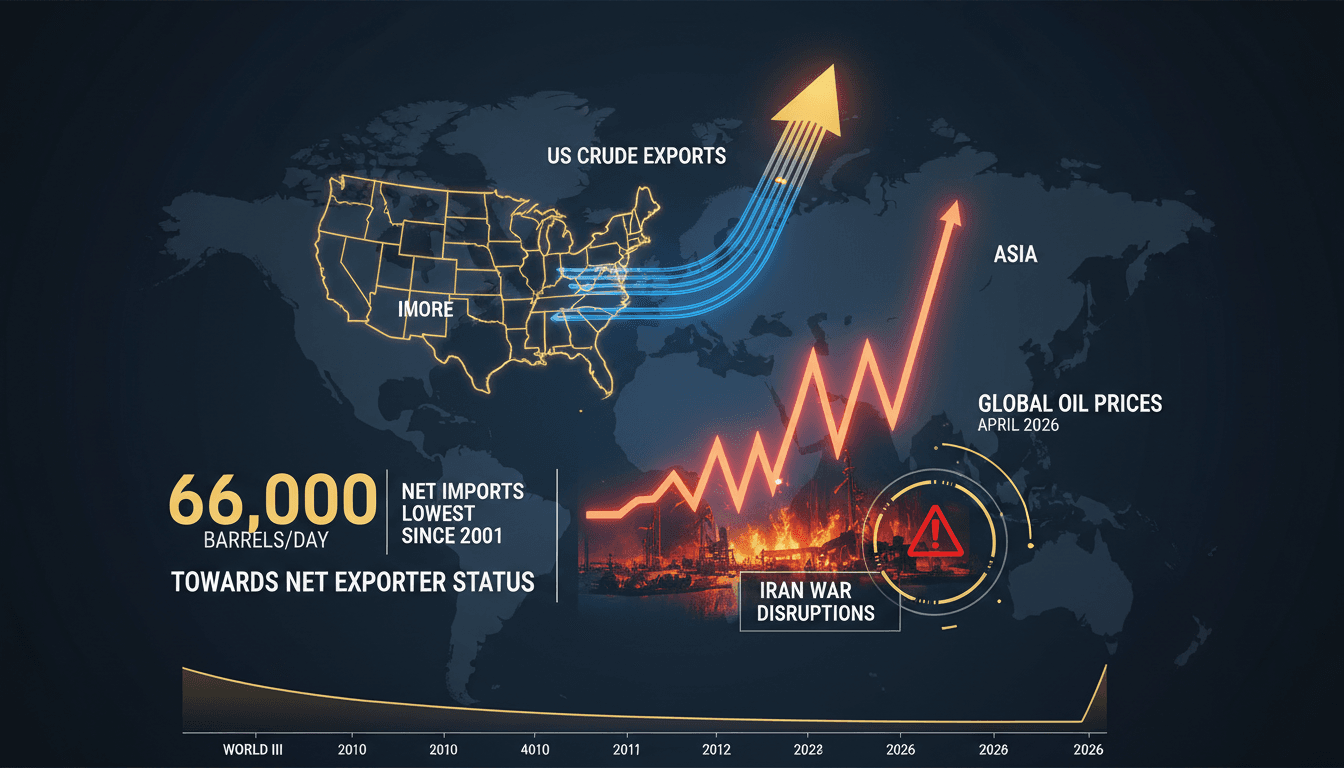
- U.S. net crude oil imports fell to 66,000 barrels per day, the lowest since 2001, driven by increased exports amid geopolitical tensions.
- Exports surged to 5.2 million barrels per day, with significant demand from Europe and Asia as they sought alternatives to Middle Eastern oil.
- The ongoing U.S.-Israel-Iran war has disrupted 20% of global oil transit, pushing Brent crude prices above $120 per barrel.
The context you actually need
- The 2026 Iran war, which began on February 28, has led to a major disruption in oil supplies, particularly affecting the Strait of Hormuz, a critical shipping route.
- U.S. crude exports have become increasingly competitive due to a widening Brent-WTI price spread, enhancing the attractiveness of American oil on the global market.
- European and Asian refiners are now heavily reliant on U.S. crude, marking a shift in sourcing strategies as they adapt to the ongoing conflict.
What's really happening
The geopolitical landscape has dramatically shifted since the onset of the 2026 Iran war, which began with U.S.-Israeli airstrikes targeting Iranian military infrastructure. This conflict has led to the closure of the Strait of Hormuz, a vital artery for global oil transport, disrupting approximately 20% of the world's oil and gas supplies. As a result, Brent crude prices surged beyond $120 per barrel, forcing refiners in Europe and Asia to seek alternatives to Middle Eastern oil.
In this context, U.S. crude exports have surged to 5.2 million barrels per day, the highest in seven months, while imports have dropped significantly, yielding net imports of just 66,000 barrels per day. This marks a pivotal moment for the U.S. as it approaches net crude exporter status for the first time since 1943. The shift is not merely a statistical anomaly; it reflects a broader reconfiguration of the global energy market.
The widening spread between Brent and West Texas Intermediate (WTI) prices—now at $20.69 per barrel—has made U.S. crude more competitive internationally. This has led to a significant increase in exports to Europe, where refiners are now sourcing U.S. crude to replace disrupted Middle Eastern supplies. Notably, first-time purchases from Greece and a substantial cargo to Turkey highlight the changing dynamics of oil sourcing in response to geopolitical pressures.
As the U.S. ramps up its crude oil exports, the logistical challenges are becoming apparent. Approximately 80 empty supertankers are converging on the Gulf of Mexico for April-May loadings, indicating that export capacity is being tested. The fragile ceasefire brokered around April 8, which included pledges to reopen the Strait of Hormuz, adds another layer of complexity to the situation. Ships are now testing passage through the Strait, but ongoing U.S. port blockades complicate the logistics further.
This evolving scenario underscores the interconnectedness of global energy markets and the ripple effects that geopolitical conflicts can have on supply chains, pricing, and ultimately, consumers worldwide.
Who feels it first (and how)
- Refiners in Europe and Asia: They are scrambling to secure alternative crude supplies, impacting their operational costs and pricing strategies.
- Consumers in the U.S. and globally: Fluctuating oil prices will likely affect gasoline and energy costs, impacting household budgets.
- Businesses dependent on oil: Industries such as transportation, manufacturing, and tourism may face increased operational costs, leading to potential price hikes for consumers.
What to watch next
- U.S. export capacity limits: Monitoring how U.S. infrastructure adapts to increased export demands will be crucial for understanding future supply dynamics.
- Global oil price fluctuations: Keep an eye on Brent and WTI prices as they respond to ongoing geopolitical developments and market adjustments.
- Ceasefire developments in the Iran war: Any changes in the conflict status could significantly impact oil supply routes and pricing.
U.S. net crude oil imports have reached their lowest level since 2001.
Continued reliance on U.S. crude by European and Asian refiners as Middle Eastern supplies remain uncertain.
The long-term implications of the Iran war on global energy markets and pricing stability.
Frequently Asked Questions
- Why it matters?
- The U.S. nearing net crude exporter status for the first time since World War II signals a significant shift in global energy dynamics, affecting supply chains and pricing.
- What happened (in 30 seconds)?
- U.S. net crude oil imports fell to 66,000 barrels per day, the lowest since 2001, driven by increased exports amid geopolitical tensions. Exports surged to 5.2 million barrels per day, with significant demand from Europe and Asia as they sought alternatives to Middle Eastern oil. The ongoing U.S.-Israel-Iran war has disrupted 20% of global oil transit, pushing Brent crude prices above $120 per barrel.
- What's really happening?
- The geopolitical landscape has dramatically shifted since the onset of the 2026 Iran war, which began with U.S.-Israeli airstrikes targeting Iranian military infrastructure. This conflict has led to the closure of the Strait of Hormuz, a vital artery for global oil transport, disrupting approximately 20% of the world's oil and gas supplies. As a result, Brent crude prices surged beyond $120 per barrel, forcing refiners in Europe and Asia to seek alternatives to Middle Eastern oil. In this conte
- Who feels it first (and how)?
- Refiners in Europe and Asia: They are scrambling to secure alternative crude supplies, impacting their operational costs and pricing strategies. Consumers in the U.S. and globally: Fluctuating oil prices will likely affect gasoline and energy costs, impacting household budgets. Businesses dependent on oil: Industries such as transportation, manufacturing, and tourism may face increased operational costs, leading to potential price hikes for consumers.
- What to watch next?
- U.S. export capacity limits: Monitoring how U.S. infrastructure adapts to increased export demands will be crucial for understanding future supply dynamics. Global oil price fluctuations: Keep an eye on Brent and WTI prices as they respond to ongoing geopolitical developments and market adjustments. Ceasefire developments in the Iran war: Any changes in the conflict status could significantly impact oil supply routes and pricing.
Oil, metals, and agriculture: supply/demand headlines, OPEC chatter, inventories, and price action.
"Solid tape for energy and metals traders tracking macro and micro catalysts."
— A47 Editor
Iran war brings US close to net crude exporter for first time since World War Two
The ongoing conflict in Iran has positioned the United States on the brink of becoming a net crude oil exporter for the first time since World War Two, as geopolitical tensions disrupt traditional oil supplies from the region. This shift is largely a...
Arabic-language UAE newspaper coverage focused on domestic affairs, public institutions, business, society, and regional developments.
"Al Khaleej coverage generally reflects a mainstream UAE editorial lens with strong attention to public affairs, institutions, and regional developments."
— A47 Editor
أمريكا مُصدّر صاف للنفط الخام لأول مرة منذ الحرب العالمية
The United States has transitioned to a net exporter of crude oil for the first time since World War II, with shipments reaching near-record levels to meet demand from Asian and European buyers. This surge is driven by the need to compensate for disr...
Editor-curated FT homepage stories spanning markets, business, world, and opinion.
"The Financial Times is a globally respected business publication with a centrist/center-left tone and strong markets focus."
— A47 Editor
US crude exports hit record as Iran war disrupts Middle East supplies
US crude oil exports have reached a record high as the ongoing conflict in Iran disrupts supplies from the Middle East, raising concerns about potential increases in petrol prices domestically. This surge in exports comes amid geopolitical tensions t...