
Reserve Bank of India Holds Repo Rate Steady Amid Geopolitical Tensions
Here's what it means for you.
If you’re in finance or business, this decision impacts your cost of borrowing and investment strategies in a volatile global market.
Why it matters
This decision reflects the RBI's balancing act between controlling inflation and supporting economic growth amid external shocks.
What happened (in 30 seconds)
- The Reserve Bank of India (RBI) maintained the repo rate at 5.25% during its Monetary Policy Committee meeting on April 8, 2026.
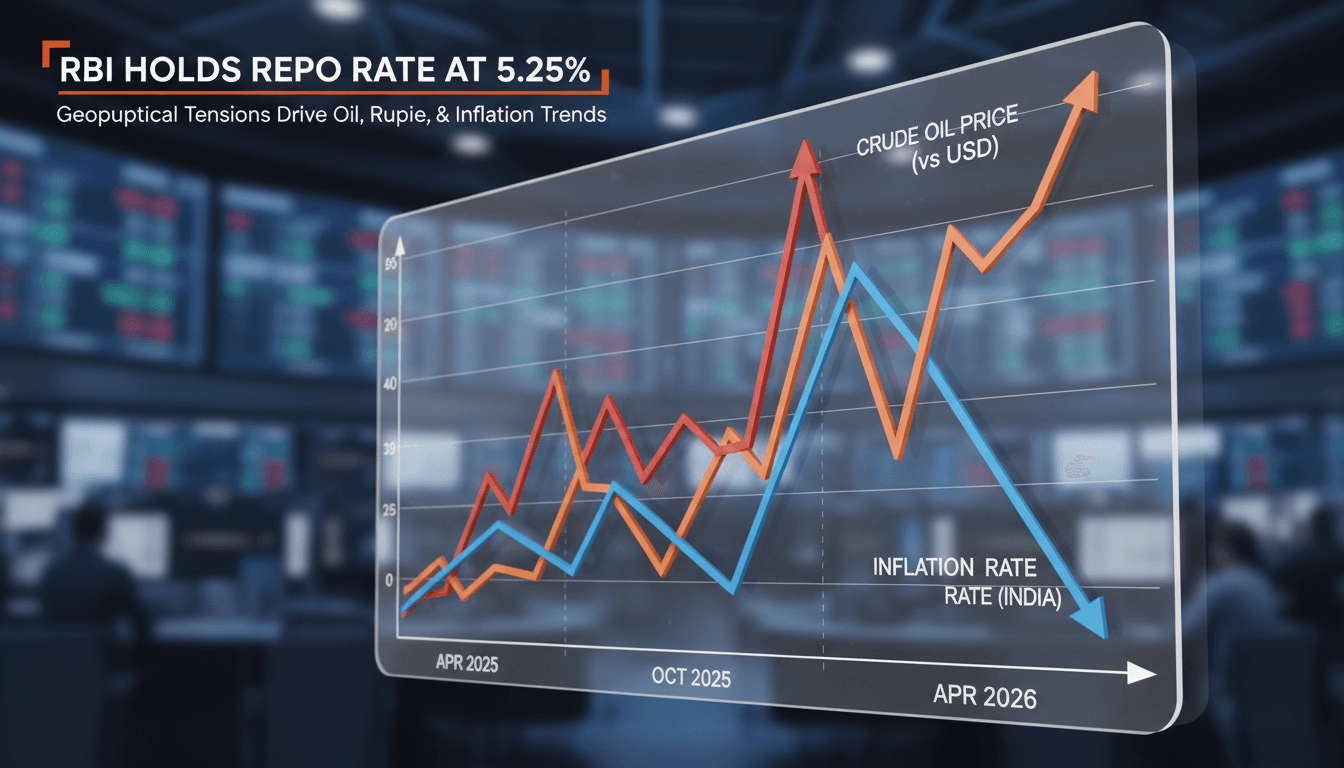
- Geopolitical tensions from the ongoing US-Iran conflict have disrupted oil supplies, pushing crude prices above $100 per barrel and weakening the Indian rupee.
- Revised forecasts indicate FY27 CPI inflation at 4.6% and GDP growth at 6.9%, down from previous estimates.
The context you actually need
- Rate cuts in 2025: The RBI had previously cut rates by 125 basis points, lowering the repo rate to 5.25% by December 2025 to foster growth amid controlled inflation.
- Geopolitical escalation: The US-Iran war, which began in late February 2026, has significantly impacted oil prices and economic stability in the region.
- Current economic indicators: The rupee has depreciated to around 93 per USD, raising concerns about imported inflation and overall economic resilience.
What's really happening
The RBI's decision to hold the repo rate at 5.25% is a strategic response to a complex interplay of domestic and international factors. The ongoing conflict between the US and Iran has created significant disruptions in the Strait of Hormuz, a critical chokepoint for global oil shipments. This has led to crude oil prices surging above $100 per barrel, which poses a dual threat to the Indian economy: rising inflation and a weakening currency.
The RBI's Monetary Policy Committee (MPC) is tasked with maintaining economic stability, and its recent decision reflects a cautious approach. By keeping the repo rate unchanged, the RBI aims to support domestic growth while mitigating the risks posed by external shocks. The revised inflation forecast of 4.6% for FY27 indicates that the central bank is vigilant about potential price pressures stemming from higher oil costs. This is particularly important as India is a net importer of oil, meaning that any increase in global oil prices directly impacts domestic inflation rates.
Furthermore, the depreciation of the rupee against the dollar complicates the situation. At around 93 per USD, the weaker rupee increases the cost of imports, further fueling inflation. This creates a challenging environment for consumers and businesses alike, as purchasing power diminishes and operational costs rise.
The RBI's neutral stance suggests that it is prepared to adjust its policies as new data emerges, particularly regarding oil prices and their impact on inflation and growth. The MPC's decision to lower the GDP growth forecast from 7.4% to 6.9% underscores the anticipated economic slowdown due to these external pressures. The committee is closely monitoring the situation, indicating that future rate adjustments may be necessary depending on how the geopolitical landscape evolves and its effects on the Indian economy.
In summary, the RBI's current monetary policy reflects a delicate balancing act: supporting growth while remaining vigilant against inflationary pressures driven by external factors. This approach aims to foster economic stability in a time of uncertainty.
Who feels it first (and how)
- Consumers: Higher oil prices lead to increased transportation and goods costs, affecting everyday expenses.
- Businesses in import-heavy sectors: Companies reliant on imported goods face rising costs, which may lead to price hikes or reduced margins.
- Indian expatriates in Dubai: The weakening rupee impacts remittances back to India, affecting family budgets and spending power.
- Investors: Fluctuations in the rupee and oil prices create uncertainty in investment returns, influencing stock market performance.
What to watch next
- Oil price trends: Continued volatility in oil prices will directly affect inflation and the RBI's future monetary policy decisions.
- Rupee stability: Monitoring the rupee's performance against the dollar will provide insights into inflationary pressures and economic health.
- Global geopolitical developments: Any escalation or resolution in the US-Iran conflict could significantly impact economic forecasts and RBI policy adjustments.
The RBI has maintained the repo rate at 5.25% as a response to external economic pressures.
Future adjustments to monetary policy may occur based on oil price movements and inflation data.
The long-term impact of the US-Iran conflict on global oil markets and the Indian economy remains uncertain.
Frequently Asked Questions
- Why it matters?
- This decision reflects the RBI's balancing act between controlling inflation and supporting economic growth amid external shocks.
- What happened (in 30 seconds)?
- The Reserve Bank of India (RBI) maintained the repo rate at 5.25% during its Monetary Policy Committee meeting on April 8, 2026. Geopolitical tensions from the ongoing US-Iran conflict have disrupted oil supplies, pushing crude prices above $100 per barrel and weakening the Indian rupee. Revised forecasts indicate FY27 CPI inflation at 4.6% and GDP growth at 6.9%, down from previous estimates.
- What's really happening?
- The RBI's decision to hold the repo rate at 5.25% is a strategic response to a complex interplay of domestic and international factors. The ongoing conflict between the US and Iran has created significant disruptions in the Strait of Hormuz, a critical chokepoint for global oil shipments. This has led to crude oil prices surging above $100 per barrel, which poses a dual threat to the Indian economy: rising inflation and a weakening currency. The RBI's Monetary Policy Committee (MPC) is tasked w
- Who feels it first (and how)?
- Consumers: Higher oil prices lead to increased transportation and goods costs, affecting everyday expenses. Businesses in import-heavy sectors: Companies reliant on imported goods face rising costs, which may lead to price hikes or reduced margins. Indian expatriates in Dubai: The weakening rupee impacts remittances back to India, affecting family budgets and spending power. Investors: Fluctuations in the rupee and oil prices create uncertainty in investment returns, influencing stock market per
- What to watch next?
- Oil price trends: Continued volatility in oil prices will directly affect inflation and the RBI's future monetary policy decisions. Rupee stability: Monitoring the rupee's performance against the dollar will provide insights into inflationary pressures and economic health. Global geopolitical developments: Any escalation or resolution in the US-Iran conflict could significantly impact economic forecasts and RBI policy adjustments.
Social/economic commentary and analysis relevant to business and markets.
"WSJ blends data-driven economic insight with commentary on policy and society."
— A47 Editor
Indian Central Bank Holds Rates as Mideast War Keeps Outlook in Flux
The Reserve Bank of India has decided to maintain its current interest rates, as indicated by the governor, who emphasized the need to monitor the developments in growth and inflation amid ongoing geopolitical tensions in the Middle East.
Global markets, investing, and macroeconomics from a premier financial newsroom.
"Bloomberg is respected for in-depth financial reporting and data-driven analysis."
— A47 Editor
India Keeps Key Rate Steady as Weak Rupee Takes Center Stage
The Reserve Bank of India (RBI) has decided to keep its key interest rate steady amid a sharply weaker rupee and ongoing geopolitical tensions in the Middle East. This marks the RBI's first policy decision since the escalation of the Middle East cris...