
Henry Paulson Warns of Financial Fallout from Weakening U.S. Treasury Demand
Here's what it means for you.
If you invest in U.S. Treasuries or related assets, prepare for potential volatility that could impact your portfolio.
Why it matters
The stability of U.S. Treasuries is crucial for global financial markets, and any disruption could lead to widespread economic consequences.
What happened (in 30 seconds)
- Henry Paulson issued a warning on April 16, 2026, about a potential collapse in demand for U.S. Treasuries amid rising national debt.
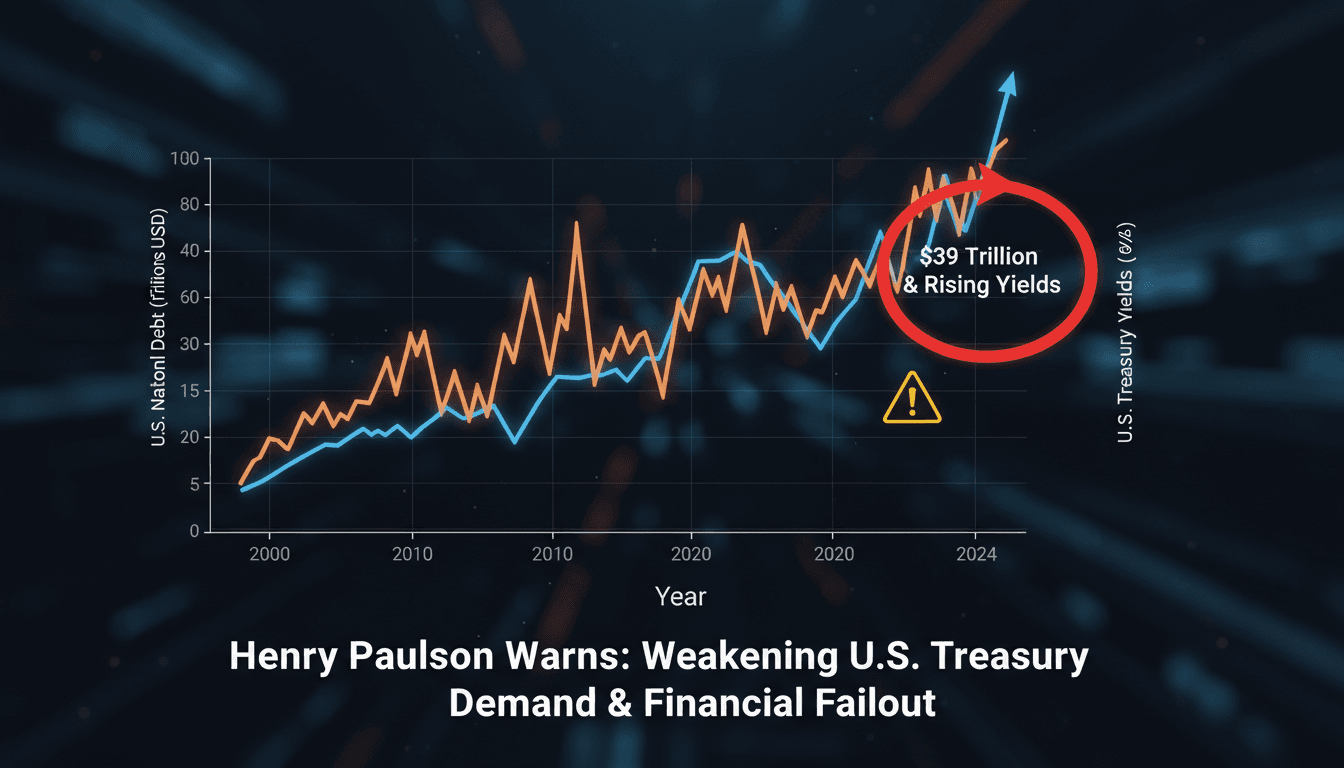
- U.S. gross national debt surpassed $39 trillion, leading to increased Treasury yields and investor concerns about debt sustainability.
- The U.S. Treasury executed a $15 billion buyback of nominal coupons to stabilize the market following these warnings.
The context you actually need
- U.S. debt levels have surged due to ongoing fiscal deficits and borrowing needs, raising alarms about long-term sustainability.
- Higher yields on Treasuries signal investor anxiety, which can lead to increased borrowing costs across various sectors, including corporate and consumer loans.
- Geopolitical tensions, such as the Iran conflict, further exacerbate concerns over the reliability of U.S. debt as a safe investment.
What's really happening
The U.S. gross national debt exceeded $39 trillion in March 2026, a milestone that reflects years of fiscal deficits and increased borrowing needs. This surge in debt has led to a corresponding rise in Treasury yields, as investors demand higher returns to compensate for perceived risks. The situation is compounded by geopolitical tensions, particularly the ongoing conflict with Iran, which has raised questions about the stability of U.S. financial instruments.
In response to these pressures, the U.S. Treasury executed a $15 billion buyback of nominal coupons maturing between 2026 and 2028 on April 16, 2026. This move aimed to provide liquidity and stabilize the market, but it also highlights the precarious position of U.S. debt. Paulson's warning about a "vicious" fallout from a potential collapse in Treasury demand underscores the systemic risks involved. Treasuries serve as the global benchmark for pricing various financial instruments, including corporate bonds, mortgages, and equities. A disruption in demand could trigger a chain reaction, affecting not just U.S. markets but also global financial stability.
The implications of a weakening demand for Treasuries are significant. If investors lose confidence, yields could rise further, increasing borrowing costs for businesses and consumers alike. This could lead to a slowdown in economic growth, as higher interest rates typically dampen spending and investment. Moreover, the Treasury market's role as a safe haven means that any instability could drive investors toward alternative assets, such as cryptocurrencies, which may not have the same level of security.
In Dubai, the situation is particularly relevant. The city is a major hub for cryptocurrency, with Tether's USDT stablecoin holding over $122 billion in U.S. Treasuries as of early 2026. A decline in Treasury demand could impair USDT's backing, leading to potential depegs and liquidity issues that would ripple through local crypto trading volumes. This interconnectedness illustrates how U.S. Treasury dynamics can have far-reaching effects, even in markets that seem distant from traditional finance.
Who feels it first (and how)
- Investors in U.S. Treasuries: They may face increased volatility and lower confidence in their investments.
- Corporations relying on debt financing: Higher yields could lead to increased borrowing costs, impacting profitability and growth.
- Consumers with variable-rate loans: Rising interest rates could translate to higher monthly payments, affecting disposable income.
- Cryptocurrency traders in Dubai: Instability in U.S. Treasuries could lead to liquidity issues in stablecoins like USDT, impacting local trading volumes.
What to watch next
- Treasury yield movements: Watch for significant changes in yields, as they will indicate investor sentiment and market stability.
- U.S. fiscal policy announcements: Any new measures to address the national debt could influence market confidence and Treasury demand.
- Geopolitical developments: Monitor tensions that could affect investor perceptions of U.S. debt as a safe asset.
U.S. gross national debt has surpassed $39 trillion, leading to increased Treasury yields.
Continued volatility in Treasury yields as investors react to fiscal and geopolitical developments.
The long-term impact on global markets if Treasury demand significantly weakens.
Frequently Asked Questions
- Why it matters?
- The stability of U.S. Treasuries is crucial for global financial markets, and any disruption could lead to widespread economic consequences.
- What happened (in 30 seconds)?
- Henry Paulson issued a warning on April 16, 2026, about a potential collapse in demand for U.S. Treasuries amid rising national debt. U.S. gross national debt surpassed $39 trillion, leading to increased Treasury yields and investor concerns about debt sustainability. The U.S. Treasury executed a $15 billion buyback of nominal coupons to stabilize the market following these warnings.
- What's really happening?
- The U.S. gross national debt exceeded $39 trillion in March 2026, a milestone that reflects years of fiscal deficits and increased borrowing needs. This surge in debt has led to a corresponding rise in Treasury yields, as investors demand higher returns to compensate for perceived risks. The situation is compounded by geopolitical tensions, particularly the ongoing conflict with Iran, which has raised questions about the stability of U.S. financial instruments. In response to these pressures, t
- Who feels it first (and how)?
- Investors in U.S. Treasuries: They may face increased volatility and lower confidence in their investments. Corporations relying on debt financing: Higher yields could lead to increased borrowing costs, impacting profitability and growth. Consumers with variable-rate loans: Rising interest rates could translate to higher monthly payments, affecting disposable income. Cryptocurrency traders in Dubai: Instability in U.S. Treasuries could lead to liquidity issues in stablecoins like USDT, impacting
- What to watch next?
- Treasury yield movements: Watch for significant changes in yields, as they will indicate investor sentiment and market stability. U.S. fiscal policy announcements: Any new measures to address the national debt could influence market confidence and Treasury demand. Geopolitical developments: Monitor tensions that could affect investor perceptions of U.S. debt as a safe asset.
Real-time updates, analysis, and reports on the blockchain and cryptocurrency sectors.
"Crypto News delivers real-time updates, analysis, and reports on the blockchain and cryptocurrency sectors."
— A47 Editor
Former Treasury Secretary warns of “vicious” fallout if U.S. Treasury demand weakens
Former Treasury Secretary Henry Paulson has warned U.S. policymakers to prepare for a potential crisis in the Treasury market, citing a possible breakdown in demand for U.S. Treasurys. In a recent Bloomberg interview, he described the potential fallo...
Covers blockchain, cryptocurrency news, project analysis, and market insights.
"Cointelegraph is a leading crypto-focused media outlet known for timely news, analysis, and educational content related to blockchain and digital assets."
— A47 Editor
Ex-Treasury chief warns of US bond crash, calls for contingency plan
Former Treasury Secretary Henry Paulson has issued a warning about a potential crisis in the US Treasury market, stating that when it occurs, it will be severe and urging the need for a contingency plan. This statement highlights concerns regarding t...
Global markets, investing, and macroeconomics from a premier financial newsroom.
"Bloomberg is respected for in-depth financial reporting and data-driven analysis."
— A47 Editor
Paulson Says US Should Prepare for a 'Vicious' Bond Crash
Former Treasury Secretary Hank Paulson has warned that the U.S. should prepare for a potential 'vicious' bond crash, urging authorities to develop a contingency plan to avert a collapse in demand for Treasuries. In an interview with David Westin on B...
Macro commentary, policy analysis, growth/inflation themes, and global outlooks.
"Contextual macro coverage that complements day-to-day market headlines."
— A47 Editor
Paulson calls for emergency plan to prevent Treasury market collapse
Paulson has called for an emergency plan to avert a potential collapse of the Treasury market, highlighting concerns over the stability of this critical financial sector. The statement reflects growing anxiety regarding market conditions and the impl...