
Aurora Borealis Forecast for 10 Northern US States
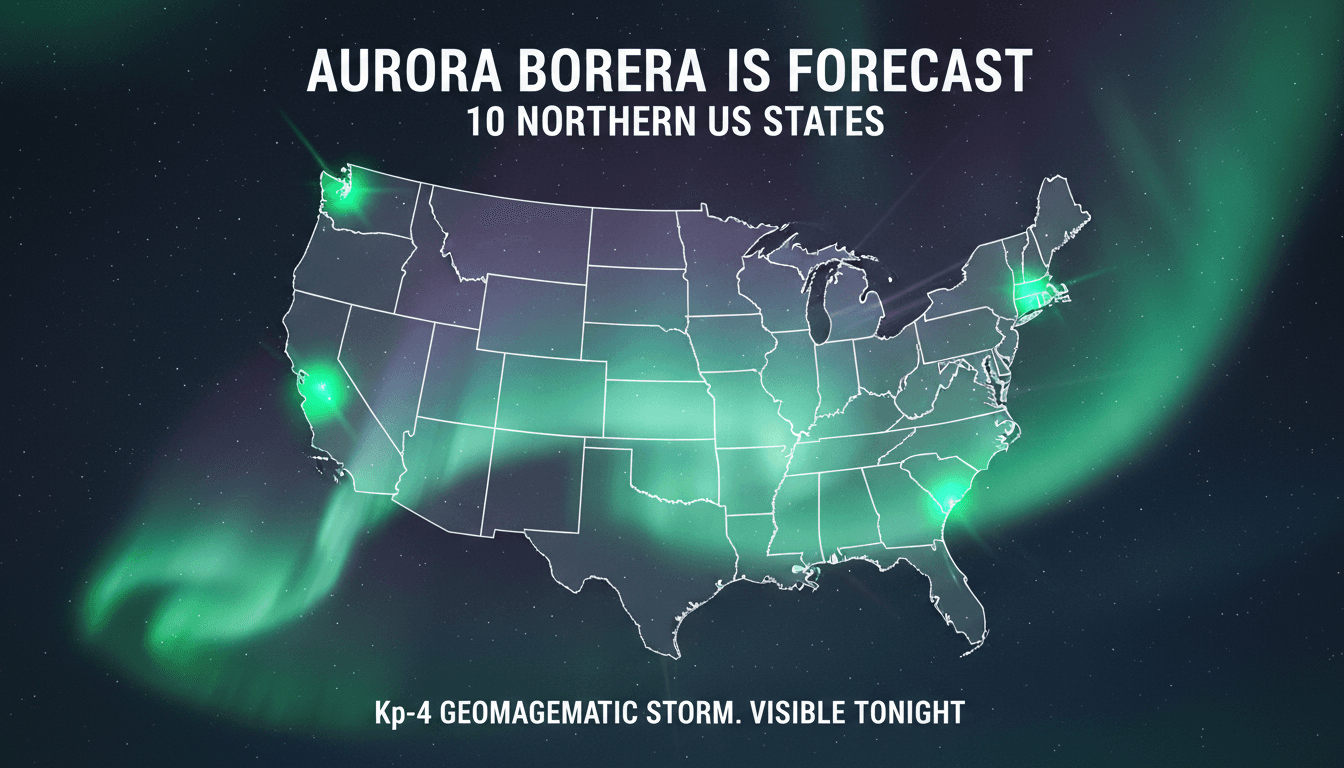
Here's what it means for you.
A rare chance to witness the aurora borealis could inspire creativity and connection among professionals in the northern U.S.
What happened
NOAA's Space Weather Prediction Center forecasts a moderate geomagnetic storm, making the aurora borealis visible across northern parts of 10 U.S. states on the evening of March 13, 2026.
The Context
- Geomagnetic storms occur when solar wind particles interact with Earth's magnetosphere, enhancing aurora visibility.
- Optimal viewing times are from 10 p.m. to 2 a.m. in dark-sky locations, particularly in northern states.
- Kp index of 4 indicates moderate storm conditions, suggesting good visibility for those in the affected areas.
The Number
— the number of U.S. states where the aurora borealis could be seen, highlighting a unique opportunity for professionals to engage in outdoor activities and networking.
Takeaway
As the solar maximum phase peaks, expect more frequent aurora sightings in the coming years, making it a key time for skywatching enthusiasts and professionals alike.
Business, investment, entrepreneurship, leadership, and innovation.
"Forbes is known for its coverage of business leaders, market trends, and entrepreneurial ventures with a pro-business editorial stance."
— A47 Editor
Northern Lights Forecast: 10 States Could See Aurora Borealis Tonight
A forecast indicates that the Northern Lights, also known as the Aurora Borealis, may be visible tonight in 10 U.S. states, particularly those located closer to the U.S.-Canada border.
Space science news, astronomy updates, and spaceflight developments.
"Space.com delivers space science news, astronomy updates, and spaceflight developments with engaging coverage."
— A47 Editor
Northern lights may be visible in 9 US states tonight
The northern lights may be visible tonight and tomorrow across nine US states, stretching from Alaska to Maine, as a fast-moving solar wind stream is expected to arrive, according to Space.com.