
Wall Street Banks Begin Trading Credit Default Swaps on Private Credit Funds Amid Market Stress
Here's what it means for you.
If you’re invested in private credit or related sectors, this shift could impact your portfolio's risk profile.
Why it matters
The introduction of credit default swaps (CDS) linked to private credit funds signals a critical juncture for a sector facing significant stress, potentially affecting broader financial stability.
What happened (in 30 seconds)
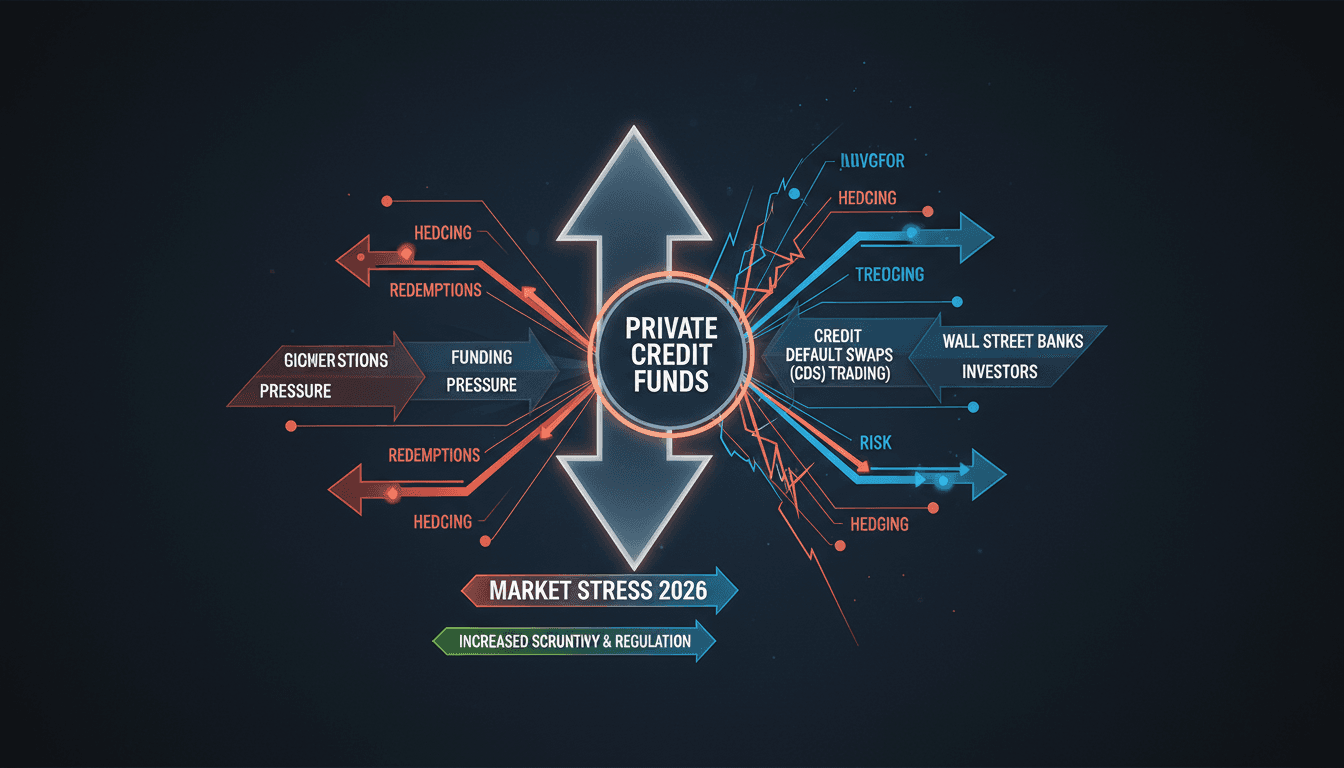
- On April 17, 2026, major Wall Street banks began trading CDS on private credit funds managed by Blackstone, Apollo, and Ares.
- This trading allows investors to hedge against or speculate on potential distress in the private credit sector, which is currently under pressure.
- The move follows the launch of an S&P Dow Jones CDS index that includes private credit exposure, amid rising redemptions and liquidity issues.
The context you actually need
- Private credit has grown rapidly to over $3 trillion since the 2008 financial crisis, driven by low interest rates and demand for higher yields.
- Recent market turbulence is attributed to elevated interest rates, increased defaults, and significant investor redemptions exceeding $20 billion in Q1 2026.
- Some private credit funds have implemented gates on withdrawals to manage liquidity constraints, raising concerns about systemic risks.
What's really happening
The trading of credit default swaps linked to private credit funds marks a significant evolution in the financial landscape. Historically, private credit emerged as an alternative lending source following the 2008 financial crisis, growing rapidly to an estimated $3 trillion in assets. This growth was fueled by low interest rates and a strong demand for yield, with banks playing a crucial role in financing and leveraging these funds.
However, the current environment is markedly different. As interest rates have risen, the private credit sector is experiencing its most significant stress test in over a decade. Defaults, particularly in software loans, have increased, and investor redemptions have surged, leading to liquidity constraints. In response, some funds have implemented withdrawal gates, limiting investors' access to their capital. This situation has prompted major Wall Street banks, including JPMorgan Chase, Barclays, Morgan Stanley, and Citigroup, to initiate trading in credit default swaps specifically linked to flagship private credit funds managed by Blackstone, Apollo, and Ares.
The launch of the S&P Dow Jones FINDX CDS index on April 10, 2026, which includes 12% exposure to private credit funds, has further facilitated this trading. This index allows investors to hedge against potential downturns in the private credit sector, reflecting a growing recognition of the risks involved. The ability to trade CDS on these funds enables investors to bet on credit events, effectively allowing them to manage their exposure to the sector's volatility.
This development has sparked discussions reminiscent of the pre-2008 financial crisis, where CDS trading on subprime mortgages contributed to systemic risks. While no immediate governmental responses have been reported, the potential for contagion remains a concern. As private credit funds continue to navigate redemptions and liquidity challenges, the broader market impacts have, as of April 18, 2026, remained contained, with no significant shifts observed in public credit markets or bank stocks.
Who feels it first (and how)
- Investors in private credit funds: They may face increased volatility and potential losses due to rising defaults and liquidity constraints.
- Banks and financial institutions: They are directly involved in trading these CDS and may experience shifts in risk exposure.
- High-net-worth individuals and family offices: Particularly in regions like Dubai, they may be impacted by their allocations to private credit, which could lead to losses amid U.S.-centric stress.
What to watch next
- Redemption trends: Monitoring the pace and volume of redemptions in private credit funds will indicate investor confidence and liquidity health.
- Default rates: An increase in default rates, especially in sectors like software, could signal deeper issues within the private credit market.
- Regulatory responses: Any forthcoming regulations or oversight measures from financial authorities could reshape the trading landscape for CDS linked to private credit.
Major Wall Street banks are now trading CDS linked to private credit funds.
Increased scrutiny and potential regulatory responses may emerge as the situation evolves.
The long-term impact on the broader financial system and market stability remains uncertain.
Frequently Asked Questions
- Why it matters?
- The introduction of credit default swaps (CDS) linked to private credit funds signals a critical juncture for a sector facing significant stress, potentially affecting broader financial stability.
- What happened (in 30 seconds)?
- On April 17, 2026, major Wall Street banks began trading CDS on private credit funds managed by Blackstone, Apollo, and Ares. This trading allows investors to hedge against or speculate on potential distress in the private credit sector, which is currently under pressure. The move follows the launch of an S&P Dow Jones CDS index that includes private credit exposure, amid rising redemptions and liquidity issues.
- What's really happening?
- The trading of credit default swaps linked to private credit funds marks a significant evolution in the financial landscape. Historically, private credit emerged as an alternative lending source following the 2008 financial crisis, growing rapidly to an estimated $3 trillion in assets. This growth was fueled by low interest rates and a strong demand for yield, with banks playing a crucial role in financing and leveraging these funds. However, the current environment is markedly different. As in
- Who feels it first (and how)?
- Investors in private credit funds: They may face increased volatility and potential losses due to rising defaults and liquidity constraints. Banks and financial institutions: They are directly involved in trading these CDS and may experience shifts in risk exposure. High-net-worth individuals and family offices: Particularly in regions like Dubai, they may be impacted by their allocations to private credit, which could lead to losses amid U.S.-centric stress.
- What to watch next?
- Redemption trends: Monitoring the pace and volume of redemptions in private credit funds will indicate investor confidence and liquidity health. Default rates: An increase in default rates, especially in sectors like software, could signal deeper issues within the private credit market. Regulatory responses: Any forthcoming regulations or oversight measures from financial authorities could reshape the trading landscape for CDS linked to private credit.
Market-moving headlines impacting equities, bonds, and related risk assets.
"Real-time catalysts and volatility drivers across indices and sectors."
— A47 Editor
Wall Street banks trade derivatives to bet on private credit stress, FT reports
Wall Street banks have begun trading derivatives to bet against private credit, reflecting growing concerns about the stability of this investment sector, as reported by the Financial Times. This move aligns with the introduction of a new credit-defa...
Editor-curated FT homepage stories spanning markets, business, world, and opinion.
"The Financial Times is a globally respected business publication with a centrist/center-left tone and strong markets focus."
— A47 Editor
Wall Street banks start trading derivatives to bet on pain in private credit
Wall Street banks, including JPMorgan and Barclays, have begun trading credit default swaps (CDS) on private equity funds managed by Apollo, Ares, and Blackstone, indicating a shift towards hedging against potential downturns in the private credit ma...
Global markets, investing, and macroeconomics from a premier financial newsroom.
"Bloomberg is respected for in-depth financial reporting and data-driven analysis."
— A47 Editor
Private Credit Funds Face More Pressure as Banks Swap Collateral
Private credit funds are experiencing increased pressure as Wall Street banks adjust their collateral strategies, which has historically bolstered these funds with substantial loans, enhancing their investment capabilities. This shift comes amid risi...