
Pakistan Secures Two-Week Ceasefire Extension in U.S.-Iran Conflict
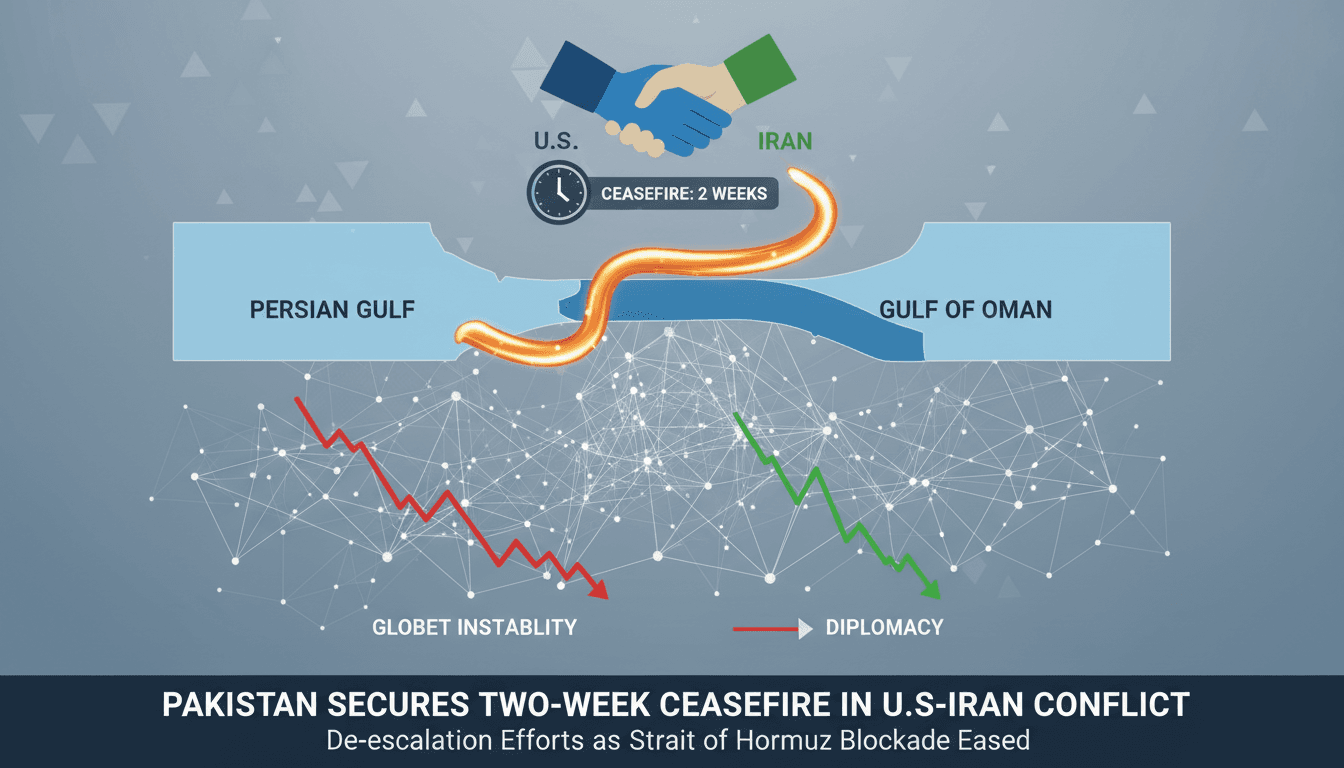
Here's what it means for you.
The recent ceasefire extension impacts global oil markets and geopolitical stability, affecting your investments and energy prices.
Why it matters
This ceasefire is critical as it directly influences global oil supply chains and market stability.
What happened (in 30 seconds)
- On April 7, 2026, Pakistani Prime Minister Shahbaz Sharif proposed a two-week ceasefire extension to U.S. President Donald Trump amid escalating U.S.-Israeli-Iranian tensions.
- Iran responded positively, leading to Trump's announcement of a conditional two-week suspension of strikes, contingent on reopening the vital Strait of Hormuz.
- The ceasefire comes after weeks of conflict that resulted in over 5,000 reported deaths across 12 countries, highlighting the urgent need for diplomatic solutions.
The context you actually need
- The Strait of Hormuz is a crucial chokepoint for global oil supplies, with approximately 20% of the world's oil transiting through it.
- The ongoing conflict has seen U.S. and Israeli strikes on Iranian military targets, escalating tensions and prompting international condemnation.
- Market reactions to the conflict have included volatility in Gulf exchanges and concerns over rising fuel prices, particularly impacting economies heavily reliant on energy trade.
What's really happening
The recent ceasefire extension is a result of intense diplomatic maneuvering amid a backdrop of escalating military conflict. The U.S. and Israel have been engaged in a series of strikes against Iranian military and infrastructure targets, which Iran has retaliated against, further complicating the situation. The closure of the Strait of Hormuz by Iran has paralyzed global oil markets, prompting urgent calls for a resolution.
Pakistani Prime Minister Shahbaz Sharif's intervention represents a significant diplomatic effort to de-escalate tensions. His proposal for a two-week ceasefire was not only a response to the immediate crisis but also a strategic move to stabilize the region and prevent further loss of life. The Iranian government's positive response indicates a willingness to negotiate, albeit under pressure from the U.S. ultimatum.
Trump's acceptance of the ceasefire, conditional on the reopening of the Strait, reflects the precarious balance of power and the high stakes involved. The U.S. has threatened comprehensive destruction of Iranian infrastructure if compliance is not met, which underscores the urgency of the situation. The conflict has already resulted in over 5,000 deaths, highlighting the humanitarian crisis that could worsen if hostilities resume.
The implications of this ceasefire extend beyond immediate military concerns. For global markets, the uncertainty surrounding oil supply has led to volatility, with Gulf exchanges reacting negatively to the threat of continued conflict. Dubai, as a major hub for trade and energy, is particularly vulnerable to fluctuations in oil prices, which could impact everything from fuel costs to broader economic stability.
The ceasefire's success hinges on the ability of involved parties to navigate complex geopolitical dynamics. With the U.S. and Israel maintaining a hardline stance against Iran, any failure to reopen the Strait could quickly lead to renewed hostilities. The international community, including entities like the UN, is closely monitoring the situation, emphasizing the need for a sustainable resolution to prevent further escalation.
Who feels it first (and how)
- Investors in oil markets: Fluctuations in oil prices directly impact investment portfolios.
- Residents of Dubai: Economic stability is tied to energy trade and price stability.
- Businesses reliant on energy: Companies in sectors like transportation and manufacturing may face increased costs.
- Regional governments: Heightened tensions could lead to precautionary measures affecting daily life and economic activities.
What to watch next
- Negotiations between the U.S. and Iran: Continued diplomatic talks will be crucial in determining the future of the ceasefire and regional stability.
- Market reactions to oil supply forecasts: Watch for fluctuations in oil prices as the situation evolves, which could impact global markets.
- Responses from other regional players: The reactions of countries like Saudi Arabia and the UAE will be essential in assessing the broader geopolitical landscape.
The ceasefire has been agreed upon for two weeks, with U.S. strikes suspended.
Continued diplomatic efforts will be necessary to maintain the ceasefire and prevent escalation.
The long-term implications for U.S.-Iran relations and regional stability remain uncertain.
Frequently Asked Questions
- Why it matters?
- This ceasefire is critical as it directly influences global oil supply chains and market stability.
- What happened (in 30 seconds)?
- On April 7, 2026, Pakistani Prime Minister Shahbaz Sharif proposed a two-week ceasefire extension to U.S. President Donald Trump amid escalating U.S.-Israeli-Iranian tensions. Iran responded positively, leading to Trump's announcement of a conditional two-week suspension of strikes, contingent on reopening the vital Strait of Hormuz. The ceasefire comes after weeks of conflict that resulted in over 5,000 reported deaths across 12 countries, highlighting the urgent need for diplomatic solutions.
- What's really happening?
- The recent ceasefire extension is a result of intense diplomatic maneuvering amid a backdrop of escalating military conflict. The U.S. and Israel have been engaged in a series of strikes against Iranian military and infrastructure targets, which Iran has retaliated against, further complicating the situation. The closure of the Strait of Hormuz by Iran has paralyzed global oil markets, prompting urgent calls for a resolution. Pakistani Prime Minister Shahbaz Sharif's intervention represents a s
- Who feels it first (and how)?
- Investors in oil markets: Fluctuations in oil prices directly impact investment portfolios. Residents of Dubai: Economic stability is tied to energy trade and price stability. Businesses reliant on energy: Companies in sectors like transportation and manufacturing may face increased costs. Regional governments: Heightened tensions could lead to precautionary measures affecting daily life and economic activities.
- What to watch next?
- Negotiations between the U.S. and Iran: Continued diplomatic talks will be crucial in determining the future of the ceasefire and regional stability. Market reactions to oil supply forecasts: Watch for fluctuations in oil prices as the situation evolves, which could impact global markets. Responses from other regional players: The reactions of countries like Saudi Arabia and the UAE will be essential in assessing the broader geopolitical landscape.
Arabic-language coverage of international news and geopolitics.
"RT Arabic is a Russian state-funded outlet often criticized for promoting Kremlin-aligned narratives."
— A47 Editor
مساع في اللحظات الأخيرة لهدنة قبيل انقضاء مهلة ترامب لإيران
U.S. President Donald Trump issued a stark warning to Iran, stating that an entire civilization could be destroyed if it does not open the Strait of Hormuz within two hours. Meanwhile, Pakistan has proposed a two-week ceasefire in a last-ditch effort...
Arabic-language reporting on global and regional news.
"BBC Arabic is part of the BBC, generally regarded for editorial standards and broad international coverage."
— A47 Editor
ترامب يتوعد بـ"موت حضارة إيران وعدم نهوضها مجددا"
Donald Trump has made a bold statement threatening the demise of Iranian civilization, asserting that it will not rise again. This declaration reflects ongoing tensions between the United States and Iran, highlighting the contentious relationship bet...
Arabic-language UAE newspaper coverage focused on domestic affairs, public institutions, business, society, and regional developments.
"Al Khaleej coverage generally reflects a mainstream UAE editorial lens with strong attention to public affairs, institutions, and regional developments."
— A47 Editor
ترامب يتوعد إيران: حضارة بأكملها ستموت الليلة ولن تعود أبداً
On Tuesday, U.S. President Donald Trump declared that 47 years of extortion and corruption would come to an end with airstrikes on Iran, stating that an entire civilization would perish that night and would never return. This announcement came just h...
Arabic-language digital news outlet covering UAE, regional, and international developments with broad general-news coverage.
"Al Ain News coverage typically blends UAE-focused reporting with wider Arab regional and international news."
— A47 Editor
ترامب يستبق انتهاء «مهلة إيران» بتحذير غير مسبوق: حضارة ستموت الليلة
U.S. President Donald Trump issued an unprecedented warning just hours before the deadline he set for Iran, stating, "A whole civilization will die tonight." This statement underscores the escalating tensions between the U.S. and Iran, highlighting t...