
Kremlin Warns of Severe Damage to Global Energy Markets from U.S. Naval Blockade
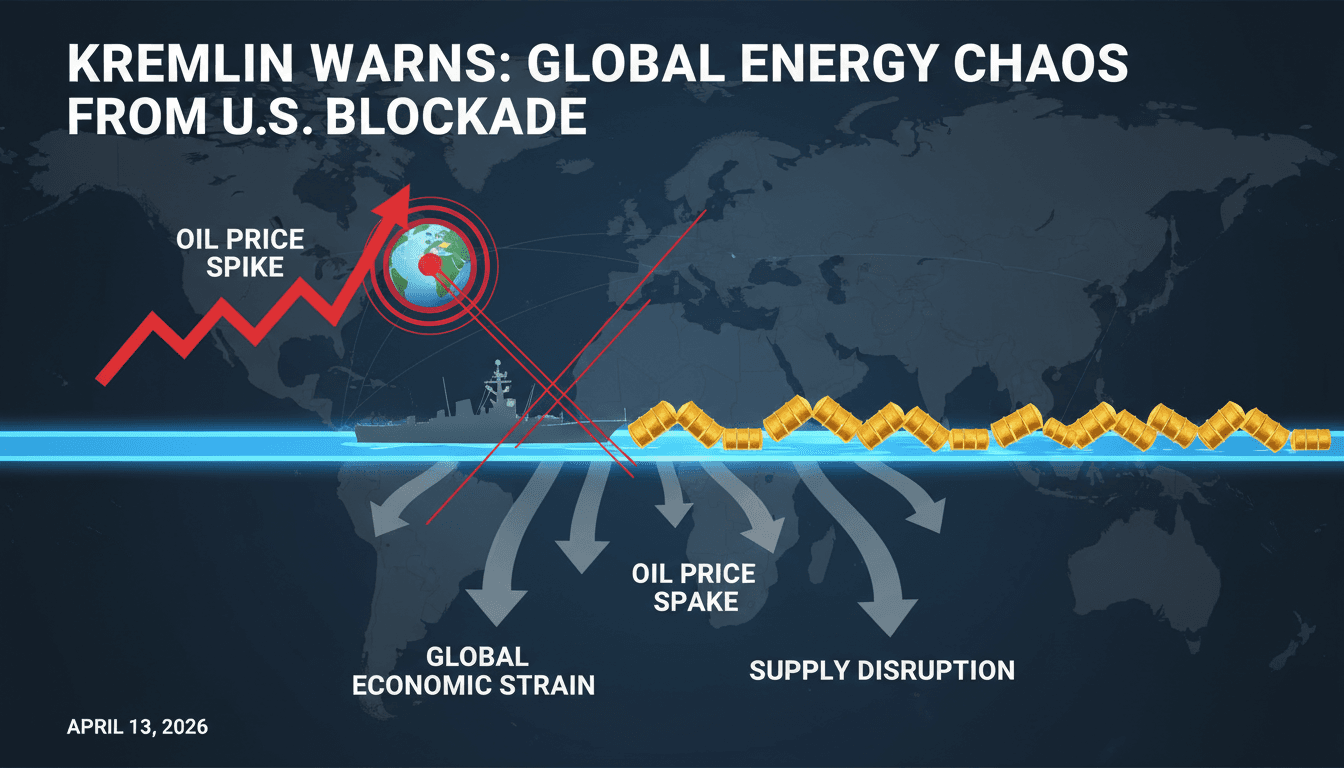
Here's what it means for you.
If you rely on global energy markets, prepare for rising costs and potential supply disruptions.
Why it matters
The U.S. blockade threatens to destabilize energy prices and supply chains, impacting economies worldwide.
What happened (in 30 seconds)
- April 12: President Trump announces a naval blockade of the Strait of Hormuz in response to Iranian provocations.
- April 13: Kremlin warns that the blockade will severely damage global energy markets as U.S. Navy operations commence.
- Current Status: Oil prices surge above $100 per barrel, and shipping traffic through the strait has halted entirely.
The context you actually need
- Geopolitical Tensions: The crisis began on February 28, 2026, when Iran closed the strait following U.S.-Israeli airstrikes, leading to a series of retaliatory actions.
- Energy Dependency: The Strait of Hormuz is a critical chokepoint for global oil supply, with approximately 20% of seaborne oil passing through it.
- Market Reactions: The International Energy Agency (IEA) and OPEC+ are closely monitoring the situation, anticipating significant disruptions to oil supply.
What's really happening
The U.S. naval blockade of the Strait of Hormuz is a direct response to escalating tensions between the U.S., Israel, and Iran. This crisis began with airstrikes on Iranian targets, prompting Iran's Islamic Revolutionary Guard Corps (IRGC) to retaliate by laying mines and attacking vessels in the strait. The blockade aims to choke off Iranian ports and disrupt shipping that pays tolls to Iran, which has been accused of extortion.
As the U.S. Navy enforces this blockade, it is not just a military maneuver but a strategic economic decision with far-reaching implications. The Kremlin's warning underscores the interconnectedness of global energy markets; disruptions in the Strait of Hormuz can lead to immediate spikes in oil prices, as seen with Brent crude surpassing $100 per barrel.
The blockade has already led to a complete halt in shipping traffic, according to Lloyd's List, which will exacerbate supply shortages and drive prices higher. This situation is reminiscent of past energy crises, where geopolitical tensions led to significant market shocks. The current crisis is being closely monitored by global organizations, including the IEA, which is assessing reserves and potential impacts on energy security.
Moreover, the blockade is likely to trigger a chain reaction in global markets. Countries dependent on oil imports will face increased costs, which may lead to inflation in consumer goods and transportation. For instance, residents in Dubai are already experiencing fuel prices exceeding AED 4 per liter, which will further strain household budgets and economic stability in the region.
In summary, the U.S. blockade is not merely a tactical military operation; it is a significant intervention in global energy markets that could reshape economic landscapes and alter the balance of power in the region.
Who feels it first (and how)
- Energy Sector: Oil producers and consumers will see immediate price increases and potential supply shortages.
- Transport and Logistics: Shipping companies face halted operations, leading to increased costs and delays.
- Consumers: Households will experience rising fuel prices and inflation in goods reliant on oil transport.
- Geopolitical Analysts: Experts will monitor shifts in alliances and responses from other nations, particularly China and Russia.
What to watch next
- Oil Price Trends: Monitor Brent crude prices for signs of stabilization or further increases, which will indicate market reactions.
- Shipping Traffic Resumption: Watch for any announcements regarding the resumption of shipping traffic through the Strait, which could signal easing tensions.
- International Diplomatic Efforts: Pay attention to diplomatic talks involving major players like China and Russia, as their involvement could influence the blockade's duration and impact.
The U.S. Navy has initiated a blockade of the Strait of Hormuz, and oil prices have surged above $100 per barrel.
Prolonged disruptions in shipping and energy supply will lead to increased global oil prices and inflation.
The long-term geopolitical ramifications of the blockade and potential shifts in alliances remain uncertain.
Frequently Asked Questions
- Why it matters?
- The U.S. blockade threatens to destabilize energy prices and supply chains, impacting economies worldwide.
- What happened (in 30 seconds)?
- April 12: President Trump announces a naval blockade of the Strait of Hormuz in response to Iranian provocations. April 13: Kremlin warns that the blockade will severely damage global energy markets as U.S. Navy operations commence. Current Status: Oil prices surge above $100 per barrel, and shipping traffic through the strait has halted entirely.
- What's really happening?
- The U.S. naval blockade of the Strait of Hormuz is a direct response to escalating tensions between the U.S., Israel, and Iran. This crisis began with airstrikes on Iranian targets, prompting Iran's Islamic Revolutionary Guard Corps (IRGC) to retaliate by laying mines and attacking vessels in the strait. The blockade aims to choke off Iranian ports and disrupt shipping that pays tolls to Iran, which has been accused of extortion. As the U.S. Navy enforces this blockade, it is not just a militar
- Who feels it first (and how)?
- Energy Sector: Oil producers and consumers will see immediate price increases and potential supply shortages. Transport and Logistics: Shipping companies face halted operations, leading to increased costs and delays. Consumers: Households will experience rising fuel prices and inflation in goods reliant on oil transport. Geopolitical Analysts: Experts will monitor shifts in alliances and responses from other nations, particularly China and Russia.
- What to watch next?
- Oil Price Trends: Monitor Brent crude prices for signs of stabilization or further increases, which will indicate market reactions. Shipping Traffic Resumption: Watch for any announcements regarding the resumption of shipping traffic through the Strait, which could signal easing tensions. International Diplomatic Efforts: Pay attention to diplomatic talks involving major players like China and Russia, as their involvement could influence the blockade's duration and impact.
Sports reporting with a focus on Saudi and regional competitions.
"Okaz sports coverage is broad and audience-friendly, with strong attention to Saudi teams and leagues."
— A47 Editor
روسيا تحذّر: حصار «هرمز» يلحق أضراراً جسيمة بأسواق الطاقة العالمية
The Kremlin has criticized U.S. President Donald Trump's announcement of a military blockade on the Strait of Hormuz, which includes closing access to Iranian ports. Kremlin spokesman Dmitry Peskov stated that this action is likely to cause significa...
Pan-Arab news coverage spanning politics, business, sports, and regional affairs.
"Asharq Al-Awsat reflects a broad Arab editorial perspective with strong attention to regional geopolitics."
— A47 Editor
الكرملين: الحصار الأميركي لمضيق هرمز سيضر بالأسواق العالمية
The Kremlin criticized U.S. President Donald Trump's announcement on Monday regarding the intention to impose a blockade on the Strait of Hormuz. This move is seen as a significant escalation in U.S. foreign policy that could impact global oil market...
Macro commentary, policy analysis, growth/inflation themes, and global outlooks.
"Contextual macro coverage that complements day-to-day market headlines."
— A47 Editor
Kremlin says U.S. blockade of Hormuz will be bad for markets
The Kremlin has warned that the U.S. blockade of the Strait of Hormuz will negatively impact global markets, emphasizing the potential for increased instability in the region. This blockade follows the breakdown of peace negotiations between the U.S....