
QVC Group Files for Chapter 11 Bankruptcy to Restructure $6.6 Billion Debt
Here's what it means for you.
If you’re a consumer or vendor involved with QVC or HSN, this restructuring could impact product availability and pricing strategies.
Why it matters
This bankruptcy highlights the ongoing challenges traditional retail faces in adapting to digital competition and changing consumer preferences.
What happened (in 30 seconds)
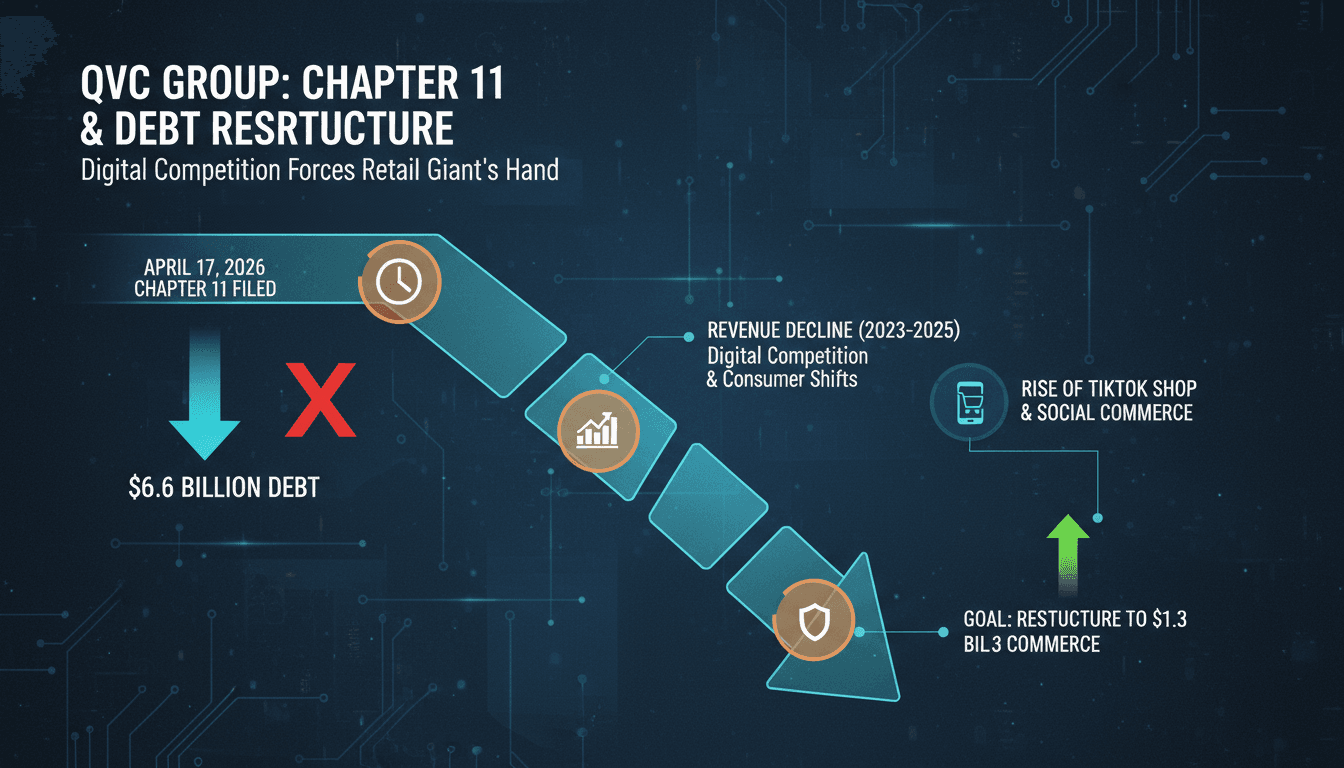
- QVC Group filed for voluntary Chapter 11 bankruptcy on April 17, 2026, to restructure its $6.6 billion debt.
- The company aims to reduce its debt to $1.3 billion while continuing operations across all platforms.
- Shares of QVC Group dropped over 65% in pre-market trading following the announcement, reflecting investor concerns.
The context you actually need
- QVC pioneered live television shopping in 1986, but has struggled with revenue declines due to internet disruption and cord-cutting.
- The company merged with HSN in 2017 under Liberty Media, consolidating operations but accumulating significant debt.
- Fiscal 2025 revenue fell by 9% year-over-year, prompting negotiations with creditors and a restructuring support agreement.
What's really happening
QVC Group's decision to file for Chapter 11 bankruptcy is a strategic move to address its unsustainable debt load, which ballooned to $6.6 billion by the end of 2025. This financial strain is largely attributed to a significant decline in revenue, which fell to $9.2 billion in fiscal 2025, marking a 9% decrease from the previous year. The company has faced mounting pressure from various fronts, including the rise of digital shopping platforms and changing consumer behaviors that favor social media shopping over traditional television shopping.
The restructuring process is designed to reduce the debt principal to $1.3 billion, allowing QVC to emerge with a more manageable financial structure. This prepackaged bankruptcy approach indicates that the company has already secured support from a majority of its lenders, which is crucial for a smoother transition through the bankruptcy process. The targeted emergence from bankruptcy within 90 days suggests that QVC is keen to stabilize its operations quickly and regain investor confidence.
Despite the bankruptcy filing, QVC's operations will continue uninterrupted, ensuring that employees, vendors, and customers are not immediately affected. This is a critical aspect of the restructuring, as maintaining operational continuity can help preserve customer loyalty and vendor relationships during a tumultuous period. However, the significant drop in share value reflects investor skepticism about the company's long-term viability in a rapidly evolving retail landscape.
The broader implications of QVC's bankruptcy extend beyond its immediate financial health. It underscores a significant shift in the retail industry, where traditional shopping models are increasingly challenged by digital-first competitors. Platforms like TikTok Shop are gaining traction, attracting consumers who prefer interactive and engaging shopping experiences. QVC's ability to adapt to these changes will be pivotal in determining its future success.
Who feels it first (and how)
- Employees: Job security may be uncertain during the restructuring process, although operations will continue.
- Vendors: Payment terms and product availability could be affected as the company restructures its financial obligations.
- Consumers: Shifts in pricing strategies and product offerings may occur as QVC seeks to stabilize its financial position.
- Investors: Significant losses in share value may lead to a reevaluation of investment strategies in retail stocks.
What to watch next
- Emergence timeline: Monitor QVC's progress in emerging from bankruptcy within the targeted 90 days, as this will indicate financial stability.
- Consumer response: Watch for changes in consumer purchasing behavior on QVC and HSN platforms, particularly in relation to social media shopping trends.
- Market competition: Keep an eye on how competitors, especially digital platforms, respond to QVC's restructuring and whether they capitalize on its challenges.
QVC Group filed for Chapter 11 bankruptcy to restructure its debt.
The company will emerge with a significantly reduced debt load, allowing for potential operational improvements.
The long-term impact on consumer behavior and vendor relationships remains uncertain as the retail landscape evolves.
Frequently Asked Questions
- Why it matters?
- This bankruptcy highlights the ongoing challenges traditional retail faces in adapting to digital competition and changing consumer preferences.
- What happened (in 30 seconds)?
- QVC Group filed for voluntary Chapter 11 bankruptcy on April 17, 2026, to restructure its $6.6 billion debt. The company aims to reduce its debt to $1.3 billion while continuing operations across all platforms. Shares of QVC Group dropped over 65% in pre-market trading following the announcement, reflecting investor concerns.
- What's really happening?
- QVC Group's decision to file for Chapter 11 bankruptcy is a strategic move to address its unsustainable debt load, which ballooned to $6.6 billion by the end of 2025. This financial strain is largely attributed to a significant decline in revenue, which fell to $9.2 billion in fiscal 2025, marking a 9% decrease from the previous year. The company has faced mounting pressure from various fronts, including the rise of digital shopping platforms and changing consumer behaviors that favor social med
- Who feels it first (and how)?
- Employees: Job security may be uncertain during the restructuring process, although operations will continue. Vendors: Payment terms and product availability could be affected as the company restructures its financial obligations. Consumers: Shifts in pricing strategies and product offerings may occur as QVC seeks to stabilize its financial position. Investors: Significant losses in share value may lead to a reevaluation of investment strategies in retail stocks.
- What to watch next?
- Emergence timeline: Monitor QVC's progress in emerging from bankruptcy within the targeted 90 days, as this will indicate financial stability. Consumer response: Watch for changes in consumer purchasing behavior on QVC and HSN platforms, particularly in relation to social media shopping trends. Market competition: Keep an eye on how competitors, especially digital platforms, respond to QVC's restructuring and whether they capitalize on its challenges.
Breaking entertainment industry news, casting, and box office.
"Deadline delivers fast, authoritative entertainment industry coverage."
— A47 Editor
QVC Group, Whose Networks Popularized Shopping On TV, Files For Chapter 11 Bankruptcy
QVC Group, known for pioneering live TV shopping in the 1980s, has filed for Chapter 11 bankruptcy in the U.S. Bankruptcy Court for Southern Texas. This voluntary filing is intended to facilitate a transition for the company amid financial challenges...
Markets desk coverage, trading insights, and investor updates.
"WSJ’s markets reporting provides in-depth analysis and context for investors."
— A47 Editor
QVC Files for Chapter 11 Bankruptcy, Plans to Restructure $6.6 Billion of Debt
QVC has filed for Chapter 11 bankruptcy in the U.S. Bankruptcy Court for the Southern District of Texas, aiming to restructure approximately $6.6 billion in debt. This prepackaged bankruptcy follows an agreement with key lenders and is part of a broa...
Global markets, investing, and macroeconomics from a premier financial newsroom.
"Bloomberg is respected for in-depth financial reporting and data-driven analysis."
— A47 Editor
QVC Shopping Channel Files Bankruptcy to Cut $5 Billion of Debt
QVC Group, the television shopping network, filed for bankruptcy on Thursday as part of a strategy to eliminate over $5 billion in debt. The company has faced challenges due to declining viewership and a significant shift towards online retail, which...