
Trump Warns Iran Against Tolls on Strait of Hormuz Shipping After Ceasefire
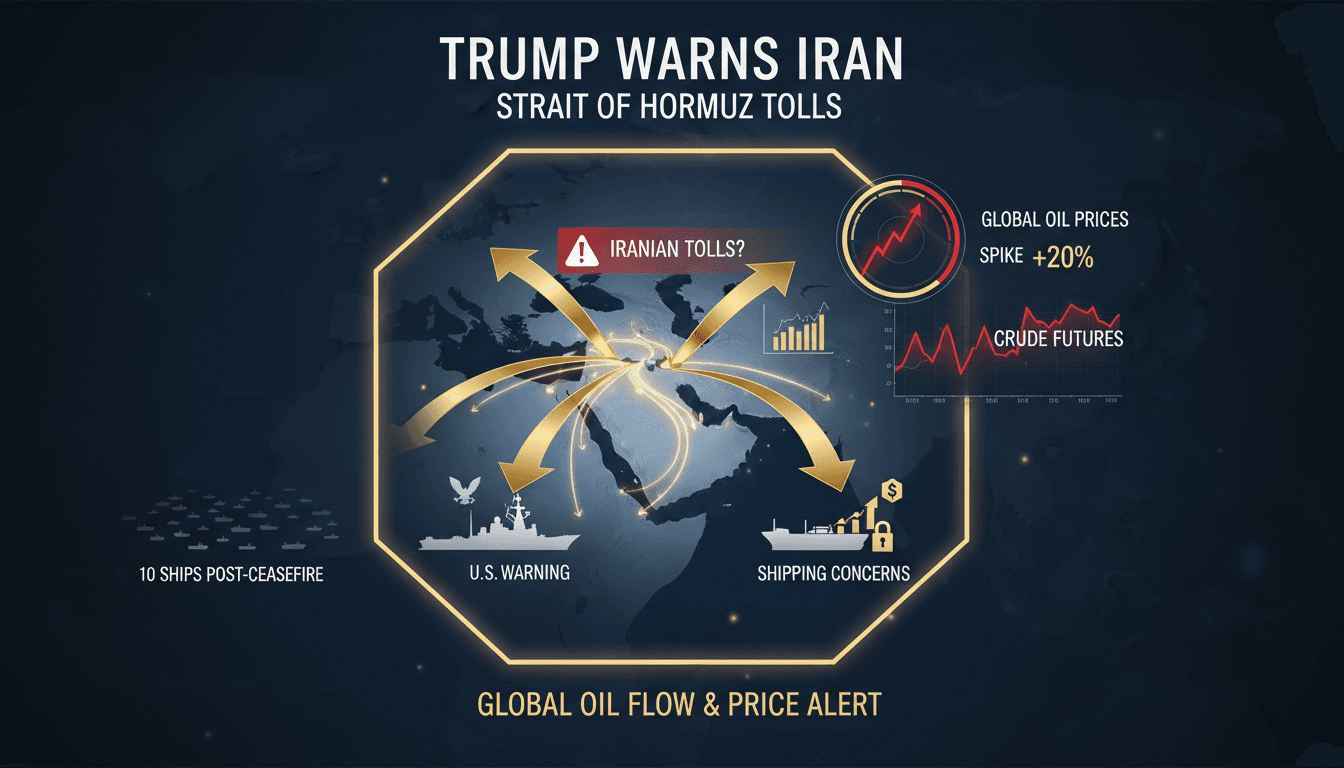
Here's what it means for you.
If you rely on global oil markets, the potential for increased shipping costs could impact fuel prices and economic stability.
Why it matters
The Strait of Hormuz is a critical chokepoint for global oil trade, and any disruption can lead to significant economic repercussions worldwide.
What happened (in 30 seconds)
- Trump issued a warning to Iran against imposing fees on oil tankers in the Strait of Hormuz following a ceasefire agreement.
- Only 10 ships have transited the strait since the ceasefire, highlighting limited navigation and potential risks to oil flows.
- International leaders are coordinating responses, with the UK and Bahrain rejecting Iranian tolls and advocating for open navigation.
The context you actually need
- The Strait of Hormuz accounts for approximately 20-30% of global seaborne oil trade, making it a vital maritime artery.
- Recent U.S.-Iran tensions have led to military confrontations and blockades, prompting a fragile ceasefire to allow limited shipping.
- Iran's reported tolls on oil tankers could exacerbate already strained energy markets and affect global oil prices.
What's really happening
The recent warning from U.S. President Donald Trump to Iran regarding potential tolls on oil tankers transiting the Strait of Hormuz underscores the fragile state of maritime trade in the region. Following a two-week ceasefire aimed at reducing hostilities, Iran's agreement to reopen the strait has been met with skepticism due to reports of tolls being imposed on vessels. This situation is particularly concerning given that only 10 ships have successfully navigated the strait since the ceasefire was implemented, indicating a significant reduction in shipping activity.
The Strait of Hormuz is not just a geographical point; it is a critical juncture for global oil supply, with 20-30% of the world's seaborne oil trade passing through it. The implications of any disruption are far-reaching, affecting not only oil prices but also broader economic stability. Trump's warning reflects a strategic move to maintain pressure on Iran and ensure the free flow of oil, which is essential for both U.S. interests and global markets.
Iran's potential imposition of fees could be seen as a violation of the ceasefire terms, and Trump's rhetoric aims to deter such actions. He has emphasized that oil will continue to flow regardless of Iran's actions, suggesting that the U.S. may take measures to ensure navigation remains unimpeded. This stance is supported by international leaders, including UK Prime Minister Keir Starmer and Bahrain's Prime Minister, who have both condemned the idea of tolls and stressed the importance of open navigation.
The backdrop of this diplomatic tension is a history of military confrontations between the U.S. and Iran, which have led to blockades and mining of the strait. The fragile ceasefire is a temporary measure, and the international community is closely monitoring the situation to prevent further escalation. The potential for increased shipping costs due to tolls could have a cascading effect on global oil prices, impacting consumers and businesses alike.
Who feels it first (and how)
- Oil importers: Increased shipping costs could lead to higher fuel prices, affecting businesses and consumers.
- Energy-dependent economies: Countries reliant on oil imports, such as those in the Gulf region, may face economic strain.
- Shipping companies: Potential tolls could alter logistics and operational costs, impacting profitability.
What to watch next
- Shipping traffic data: Monitoring the number of vessels transiting the Strait of Hormuz will indicate the effectiveness of the ceasefire and Iran's compliance.
- Oil price fluctuations: Changes in global oil prices will reflect market reactions to any disruptions or toll implementations.
- Diplomatic developments: Watch for further statements from U.S. and allied leaders regarding Iran's actions and potential sanctions or interventions.
The Strait of Hormuz is crucial for global oil trade, and any disruption can lead to economic consequences.
Increased scrutiny on Iran's actions regarding tolls and shipping fees will continue from international leaders.
The long-term stability of the ceasefire and its impact on shipping traffic remains uncertain.
Frequently Asked Questions
- Why it matters?
- The Strait of Hormuz is a critical chokepoint for global oil trade, and any disruption can lead to significant economic repercussions worldwide.
- What happened (in 30 seconds)?
- Trump issued a warning to Iran against imposing fees on oil tankers in the Strait of Hormuz following a ceasefire agreement. Only 10 ships have transited the strait since the ceasefire, highlighting limited navigation and potential risks to oil flows. International leaders are coordinating responses, with the UK and Bahrain rejecting Iranian tolls and advocating for open navigation.
- What's really happening?
- The recent warning from U.S. President Donald Trump to Iran regarding potential tolls on oil tankers transiting the Strait of Hormuz underscores the fragile state of maritime trade in the region. Following a two-week ceasefire aimed at reducing hostilities, Iran's agreement to reopen the strait has been met with skepticism due to reports of tolls being imposed on vessels. This situation is particularly concerning given that only 10 ships have successfully navigated the strait since the ceasefire
- Who feels it first (and how)?
- Oil importers: Increased shipping costs could lead to higher fuel prices, affecting businesses and consumers. Energy-dependent economies: Countries reliant on oil imports, such as those in the Gulf region, may face economic strain. Shipping companies: Potential tolls could alter logistics and operational costs, impacting profitability.
- What to watch next?
- Shipping traffic data: Monitoring the number of vessels transiting the Strait of Hormuz will indicate the effectiveness of the ceasefire and Iran's compliance. Oil price fluctuations: Changes in global oil prices will reflect market reactions to any disruptions or toll implementations. Diplomatic developments: Watch for further statements from U.S. and allied leaders regarding Iran's actions and potential sanctions or interventions.
Pan-Arab political news and analysis.
"Al-Quds Al-Arabi is a London-based Arabic newspaper known for political coverage."
— A47 Editor
ترامب يحذّر إيران من فرض رسوم على الشحن عبر مضيق هرمز
On Thursday, U.S. President Donald Trump warned Iran against imposing fees on shipping vessels passing through the Strait of Hormuz, following Tehran's agreement to reopen this vital passage as part of a two-week ceasefire. Trump expressed concerns o...
Pan-Arab political news and analysis.
"Al-Quds Al-Arabi is a London-based Arabic newspaper known for political coverage."
— A47 Editor
ترامب يحذر إيران من فرض رسوم على عبور السفن لمضيق هرمز
On Thursday, U.S. President Donald Trump warned Iran against imposing fees on oil tankers passing through the Strait of Hormuz, stating that it would be better for them not to do so and urging them to stop immediately if they were considering it. Thi...
Arabic-language digital news outlet covering UAE, regional, and international developments with broad general-news coverage.
"Al Ain News coverage typically blends UAE-focused reporting with wider Arab regional and international news."
— A47 Editor
ترامب يحذّر إيران من فرض رسوم على الشحن عبر مضيق هرمز
On Thursday, U.S. President Donald Trump issued a warning to Iran regarding the potential imposition of tariffs on shipping through the Strait of Hormuz. This statement highlights ongoing tensions between the United States and Iran, particularly conc...