
Saudi Aramco Raises Arab Light Crude Price Premium to Record High Amid Middle East Tensions
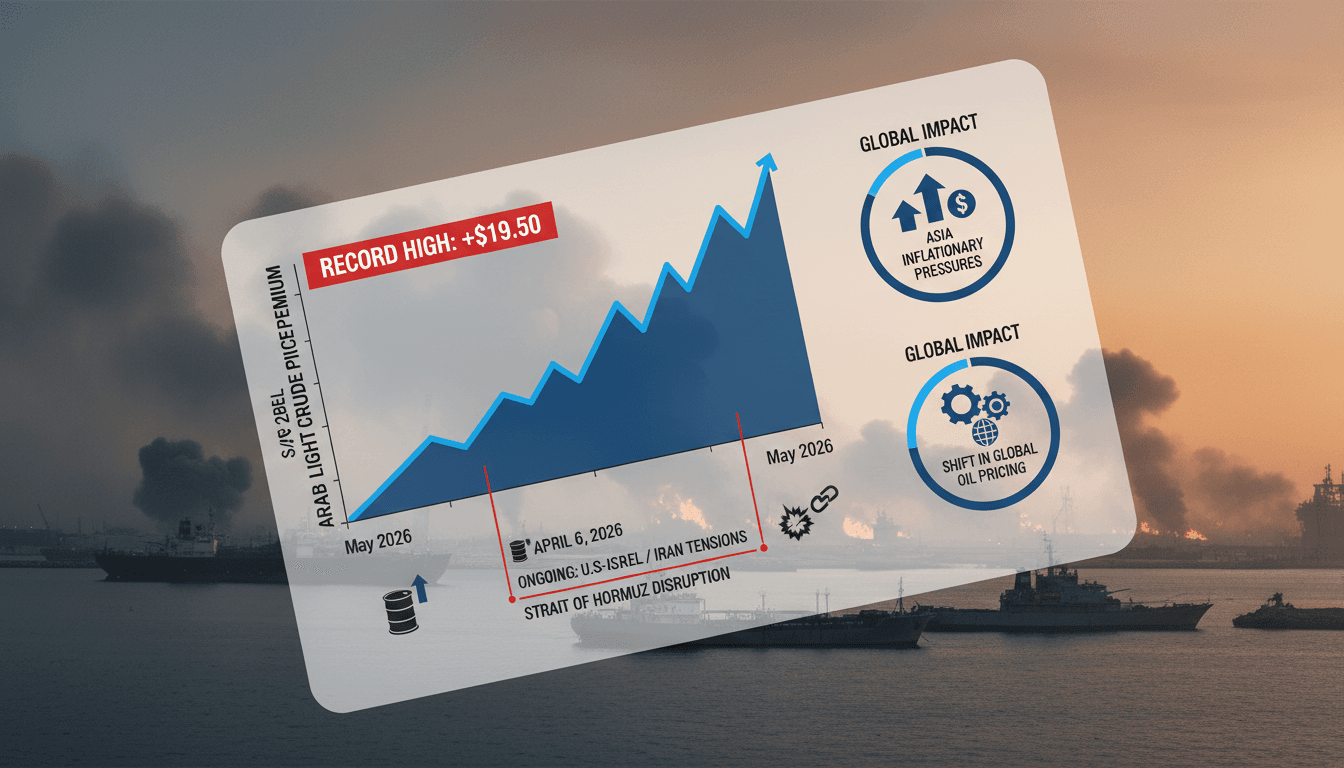
Here's what it means for you.
Rising crude prices could lead to increased costs across various sectors, impacting your expenses directly.
Why it matters
This price adjustment highlights the fragility of global oil supply chains amid geopolitical tensions, affecting energy markets worldwide.
What happened (in 30 seconds)
- Saudi Aramco raised the official selling price premium for Arab Light crude to Asia to a record $19.50 per barrel for May 2026.
- Supply constraints from the ongoing U.S.-Israel conflict with Iran have severely restricted navigation through the Strait of Hormuz, a critical oil transit route.
- Asian refiners are now negotiating with Aramco to manage the impact of these soaring prices on their operations.
The context you actually need
- Geopolitical tensions: The U.S.-Israel military operations against Iran, which began in late February 2026, have led to significant disruptions in oil supply, particularly through the Strait of Hormuz.
- Market dynamics: The price of Dubai crude surged to approximately $170 per barrel in March 2026, with cash premiums exceeding $38.30 over swaps, indicating heightened demand and limited supply.
- OPEC+ decisions: As Saudi Arabia adjusts its pricing strategy, OPEC+ has approved a quota hike of 206,000 barrels per day for May, although this is constrained by the ongoing conflict.
What's really happening
The recent price hike by Saudi Aramco reflects a complex interplay of geopolitical events and market dynamics. The U.S.-Israel military operations against Iran have led to significant restrictions in the Strait of Hormuz, a vital chokepoint for global oil transport. This disruption has resulted in the largest oil supply shock in history, with Gulf exports sharply declining. As a response, Saudi Arabia has maximized its East-West pipeline capacity to Yanbu, which can handle up to 5 million barrels per day, prioritizing lighter crude grades while curtailing heavier ones.
The implications of these changes are profound. The record-high official selling price (OSP) premium of $19.50 per barrel for Arab Light crude is a staggering $17 increase from the previous month’s $2.50 premium. This adjustment not only reflects the immediate supply constraints but also signals a long-term shift in how Middle Eastern crude is priced on the global market. With Brent crude prices rising over 50% and physical premiums for oil reaching between $150 and $166 per barrel, the disparity between physical and paper markets is becoming increasingly pronounced.
Saudi Arabia's strategy appears to be twofold: maximizing revenue from higher prices while navigating the complexities of reduced export volumes. Despite a 33% drop in exports to 4.8 million barrels per day, Saudi revenues have surged by 29%, underscoring the effectiveness of this pricing strategy in the current environment. However, this situation places significant pressure on Asian refiners, who are now urgently negotiating with Aramco to manage their operational costs amid soaring fuel prices.
The broader market reaction has been one of concern, with analysts warning of potential inflationary pressures in Asia as fuel prices spike. The costs of shipping have also escalated, with Very Large Crude Carrier (VLCC) charters reaching daily rates of $200,000 to $400,000. This situation creates a ripple effect that could strain consumers and businesses alike, particularly in regions heavily reliant on imported oil.
Who feels it first (and how)
- Asian refiners: Facing increased costs and potential volume cuts, they must negotiate urgently with Aramco to manage their operations.
- Consumers: Individuals in Asia may experience higher gasoline prices, impacting transportation budgets and overall cost of living.
- Shipping companies: Increased freight costs due to rerouted oil shipments will affect profitability and operational strategies.
What to watch next
- Refinery negotiations: Watch for updates on how Asian refiners manage their contracts with Aramco, as this will indicate the market's adaptability to high prices.
- Global inflation rates: Keep an eye on inflation indicators in Asia, as rising fuel costs could lead to broader economic impacts.
- OPEC+ production decisions: Future announcements regarding OPEC+ quotas will be crucial in understanding how the market will respond to ongoing geopolitical tensions.
Saudi Aramco's OSP for Arab Light crude is now set at a record $19.50 per barrel for May 2026.
Asian refiners will face increased operational costs, potentially leading to higher consumer prices.
The long-term impact of these price adjustments on global oil supply chains and economic stability remains uncertain.
Frequently Asked Questions
- Why it matters?
- This price adjustment highlights the fragility of global oil supply chains amid geopolitical tensions, affecting energy markets worldwide.
- What happened (in 30 seconds)?
- Saudi Aramco raised the official selling price premium for Arab Light crude to Asia to a record $19.50 per barrel for May 2026. Supply constraints from the ongoing U.S.-Israel conflict with Iran have severely restricted navigation through the Strait of Hormuz, a critical oil transit route. Asian refiners are now negotiating with Aramco to manage the impact of these soaring prices on their operations.
- What's really happening?
- The recent price hike by Saudi Aramco reflects a complex interplay of geopolitical events and market dynamics. The U.S.-Israel military operations against Iran have led to significant restrictions in the Strait of Hormuz, a vital chokepoint for global oil transport. This disruption has resulted in the largest oil supply shock in history, with Gulf exports sharply declining. As a response, Saudi Arabia has maximized its East-West pipeline capacity to Yanbu, which can handle up to 5 million barrel
- Who feels it first (and how)?
- Asian refiners: Facing increased costs and potential volume cuts, they must negotiate urgently with Aramco to manage their operations. Consumers: Individuals in Asia may experience higher gasoline prices, impacting transportation budgets and overall cost of living. Shipping companies: Increased freight costs due to rerouted oil shipments will affect profitability and operational strategies.
- What to watch next?
- Refinery negotiations: Watch for updates on how Asian refiners manage their contracts with Aramco, as this will indicate the market's adaptability to high prices. Global inflation rates: Keep an eye on inflation indicators in Asia, as rising fuel costs could lead to broader economic impacts. OPEC+ production decisions: Future announcements regarding OPEC+ quotas will be crucial in understanding how the market will respond to ongoing geopolitical tensions.
Arabic-language UAE newspaper coverage focused on domestic affairs, public institutions, business, society, and regional developments.
"Al Khaleej coverage generally reflects a mainstream UAE editorial lens with strong attention to public affairs, institutions, and regional developments."
— A47 Editor
السعودية ترفع علاوة البيع للخام العربي الخفيف إلى آسيا لمستوى غير مسبوق
Saudi Arabia has set the official selling price for Arab Light crude oil to Asia at an unprecedented premium for May 2026. This decision marks a significant adjustment in pricing strategy aimed at the Asian market.
Sports reporting with a focus on Saudi and regional competitions.
"Okaz sports coverage is broad and audience-friendly, with strong attention to Saudi teams and leagues."
— A47 Editor
أرامكو ترفع أسعار خامها الرئيسي لأسواق آسيا إلى مستوى قياسي
Saudi Aramco has raised the price of its main crude oil, Arab Light, for Asian markets to a record level, setting a premium of $19.5 per barrel above the benchmark for May shipments, an increase of $17 from April. This decision comes amid significant...
Arabic-language coverage of international news and geopolitics.
"RT Arabic is a Russian state-funded outlet often criticized for promoting Kremlin-aligned narratives."
— A47 Editor
السعودية ترفع سعر نفطها لآسيا
Saudi Arabia has set the official selling price for its Arab Light crude oil destined for Asia at a premium of $19.50 per barrel above the average prices of Oman and Dubai crude for the upcoming month of May.