
U.S. F-15E Strike Eagle Shot Down in Iran During Ongoing Conflict
Here's what it means for you.
As tensions escalate in the Middle East, global markets and air travel could face significant disruptions.
Why it matters
The U.S.-Iran conflict is reshaping geopolitical dynamics, affecting energy prices and international security.
What happened (in 30 seconds)
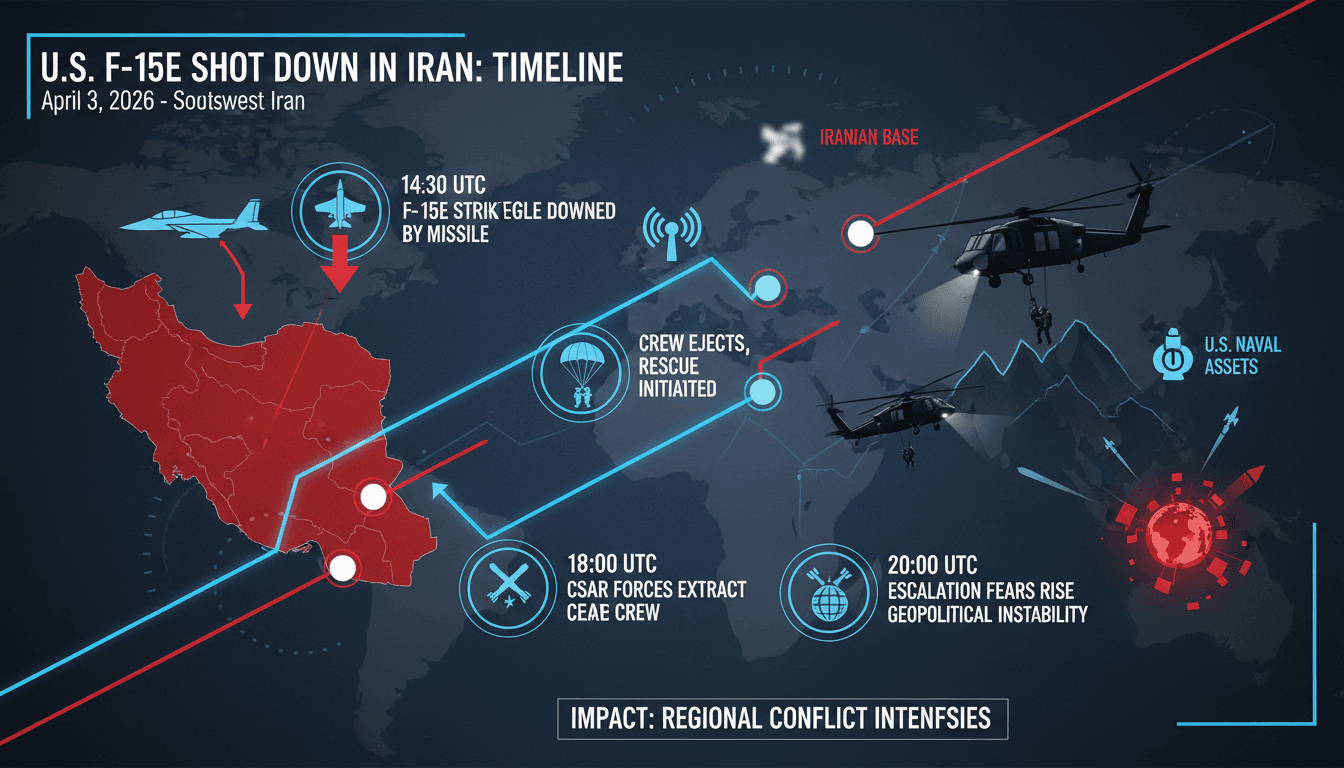
- On April 3, 2026, a U.S. Air Force F-15E Strike Eagle was shot down over southwestern Iran during ongoing military operations.
- The pilot was rescued quickly, while the weapons systems officer evaded capture for over 24 hours before a complex extraction mission.
- President Trump confirmed the successful rescue on April 6, highlighting U.S. military capabilities amid rising tensions.
The context you actually need
- The U.S.-Iran war began over a month prior, fueled by escalating strikes on Iranian targets by U.S. and Israeli forces.
- Iran's Revolutionary Guard Corps actively sought the capture of the downed crew, offering bounties and escalating the urgency of U.S. rescue operations.
- Global oil prices surged due to fears of conflict in the Strait of Hormuz, impacting air travel costs and routes.
What's really happening
The shootdown of the F-15E Strike Eagle on April 3, 2026, marked a critical moment in the ongoing U.S.-Iran war, which had intensified due to a series of military actions and retaliatory strikes. The F-15E, part of the 494th Fighter Squadron stationed at RAF Lakenheath, England, was engaged in operations aimed at establishing air superiority when it was targeted by an Iranian shoulder-fired missile. This incident not only underscored the operational risks faced by U.S. forces in the region but also highlighted the evolving capabilities of Iranian military technology.
Following the shootdown, the two crew members ejected safely, but their fates diverged dramatically. The pilot was quickly located and rescued, while the weapons systems officer, a colonel, faced a harrowing 24-hour ordeal evading capture in hostile territory. His successful evasion involved navigating treacherous terrain and signaling for help, showcasing the resilience and training of U.S. military personnel.
The U.S. response was swift and multifaceted. Special operations forces, including Navy SEAL Team 6, were deployed in a complex extraction mission that involved deception tactics orchestrated by the CIA. These tactics misled Iranian forces into believing a ground convoy extraction was underway, allowing U.S. forces to operate with a degree of stealth. The extraction itself was fraught with danger, as U.S. aircraft provided air support while engaging in firefights with Iranian forces. The operation culminated in a tense extraction under the cover of darkness, demonstrating the high-stakes nature of military operations in the region.
The aftermath of the incident has significant implications. President Trump publicly hailed the operation as a testament to U.S. air dominance, while Iran claimed to have downed additional U.S. aircraft during the rescue attempt. This exchange of claims illustrates the escalating narrative battle between the two nations, with both sides seeking to assert their military capabilities and resolve. The incident has also led to a spike in global oil prices, as fears of further conflict in the Strait of Hormuz—an essential oil shipping route—have prompted market reactions, including increased airfares and disrupted flights.
Who feels it first (and how)
- Airlines: Facing increased operational costs due to rising fuel prices and potential route disruptions.
- Travelers: Experiencing higher airfares and possible flight cancellations as airlines adjust to the geopolitical climate.
- Energy Sector: Companies are bracing for volatility in oil prices, impacting profitability and operational planning.
What to watch next
- Oil Price Fluctuations: Continued instability in the region could lead to further spikes in oil prices, affecting global markets and consumer costs.
- Military Engagements: Monitor U.S. and Iranian military activities for signs of escalation or de-escalation, which will influence geopolitical stability.
- Diplomatic Efforts: Watch for developments in ceasefire talks, particularly in Islamabad, as they could signal shifts in the conflict's trajectory.
Both crew members of the F-15E were rescued and are medically stable.
Oil prices will continue to fluctuate due to ongoing tensions in the region.
The long-term impact of this incident on U.S.-Iran relations and future military engagements.
Frequently Asked Questions
- Why it matters?
- The U.S.-Iran conflict is reshaping geopolitical dynamics, affecting energy prices and international security.
- What happened (in 30 seconds)?
- On April 3, 2026, a U.S. Air Force F-15E Strike Eagle was shot down over southwestern Iran during ongoing military operations. The pilot was rescued quickly, while the weapons systems officer evaded capture for over 24 hours before a complex extraction mission. President Trump confirmed the successful rescue on April 6, highlighting U.S. military capabilities amid rising tensions.
- What's really happening?
- The shootdown of the F-15E Strike Eagle on April 3, 2026, marked a critical moment in the ongoing U.S.-Iran war, which had intensified due to a series of military actions and retaliatory strikes. The F-15E, part of the 494th Fighter Squadron stationed at RAF Lakenheath, England, was engaged in operations aimed at establishing air superiority when it was targeted by an Iranian shoulder-fired missile. This incident not only underscored the operational risks faced by U.S. forces in the region but a
- Who feels it first (and how)?
- Airlines: Facing increased operational costs due to rising fuel prices and potential route disruptions. Travelers: Experiencing higher airfares and possible flight cancellations as airlines adjust to the geopolitical climate. Energy Sector: Companies are bracing for volatility in oil prices, impacting profitability and operational planning.
- What to watch next?
- Oil Price Fluctuations: Continued instability in the region could lead to further spikes in oil prices, affecting global markets and consumer costs. Military Engagements: Monitor U.S. and Iranian military activities for signs of escalation or de-escalation, which will influence geopolitical stability. Diplomatic Efforts: Watch for developments in ceasefire talks, particularly in Islamabad, as they could signal shifts in the conflict's trajectory.
Arabic-language reporting on global and regional news.
"BBC Arabic is part of the BBC, generally regarded for editorial standards and broad international coverage."
— A47 Editor
تفاصيل عملية إنقاذ طاقم الطائرة التي أسقطت في إيران
U.S. President Donald Trump confirmed on social media that the U.S. military executed a daring rescue operation for the crew of a downed aircraft in Iran, stating that the officer is now safe and in good health.
English-language reporting on Saudi politics, policy, and society.
"Saudi Gazette reflects mainstream Saudi institutional perspectives."
— A47 Editor
Trump: US rescues wounded F-15 crew member in daring Iran operation
US President Donald Trump announced the successful rescue of a seriously wounded F-15 crew member from deep within Iran, describing the operation as one of the most daring in US history. The mission followed a previous rescue of another pilot and inv...
Pan-Arab news coverage spanning politics, business, sports, and regional affairs.
"Asharq Al-Awsat reflects a broad Arab editorial perspective with strong attention to regional geopolitics."
— A47 Editor
عملية أميركية معقدة في جبال زاغروس تنتهي بإنقاذ طاقم «إف-15»
On Sunday, U.S. President Donald Trump announced the successful rescue of the second officer from the crew of an F-15 fighter jet that was shot down in the Zagros Mountains of southwestern Iran during a complex operation. This incident highlights the...