
PwC Faces Scrutiny Over AI-Generated Reports with Fabricated Sources
What happened
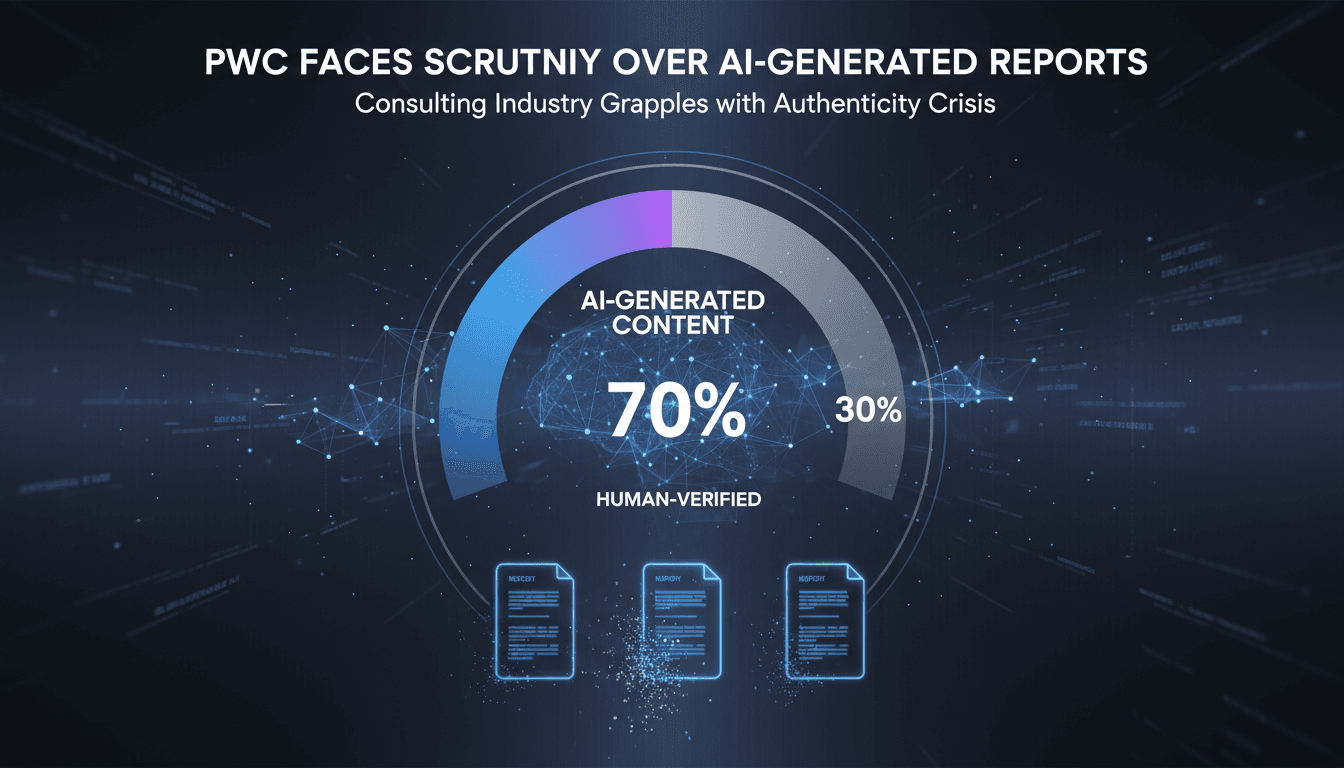
PwC's Middle East reports have been found to contain substantial amounts of AI-generated content, including fabricated references. These reports, which aimed to provide insights on topics such as AI, public services, and electric vehicles, were flagged for inaccuracies. Notably, GPTZero identified one report as being 84% AI-generated, highlighting the severity of the issue. This incident follows a troubling trend, as other major consulting firms like EY and KPMG have faced similar scrutiny for their reliance on AI-generated content.
The Context
The emergence of AI-generated inaccuracies in consulting reports underscores a critical challenge within the industry. As firms like PwC increasingly depend on AI for insights, the risk of misinformation and lack of accountability becomes more pronounced. The reports in question were part of PwC's 'thought leadership' on emerging technologies, intended to position the firm as a leader in innovative research. The timing of these findings, with discussions and confirmations surfacing shortly after the initial reports, suggests a growing urgency to address the implications of AI in consulting.
Takeaway
The consulting industry must confront the reliability of AI-generated content to maintain its credibility and trustworthiness. As scrutiny intensifies, firms will likely need to enhance their verification processes to ensure the integrity of their outputs. Future regulatory responses to AI-generated content in consulting may emerge, prompting further investigations into the practices of other firms. The ongoing reliance on AI in research necessitates a proactive approach to restore confidence among clients and stakeholders.
Tech news, hardware, and AI tools coverage.
"PC/tech site increasingly covering AI hardware and apps."
— A47 Editor
PwC just got caught trying to pass AI slop as authentic research
PwC has faced criticism after it was revealed that its recent reports on AI and electric vehicles contained AI-generated content with inaccuracies, including fabricated sources. This incident was confirmed by multiple reputable publications, includin...
Opinionated AI coverage for general audiences.
"TNW’s AI vertical covering tools, ethics, and trends."
— A47 Editor
PwC sells advice on using AI responsibly. Its own reports were written by a careless one.
PwC has come under scrutiny after the Financial Times reported that four of its Middle East thought leadership reports on AI and electric vehicles contained fake footnotes and inaccuracies, raising concerns about the reliability of its advisory servi...
Daily AI news: models, tools, and policy.
"Independent outlet tracking the fast pace of AI."
— A47 Editor
PwC has allegedly published AI-generated reports containing false or fabricated sources
PwC has come under scrutiny after GPTZero identified AI-generated reports from its Middle East division that contained false or fabricated sources, including a governance report that was 84% AI-generated and promoted a PwC product with unverified cus...
Curated tech headlines including AI stories.
"Influential aggregator surfacing the day’s top tech/AI links."
— A47 Editor
GPTZero finds AI hallucinations in four PwC Middle East reports; GPTZero's earlier investigations led EY and KPMG to retract reports with similar issues (Stephen Foley/Financial Times)
GPTZero has identified AI hallucinations in four reports from PwC Middle East, echoing previous findings that led EY and KPMG to retract their own reports due to similar issues. This raises concerns about the reliability of AI-generated content in pr...