
Politics
Latest politics news covering policy, elections, diplomacy, power shifts, and government decisions from A47 News.
67 stories - Updated live

Saudi Arabia Condemns Drone Attacks on Oil Pipeline from Iraq
On September 10, 2026, drones launched from Iraqi territory struck Saudi Arabia's East-West oil pipeline, resulting in injuries and damage. The immediate response from Saudi Arabia was a condemnation of the attacks, deferring retaliation at the request of Iraqi Prime Minister Ali Al-Zaidi to allow for an investigation. This incident underscores the ongoing regional tensions and may lead to increased security measures around critical energy infrastructure in the future.
Trump Asserts U.S. AI Dominance Amid Calls for Regulatory Caution
On September 13, 2026, U.S. President Donald Trump emphasized the United States' leadership in artificial intelligence over China while minimizing the need for immediate regulatory measures. This statement follows industry leaders advocating for a pause in AI development to enhance safety protocols, coinciding with ongoing U.S.-China tensions in technology. The long-term implication suggests a potential escalation in the AI arms race, with the U.S. likely to prioritize competitive advantage over regulatory frameworks.
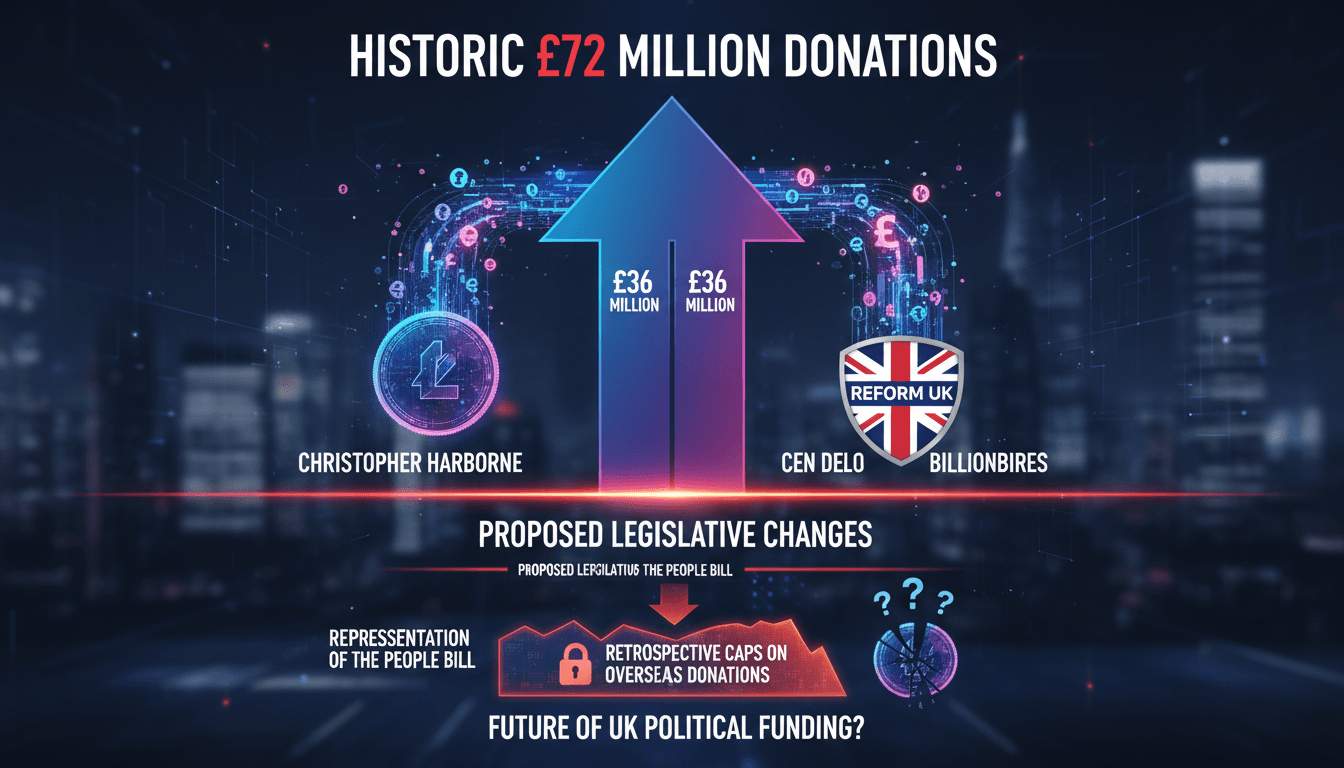
Reform UK Receives Historic £72 Million Donations from Crypto Billionaires Amid Legislative Changes
Reform UK has accepted two matching donations of £36 million each from cryptocurrency billionaires Christopher Harborne and Ben Delo, totaling £72 million, marking the largest political donations in UK history. This unprecedented funding comes as the UK government is proposing amendments to the Representation of the People Bill that could impose retrospective caps on overseas donations, potentially affecting the legality of these contributions. The situation raises significant questions about the future of political funding in the UK, particularly regarding cryptocurrency and foreign influence in politics.
Trump Blames Ukrainian Strikes for Global Diesel Shortage
On September 13, 2026, U.S. President Donald Trump publicly blamed Ukrainian strikes on Russian oil refineries for a global diesel shortage. This statement comes amid record U.S. diesel prices exceeding $6 per gallon and ongoing energy crises exacerbated by the U.S.-Israeli war with Iran. The long-term implication may involve increased geopolitical tensions and potential shifts in energy policy as nations grapple with rising fuel costs and supply constraints.
Senator McCormick Calls for Senate Vote on CLARITY Act to Regulate Digital Assets
On September 13, 2026, U.S. Senator Dave McCormick urged the Senate to hold a procedural vote on the CLARITY Act scheduled for September 15. This push comes as the bill, which aims to clarify regulatory authority between the SEC and CFTC for digital assets, has gained bipartisan support and is poised for full Senate consideration. If passed, the legislation could establish a regulatory framework that enhances consumer protections and fosters innovation in the digital asset space.

Latest Stories
Trump Dismisses Chinese Support Claims for Iranian Attack on US Troops
On September 13, 2026, President Donald Trump downplayed reports linking Chinese satellite imagery to an Iranian missile strike that killed three U.S. troops in Jordan. This dismissal comes as the U.S. administration seeks to manage tensions with China ahead of a scheduled summit with President Xi Jinping on September 24. The long-term implication may involve continued diplomatic maneuvering to mitigate U.S.-China relations amidst escalating conflicts in the Middle East.
Saudi Civil Defense Lifts Early Warnings in Southern Cities Following Houthi Threats
On September 14, 2026, the Saudi Civil Defense lifted early warnings for potential danger in Najran, Khamis Mushait, Jazan, and Abha. This decision came after a period of heightened Houthi missile and drone threats, which had escalated following their declaration of a naval blockade against Riyadh in July 2026. The long-term implication suggests ongoing vigilance and preparedness in Saudi Arabia as Houthi attacks continue to pose a risk to national security.
Abu Dhabi Court Orders Payment of 45,000 Dirhams in Loan Facilitation Dispute
The Abu Dhabi Family and Civil and Administrative Claims Court has ruled that a defendant must pay 45,000 dirhams as the remaining balance for a bank loan facilitation agreement. This ruling follows a civil lawsuit where the plaintiff claimed an oral agreement was made via WhatsApp for assistance in securing a loan, which the defendant partially acknowledged but contested. The long-term implication is a potential increase in civil litigation regarding informal financial agreements in the UAE, emphasizing the need for formal contracts to avoid disputes.
UK Foreign Secretary Supports Saudi Arabia's Right to Self-Defense Amid Houthi Attacks
On September 12, 2026, UK Foreign Secretary Ed Miliband affirmed Saudi Arabia's right to defend itself against Houthi militia attacks during a call with Saudi Foreign Minister Prince Faisal bin Farhan. This diplomatic engagement comes in response to recent escalations, including drone strikes on Saudi infrastructure, which threaten regional stability and international shipping lanes. The long-term implication is a potential increase in UK-Saudi cooperation on maritime security and a reinforced stance against Houthi aggression in the region.