
PwC Faces Scrutiny Over AI-Generated Reports with Fabricated Sources
Here's what it means for you.
The recent findings regarding PwC's reports highlight a growing concern about the reliability of AI-generated content in the consulting industry. As firms increasingly leverage AI for report generation, the potential for misinformation could undermine client trust and industry standards. This incident may prompt regulatory bodies to impose stricter guidelines on the use of AI in professional documentation.
What happened
PwC has come under scrutiny for publishing four reports in the Middle East that contained AI-generated content with fabricated sources. These reports included false footnotes and unverified claims, raising significant concerns about the integrity of consulting work. The immediate trigger for this scrutiny was the identification of these inaccuracies by GPTZero, a tool designed to detect AI-generated content.
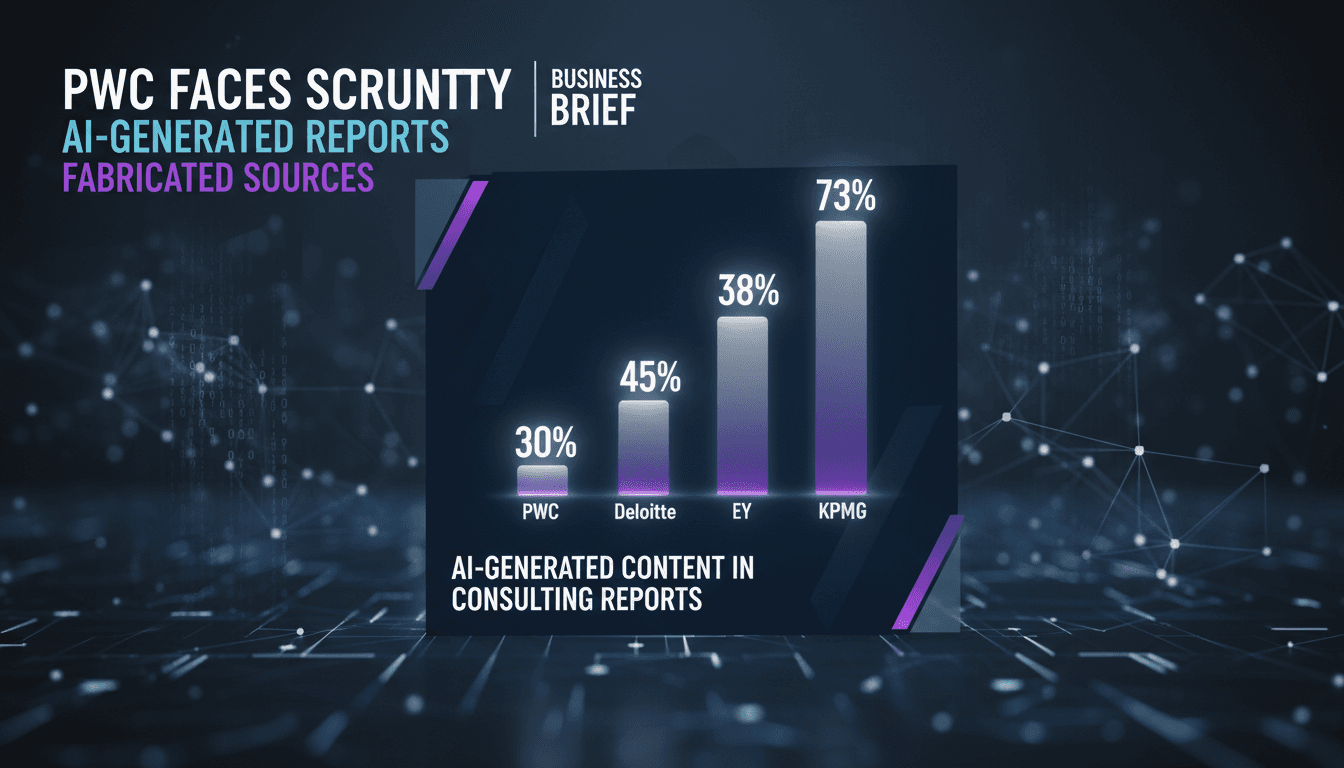
One of the reports was determined to be 84% AI-generated, underscoring the extent of reliance on AI in producing these documents. This incident follows similar issues faced by other major consulting firms, which have also been implicated in problems related to AI-generated inaccuracies.
The Context
PwC is one of the Big Four consulting firms, alongside KPMG, Deloitte, and Ernst & Young, all of which have faced scrutiny for similar issues. Previous investigations by GPTZero led to retractions of reports from EY and KPMG for comparable problems, indicating a broader trend within the industry. The timing of these revelations is critical, as firms are increasingly integrating AI into their operations.
The reliance on AI for content generation raises questions about the verification processes in place within these firms. As the consulting industry evolves, the integrity of reports produced using AI technology must be scrutinized to maintain client trust and uphold industry standards.
Takeaway
The incident with PwC underscores the urgent need for greater scrutiny and verification of AI-generated content in professional reports. As the reliance on AI in consulting continues to grow, firms will need to implement stricter quality controls and verification processes to maintain credibility. Potential regulatory responses to AI-generated content in consulting reports may emerge as a direct result of this scrutiny.
Further investigations into the practices of other Big Four firms regarding AI usage are likely to follow. The consulting industry must adapt to these challenges to avoid similar pitfalls in the future.
Opinionated AI coverage for general audiences.
"TNW’s AI vertical covering tools, ethics, and trends."
— A47 Editor
PwC sells advice on using AI responsibly. Its own reports were written by a careless one.
PwC has come under scrutiny after the Financial Times reported that four of its Middle East thought leadership reports on AI and electric vehicles contained fake footnotes and inaccuracies, raising concerns about the reliability of its advisory servi...
Daily AI news: models, tools, and policy.
"Independent outlet tracking the fast pace of AI."
— A47 Editor
PwC has allegedly published AI-generated reports containing false or fabricated sources
PwC has come under scrutiny after GPTZero identified AI-generated reports from its Middle East division that contained false or fabricated sources, including a governance report that was 84% AI-generated and promoted a PwC product with unverified cus...
Curated tech headlines including AI stories.
"Influential aggregator surfacing the day’s top tech/AI links."
— A47 Editor
GPTZero finds AI hallucinations in four PwC Middle East reports; GPTZero's earlier investigations led EY and KPMG to retract reports with similar issues (Stephen Foley/Financial Times)
GPTZero has identified AI hallucinations in four reports from PwC Middle East, echoing previous findings that led EY and KPMG to retract their own reports due to similar issues. This raises concerns about the reliability of AI-generated content in pr...