
Datadog faces growth challenges as largest customer reduces usage
What happened
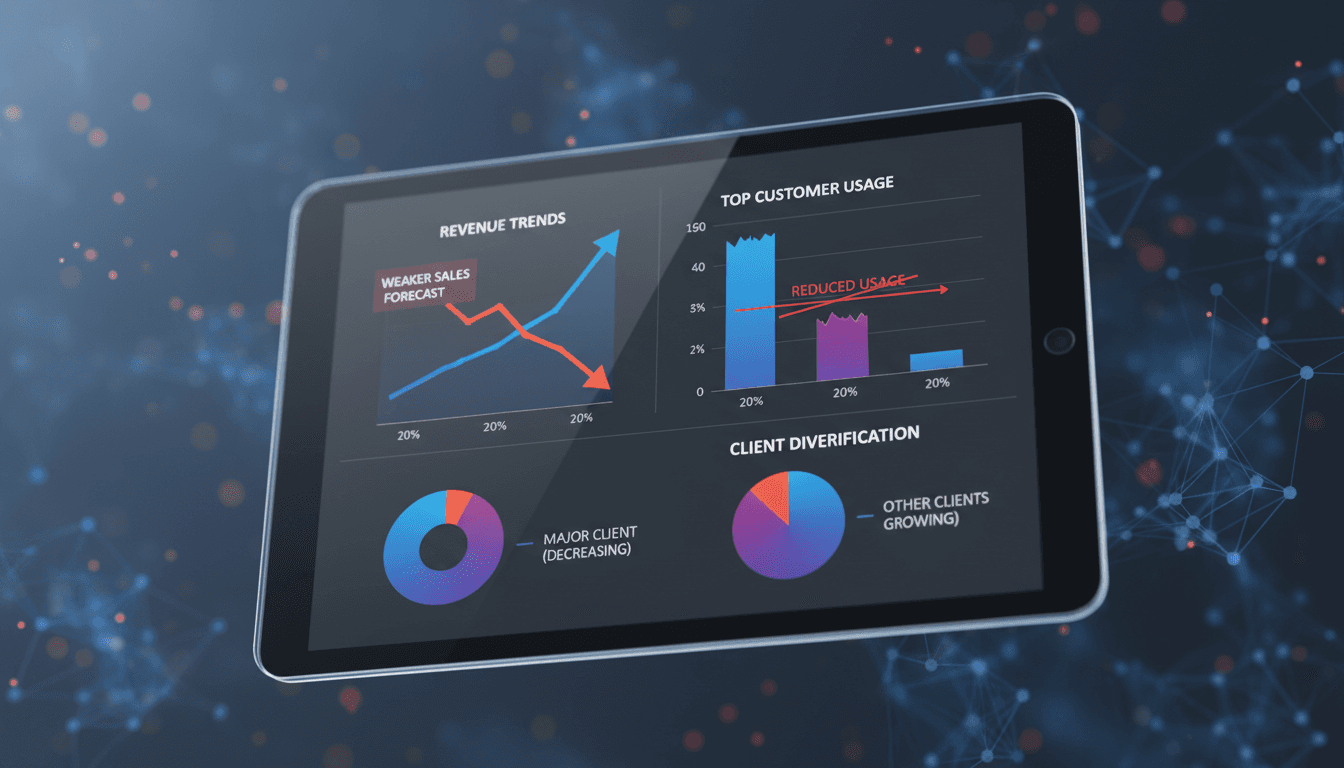
Datadog's largest customer, a prominent player in the AI sector, has renewed its contract but significantly reduced its usage. This shift has prompted the company to forecast weaker full-year sales, which has raised concerns among investors. Despite reporting a 36% revenue increase in Q2, the outlook provided by Datadog fell below Wall Street expectations, leading to a notable decline in its stock price.
The company's Q2 revenue reached $1.12 billion, reflecting strong growth year-over-year. However, the announcement of reduced usage and a lower sales outlook resulted in a stock price drop of over 15%. This situation illustrates the direct impact of customer spending fluctuations on Datadog's financial performance.
The Context
Datadog operates on a usage-based revenue model, making it particularly vulnerable to changes in customer usage patterns. The reliance on a single large customer for a significant portion of revenue poses risks, especially when that customer adjusts its spending in response to market conditions. The timing of this shift is critical, as it coincides with broader economic uncertainties that may affect technology spending.
The company's ability to adapt to these changes will be essential for its long-term growth. As Datadog faces these challenges, it must consider strategies to diversify its client base and stabilize its revenue streams. The current landscape emphasizes the need for resilience in the face of fluctuating customer demands.
Takeaway
Investors should closely monitor Datadog's performance as it navigates the implications of reduced usage from its largest customer. Future developments regarding customer usage patterns from other clients will be crucial in assessing the company's growth potential. Additionally, updates on Datadog's strategic initiatives to mitigate revenue exposure will provide insights into its ability to adapt to changing market dynamics.
As the company adjusts to these challenges, its focus on diversifying its client base will be vital for sustaining growth. The coming months will reveal how effectively Datadog can manage these risks and maintain investor confidence.
Stock market news, investing ideas, and trading analysis.
"TheStreet provides market news and retail-investor-focused analysis."
— A47 Editor
Datadog’s largest customer renews deal but cuts usage
Datadog's largest customer has renewed its contract but has simultaneously reduced its usage, raising concerns about the company's revenue stability under its usage-based model. This development highlights the vulnerability of Datadog's revenue strea...
Curated tech headlines including AI stories.
"Influential aggregator surfacing the day’s top tech/AI links."
— A47 Editor
Datadog drops 15%+ after forecasting weaker full-year sales due to reduced usage from its largest client, a leading AI company; Q2 revenue rises 36% to $1.12B (Katherine Hamilton/Wall Street Journal)
Datadog's shares fell by over 15% following the company's forecast of weaker full-year sales, primarily due to reduced usage from its largest client, a prominent AI company. Despite this setback, Datadog reported a 36% increase in Q2 revenue, reachin...
U.S. business news, corporate developments, and economy.
"The Wall Street Journal is respected for deep financial and economic reporting with a center-right editorial perspective."
— A47 Editor
Datadog Says Lower Usage From Major AI Customer Could Dent Growth
Datadog reported growth in the second quarter but indicated that reduced usage from a major AI customer could negatively impact its full-year sales outlook, which fell below Wall Street expectations.