
Unitree Robotics Shares Plummet 45% Following Shanghai STAR Market Debut
Here's what it means for you.
If you're tracking the robotics sector or investing in tech, this volatility signals the need for caution amid hype.
Why it matters
This dramatic valuation drop raises questions about the sustainability of tech IPOs in a market driven by retail enthusiasm.
What happened (in 30 seconds)
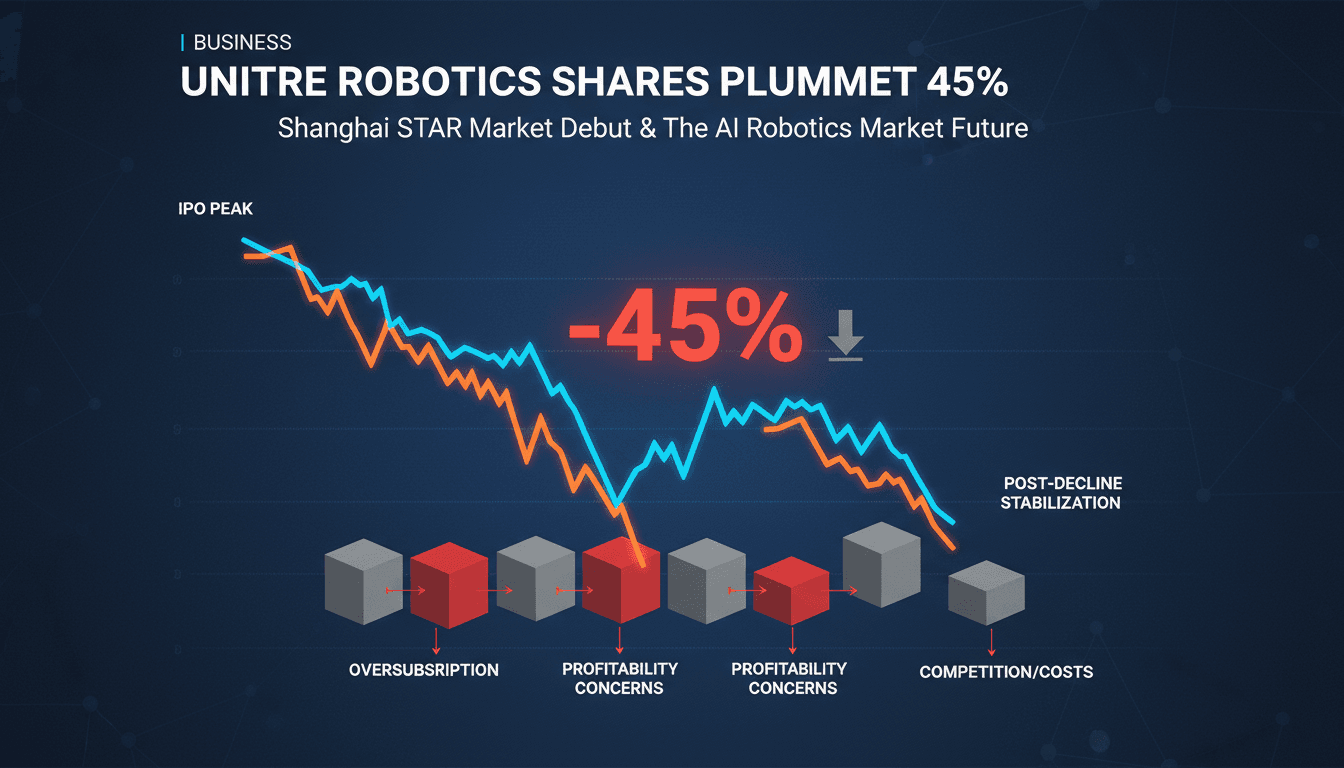
- Unitree Robotics shares fell 45% from their debut peak of 1,100 yuan to around 600 yuan within a week.
- The company briefly reached a $66 billion valuation after a 629% surge on its August 19, 2026, debut on the Shanghai STAR Market.
- Concerns over a potential bubble in the robotics sector emerged as profit weaknesses and oversubscription were revealed.
The context you actually need
- China's IPO landscape is volatile, with the STAR Market's no-price-limit rules contributing to extreme price fluctuations.
- Unitree's rapid growth was fueled by significant state and private backing, but profitability has been declining amid rising competition.
- Retail investors played a major role, with over 9.78 million accounts participating, leading to a frenzy that ultimately resulted in a selloff.
What's really happening
Unitree Robotics' IPO was initially celebrated as a triumph for China's ambitions in AI and robotics, reflecting a strategic push for technological self-sufficiency amid ongoing U.S.-China tensions. The company, founded in 2016, had positioned itself as a key player in the robotics market, attracting substantial investment from both state and private sectors, including major shareholder Meituan.
On August 6, 2026, Unitree priced its IPO at 150.80 yuan per share, raising 6.1 billion yuan. The debut on August 19 saw shares open at 1,100 yuan, a staggering 629% increase, which briefly elevated its market capitalization to $66 billion. However, this surge was short-lived. By August 25, shares had plummeted approximately 45%, erasing around $30 billion in market value and bringing the valuation down to about $36 billion.
The selloff was driven by a combination of factors, including extreme retail oversubscription—over 8,000 times the shares available—and subsequent profit weaknesses. Unitree's Q1 2026 adjusted net profit had already fallen 53% year-over-year to 40 million yuan, highlighting the company's struggles with rising R&D costs and intense price competition. Analysts have pointed out that the STAR Market's listing system, which lacks price limits, can amplify retail-driven frenzies, leading to unsustainable valuations detached from actual profitability.
This episode has sparked broader scrutiny of the IPO mechanisms in China, raising concerns that the enthusiasm for AI and robotics may have outpaced the commercial fundamentals necessary for long-term success. As other robotics firms prepare for listings, they may face increased caution from investors wary of the risks highlighted by Unitree's experience.
Who feels it first (and how)
- Retail investors: Many individual investors may face significant losses due to the volatility.
- Tech sector analysts: Professionals will need to reassess the viability of tech IPOs in the current market climate.
- Robotics companies: Other firms in the sector may experience heightened scrutiny and pressure to demonstrate profitability.
What to watch next
- Future IPOs in the robotics sector: Watch for how other companies approach their listings and whether they adopt more conservative pricing strategies.
- Unitree's financial performance: Monitor the company's quarterly earnings to see if it can stabilize and regain investor confidence.
- Regulatory changes: Keep an eye on potential reforms in China's IPO mechanisms that could impact future listings and valuations.
Unitree's shares have stabilized after the initial decline.
Other robotics firms may face increased scrutiny and cautious investor sentiment.
The long-term impact of this event on China's IPO landscape and the robotics sector remains to be seen.
Frequently Asked Questions
- Why it matters?
- This dramatic valuation drop raises questions about the sustainability of tech IPOs in a market driven by retail enthusiasm.
- What happened (in 30 seconds)?
- Unitree Robotics shares fell 45% from their debut peak of 1,100 yuan to around 600 yuan within a week. The company briefly reached a $66 billion valuation after a 629% surge on its August 19, 2026, debut on the Shanghai STAR Market. Concerns over a potential bubble in the robotics sector emerged as profit weaknesses and oversubscription were revealed.
- What's really happening?
- Unitree Robotics' IPO was initially celebrated as a triumph for China's ambitions in AI and robotics, reflecting a strategic push for technological self-sufficiency amid ongoing U.S.-China tensions. The company, founded in 2016, had positioned itself as a key player in the robotics market, attracting substantial investment from both state and private sectors, including major shareholder Meituan. On August 6, 2026, Unitree priced its IPO at 150.80 yuan per share, raising 6.1 billion yuan. The d
- Who feels it first (and how)?
- Retail investors: Many individual investors may face significant losses due to the volatility. Tech sector analysts: Professionals will need to reassess the viability of tech IPOs in the current market climate. Robotics companies: Other firms in the sector may experience heightened scrutiny and pressure to demonstrate profitability.
- What to watch next?
- Future IPOs in the robotics sector: Watch for how other companies approach their listings and whether they adopt more conservative pricing strategies. Unitree's financial performance: Monitor the company's quarterly earnings to see if it can stabilize and regain investor confidence. Regulatory changes: Keep an eye on potential reforms in China's IPO mechanisms that could impact future listings and valuations.
Curated tech headlines including AI stories.
"Influential aggregator surfacing the day’s top tech/AI links."
— A47 Editor
Unitree shares fell 45% after surging more than 5x in their August 19 Shanghai debut, cutting its valuation from $66B to $36B, raising robotics bubble concerns (Reuters)
Unitree Robotics, a prominent Chinese humanoid robot manufacturer, experienced a significant decline in its stock price, falling 45% after an initial surge of over 629% during its debut on the Shanghai stock exchange on August 19. This drop reduced t...
Market-moving headlines impacting equities, bonds, and related risk assets.
"Real-time catalysts and volatility drivers across indices and sectors."
— A47 Editor
China robot maker Unitree’s post-listing slump sparks bubble fears
Unitree Robotics, a Chinese humanoid robot manufacturer, has experienced a significant post-listing slump following its initial public offering (IPO), which raised approximately $900 million. This downturn has raised concerns about a potential market...
Business, investment, entrepreneurship, leadership, and innovation.
"Forbes is known for its coverage of business leaders, market trends, and entrepreneurial ventures with a pro-business editorial stance."
— A47 Editor
China’s Robot Boom Tests Investor Discipline
China's humanoid robot manufacturer, Unitree Robotics, has recently seen its initial public offering (IPO) valued at approximately $50 billion, raising significant questions about the company's revenue potential and the maturity of the humanoid robot...