
Novartis Phase 3 Trial for Pelacarsen Fails to Meet Cardiovascular Endpoint
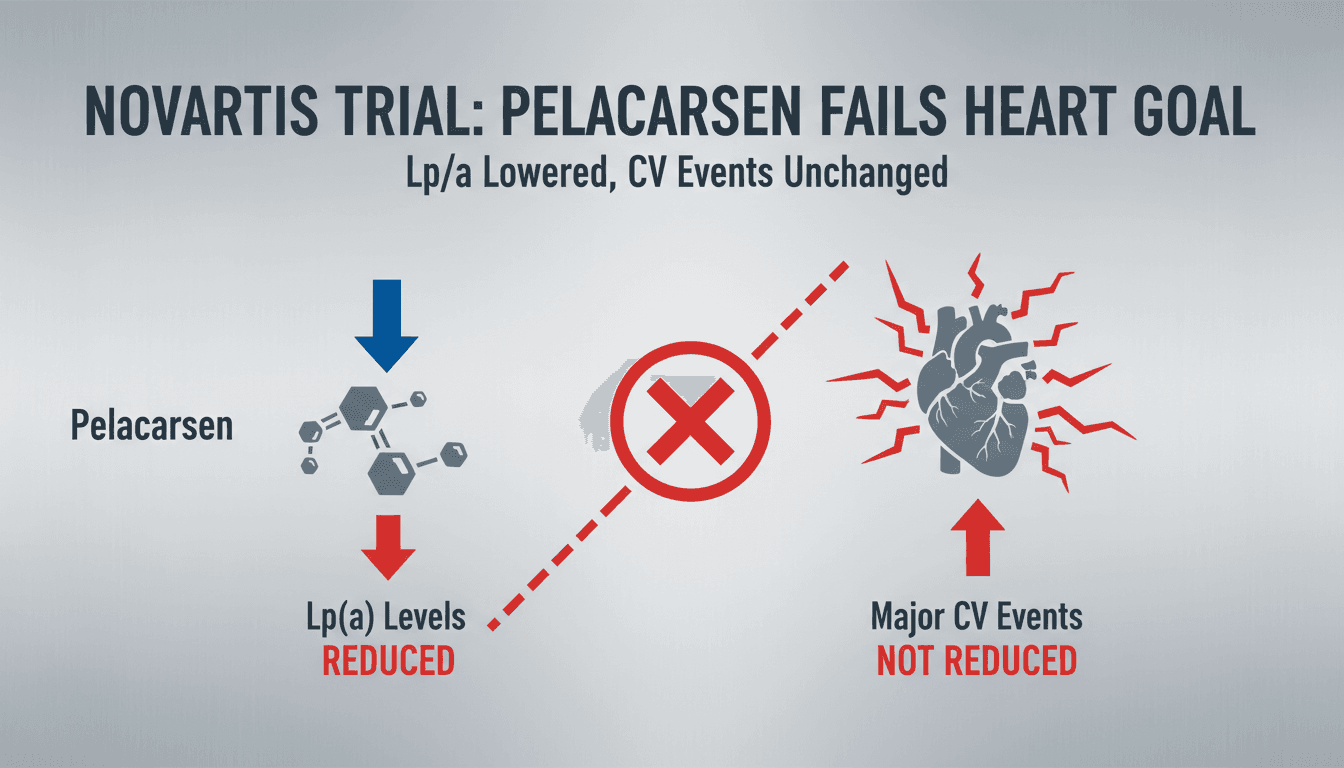
Here's what it means for you.
The failure of Novartis' pelacarsen trial signals a potential slowdown in the development of targeted therapies for cardiovascular diseases linked to elevated Lp(a).
Why it matters
This setback highlights the challenges in developing effective treatments for inherited cardiovascular risk factors, impacting future drug innovation and patient care.
What happened (in 30 seconds)
- Novartis announced that its Phase 3 Lp(a)HORIZON trial for pelacarsen did not meet its primary cardiovascular endpoint.
- Despite successfully lowering lipoprotein(a) [Lp(a)] levels, the drug failed to reduce major cardiovascular events compared to placebo.
- Shares of Novartis and Ionis fell sharply following the announcement, reflecting investor concerns over the trial's implications.
The context you actually need
- Elevated Lp(a) is a significant inherited risk factor for cardiovascular disease, affecting about one in five people globally, with no approved therapies prior to this trial.
- The Lp(a)HORIZON trial was the first large-scale study aimed at determining if lowering Lp(a) could lead to better clinical outcomes in patients with established cardiovascular disease.
- Novartis and Ionis had high expectations for pelacarsen, given decades of research linking elevated Lp(a) to increased cardiovascular risk, making this trial's failure a notable disappointment.
What's really happening
The Lp(a)HORIZON trial, which enrolled 8,323 patients over more than six years, aimed to establish whether reducing Lp(a) levels would translate into a decrease in major cardiovascular events. While the trial successfully demonstrated a statistically significant reduction in Lp(a), it did not yield a corresponding decrease in the composite primary endpoint, which included cardiovascular death, non-fatal myocardial infarction, non-fatal stroke, and urgent coronary revascularization.
This outcome raises critical questions about the relationship between Lp(a) levels and cardiovascular events. Historically, elevated Lp(a) has been associated with increased cardiovascular risk, independent of LDL cholesterol levels. However, the failure of pelacarsen to demonstrate clinical benefit suggests that simply lowering Lp(a) may not be sufficient to mitigate cardiovascular risks. This could indicate that the mechanisms underlying cardiovascular disease are more complex than previously understood, necessitating a reevaluation of treatment strategies targeting Lp(a).
The implications extend beyond Novartis and Ionis; they may affect the broader pharmaceutical landscape focused on cardiovascular therapies. Investors reacted swiftly, with Novartis shares dropping over 4% and Ionis shares falling more than 10% in after-hours trading. This reflects a loss of confidence in the viability of Lp(a)-targeted therapies, which could deter future investment in similar drug development initiatives.
Moreover, the trial's failure may influence regulatory perspectives on Lp(a) as a target for drug development. With no approved therapies for elevated Lp(a) prior to this trial, the setback could slow the momentum for research and development in this area, potentially leaving millions of patients with limited treatment options for a significant cardiovascular risk factor.
As Novartis prepares to present full trial data at an upcoming medical congress, the scientific community will be keenly interested in understanding the nuances of these results. The findings could provide valuable insights into the complexities of cardiovascular disease and the role of Lp(a), shaping future research directions and therapeutic approaches.
Who feels it first (and how)
- Patients with elevated Lp(a): They may continue to lack effective treatment options for managing their cardiovascular risk.
- Healthcare providers: Physicians may need to reassess treatment plans for patients with high Lp(a) levels, relying on existing therapies without new options.
- Investors in pharmaceutical companies: The decline in stock prices for Novartis and Ionis may lead to increased scrutiny of investments in cardiovascular drug development.
What to watch next
- Upcoming medical congress presentations: Full trial data will be presented, which could provide insights into the implications of the trial results.
- Investor sentiment: Monitor how the market reacts to further developments in Lp(a)-targeted therapies and the broader cardiovascular drug landscape.
- Regulatory responses: Watch for any shifts in regulatory attitudes towards Lp(a) as a target for drug development, which could influence future research funding and initiatives.
The Lp(a)HORIZON trial did not meet its primary endpoint, indicating that lowering Lp(a) alone may not reduce cardiovascular events.
Future research may focus on understanding the complex relationship between Lp(a) and cardiovascular disease.
The long-term impact on the development of Lp(a)-targeted therapies and patient treatment options remains uncertain.
Frequently Asked Questions
- Why it matters?
- This setback highlights the challenges in developing effective treatments for inherited cardiovascular risk factors, impacting future drug innovation and patient care.
- What happened (in 30 seconds)?
- Novartis announced that its Phase 3 Lp(a)HORIZON trial for pelacarsen did not meet its primary cardiovascular endpoint. Despite successfully lowering lipoprotein(a) [Lp(a)] levels, the drug failed to reduce major cardiovascular events compared to placebo. Shares of Novartis and Ionis fell sharply following the announcement, reflecting investor concerns over the trial's implications.
- What's really happening?
- The Lp(a)HORIZON trial, which enrolled 8,323 patients over more than six years, aimed to establish whether reducing Lp(a) levels would translate into a decrease in major cardiovascular events. While the trial successfully demonstrated a statistically significant reduction in Lp(a), it did not yield a corresponding decrease in the composite primary endpoint, which included cardiovascular death, non-fatal myocardial infarction, non-fatal stroke, and urgent coronary revascularization. This outcome
- Who feels it first (and how)?
- Patients with elevated Lp(a): They may continue to lack effective treatment options for managing their cardiovascular risk. Healthcare providers: Physicians may need to reassess treatment plans for patients with high Lp(a) levels, relying on existing therapies without new options. Investors in pharmaceutical companies: The decline in stock prices for Novartis and Ionis may lead to increased scrutiny of investments in cardiovascular drug development.
- What to watch next?
- Upcoming medical congress presentations: Full trial data will be presented, which could provide insights into the implications of the trial results. Investor sentiment: Monitor how the market reacts to further developments in Lp(a)-targeted therapies and the broader cardiovascular drug landscape. Regulatory responses: Watch for any shifts in regulatory attitudes towards Lp(a) as a target for drug development, which could influence future research funding and initiatives.
U.S. business news, corporate developments, and economy.
"The Wall Street Journal is respected for deep financial and economic reporting with a center-right editorial perspective."
— A47 Editor
Novartis Says Closely Watched Cholesterol Study Failed to Meet Goal
Novartis announced that its Phase 3 clinical trial for the heart drug Pelacarsen did not achieve its primary goal of reducing cardiovascular events such as heart attacks and strokes. This outcome has raised concerns among stakeholders who anticipated...
Public health, medical research, healthcare policy, and pharmaceutical developments.
"Dow Jones is a major financial news provider with a professional tone and broad coverage, including specialized health-sector reporting."
— A47 Editor
A highly anticipated cholesterol drug from Novartis failed to reduce the risk of severe cardiovascular outcomes in a Phase 3 study
Novartis's highly anticipated cholesterol drug, Pelacarsen, has failed to demonstrate a reduction in severe cardiovascular outcomes, such as heart attacks and strokes, in a Phase 3 clinical trial. This disappointing result has raised concerns among c...
Public health, medical research, healthcare policy, and pharmaceutical developments.
"Dow Jones is a major financial news provider with a professional tone and broad coverage, including specialized health-sector reporting."
— A47 Editor
Novartis Says Pelacarsen Heart Disease Drug Missed Primary Endpoint
Novartis announced that its heart disease drug Pelacarsen failed to meet its primary endpoint in a Phase 3 clinical trial, leading to a decline in the company's shares during after-hours trading. The trial did not demonstrate a significant reduction ...