
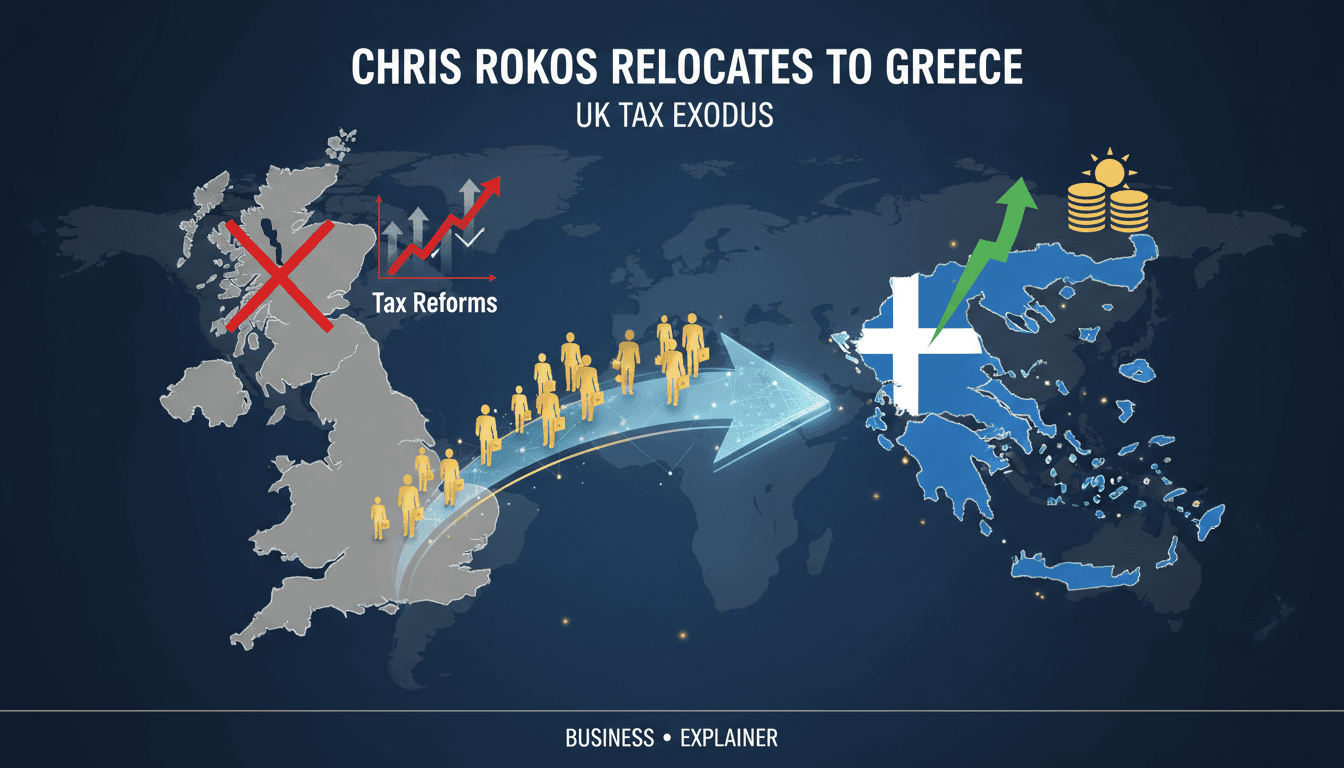
Chris Rokos Relocates from UK to Greece Amid Tax Reforms
Why it matters
The departure of wealthy individuals from the UK highlights growing concerns over tax policies and their impact on economic competitiveness.
What happened (in 30 seconds)
- Chris Rokos announced his relocation from the UK to Greece on September 8, 2026, amid rising tax pressures.
- The UK abolished its non-domiciled tax regime in 2024, prompting wealthy individuals to seek more favorable tax environments.
- Rokos plans to open an office in Athens while maintaining operations in major global financial hubs.
The context you actually need
- The UK’s tax reforms have led to predictions of wealth migration, with high-net-worth individuals exploring jurisdictions with more favorable tax regimes.
- Greece offers a non-dom program that allows foreign residents to pay a flat tax on foreign earnings, making it attractive for expatriates.
- Rokos, a significant taxpayer, contributed £330 million in taxes in 2025, underscoring the financial impact of his departure on the UK economy.
What's really happening
Chris Rokos's move to Greece is emblematic of a broader trend among wealthy individuals seeking to optimize their tax liabilities in response to changing fiscal policies in their home countries. The UK government’s decision to abolish the non-domiciled tax regime in 2024 marked a significant shift in tax policy, which had previously allowed foreign residents to pay UK taxes only on their domestic earnings. This change, coupled with anticipated increases in taxes on capital gains, inheritance, and private equity under the Labour government, has created a less favorable environment for high-net-worth individuals.
Rokos, who founded Rokos Capital Management and manages over £15 billion in assets, is not alone in his decision to relocate. Other prominent figures, including Lakshmi Mittal and Nassef Sawiris, have also left the UK for jurisdictions that offer more attractive tax conditions. Greece, with its €100,000 annual flat tax on foreign earnings for up to 15 years, has emerged as a popular destination. This program, available to those who make a €500,000 investment, provides a significant incentive for wealthy expatriates.
The implications of Rokos's move extend beyond personal tax savings. His departure signals a potential shift in investment patterns, as high-net-worth individuals may redirect their capital to countries with more favorable tax regimes. This could lead to a decrease in investment in the UK, impacting local businesses and the economy at large. The UK government has responded by asserting that the country remains an attractive destination for talent and investment, but the ongoing anxiety over public finances and potential further tax measures may challenge this narrative.
As Rokos opens an office in Athens, he maintains his firm's existing operations in London, Abu Dhabi, New York, and Singapore. This dual presence highlights a strategic approach to navigating global markets while optimizing tax obligations. The broader trend of wealth migration raises questions about the long-term sustainability of the UK’s tax policies and their ability to retain high-net-worth individuals and their contributions to the economy.
Who feels it first (and how)
- High-net-worth individuals: They may consider relocating to more favorable tax jurisdictions.
- UK businesses: Local firms could face reduced investment and spending from wealthy individuals.
- Tax authorities: Governments may need to adjust policies to retain affluent residents and their tax contributions.
What to watch next
- Future tax reforms: Monitor any announcements from the UK government regarding tax policy changes and their potential impact on wealth migration.
- Investment trends: Watch for shifts in capital flows towards countries like Greece and the UAE, which may affect local economies.
- Public sentiment: Keep an eye on public and political reactions to the wealth exodus, as it could influence future policy decisions.
Chris Rokos has relocated to Greece and plans to open an office in Athens.
Other high-net-worth individuals may follow suit, further impacting the UK economy.
The long-term effects of this wealth migration on the UK’s financial landscape and tax policies.
Frequently Asked Questions
- Why it matters?
- The departure of wealthy individuals from the UK highlights growing concerns over tax policies and their impact on economic competitiveness.
- What happened (in 30 seconds)?
- Chris Rokos announced his relocation from the UK to Greece on September 8, 2026, amid rising tax pressures. The UK abolished its non-domiciled tax regime in 2024, prompting wealthy individuals to seek more favorable tax environments. Rokos plans to open an office in Athens while maintaining operations in major global financial hubs.
- What's really happening?
- Chris Rokos's move to Greece is emblematic of a broader trend among wealthy individuals seeking to optimize their tax liabilities in response to changing fiscal policies in their home countries. The UK government’s decision to abolish the non-domiciled tax regime in 2024 marked a significant shift in tax policy, which had previously allowed foreign residents to pay UK taxes only on their domestic earnings. This change, coupled with anticipated increases in taxes on capital gains, inheritance, an
- Who feels it first (and how)?
- High-net-worth individuals: They may consider relocating to more favorable tax jurisdictions. UK businesses: Local firms could face reduced investment and spending from wealthy individuals. Tax authorities: Governments may need to adjust policies to retain affluent residents and their tax contributions.
- What to watch next?
- Future tax reforms: Monitor any announcements from the UK government regarding tax policy changes and their potential impact on wealth migration. Investment trends: Watch for shifts in capital flows towards countries like Greece and the UAE, which may affect local economies. Public sentiment: Keep an eye on public and political reactions to the wealth exodus, as it could influence future policy decisions.
UAE-based English-language newspaper covering regional politics, economics, and global affairs.
"The National reflects Emirati policy perspectives while maintaining international editorial standards."
— A47 Editor
Billionaire hedge fund founder Chris Rokos joins wealth exodus from UK
Billionaire hedge fund founder Chris Rokos has joined a growing trend of high-net-worth individuals leaving the UK, driven by increasing tax uncertainties and potential reforms. This exodus reflects a significant shift in the financial landscape as w...
Corporate news, economic trends, and markets with UK and global scope.
"BBC News is widely regarded as reputable and impartial, with a public service mandate."
— A47 Editor
UK's third-biggest taxpayer to leave for Greece
Chris Rokos, ranked as the UK's third-biggest taxpayer, is reportedly planning to relocate to Greece to open an office in Athens. This move comes amid ongoing discussions about tax policies and their impact on high earners in the UK.
UK and international business news, economics, and corporate coverage.
"The Guardian’s business section covers finance and markets with a progressive editorial tone."
— A47 Editor
Billionaire Chris Rokos, who paid £330m in tax last year, to quit UK
Billionaire hedge fund manager Chris Rokos, who paid £330 million in taxes last year, is set to leave the UK for Greece, where he plans to establish an office in Athens. This decision reflects a growing trend among wealthy individuals in the UK who a...