
India's SEBI Launches Pilot for Tokenized Corporate Bonds with $107 Million Issued
Why it matters
The pilot represents a significant step in modernizing India's financial infrastructure, integrating digital assets with traditional regulatory frameworks.
What happened (in 30 seconds)
- SEBI announced the launch of the Demat 2.0 pilot for tokenized corporate bonds on September 11, 2026.
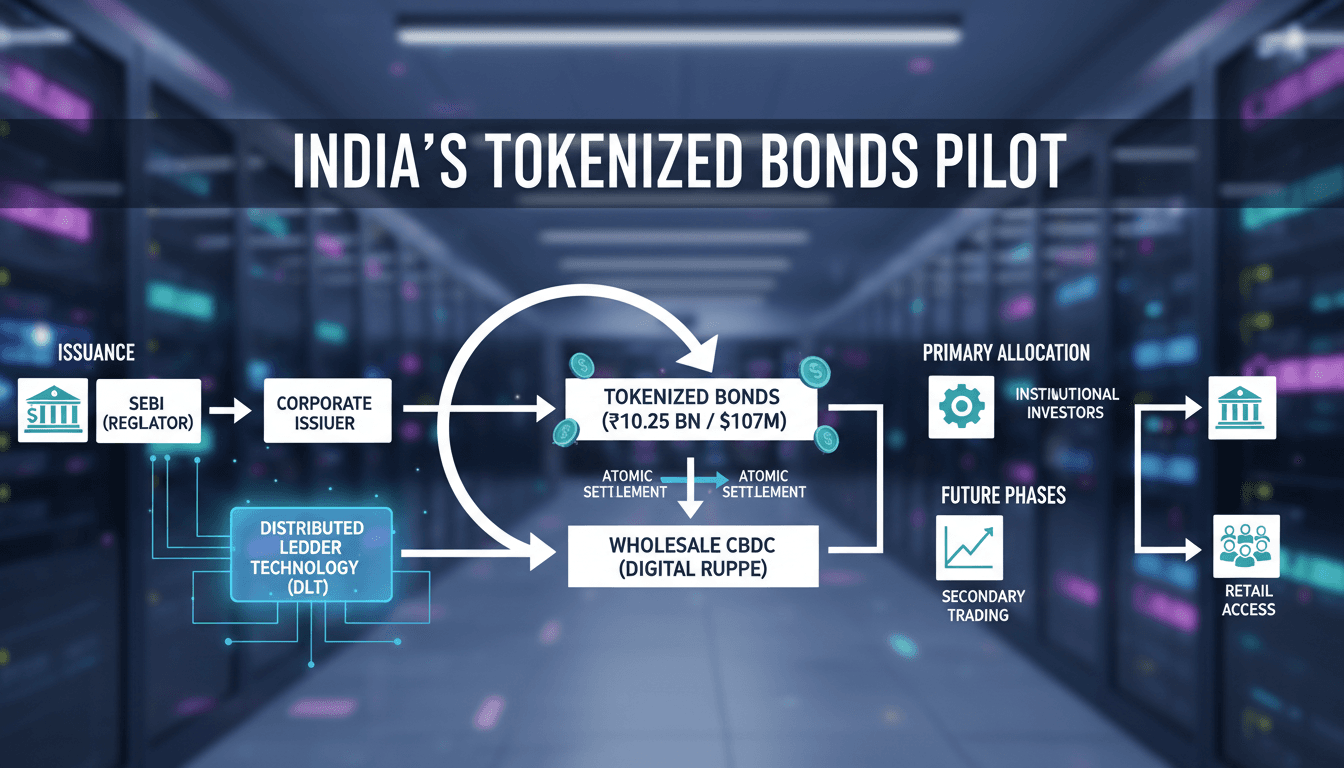
- Three companies issued a total of 10.25 billion Indian rupees (approximately $107 million) in corporate bonds using distributed ledger technology.
- The pilot integrates with the RBI's wholesale CBDC for atomic settlement, aiming to enhance efficiency and investor protections.
The context you actually need
- India's financial landscape is evolving, with a focus on digital financial infrastructure and the development of a wholesale CBDC by the RBI.
- Tokenized corporate bonds are designed to streamline bond issuance and settlement processes while maintaining existing regulatory protections.
- The pilot is part of a multi-phase rollout that will eventually include secondary trading and retail access, expanding the market for digital assets.
What's really happening
The launch of the Demat 2.0 pilot marks a pivotal moment in India's financial evolution, combining traditional bond issuance with cutting-edge technology. The Securities and Exchange Board of India (SEBI) has initiated this pilot to explore the potential of tokenized corporate bonds, which are recorded as digital tokens on a distributed ledger. This approach not only modernizes the bond issuance process but also aims to enhance efficiency and transparency in the financial markets.
The pilot began with three companies: REC Ltd., Larsen & Toubro (L&T) Ltd., and IIFL Finance. REC Ltd. issued 5 billion rupees on September 7, 2026, followed by L&T raising another 5 billion rupees on September 9, and IIFL contributing 250 million rupees. This collective issuance of 10.25 billion rupees (approximately $107 million) showcases the initial interest from institutional investors in this new format.
One of the standout features of this pilot is its integration with the Reserve Bank of India's (RBI) wholesale central bank digital currency (CBDC). This integration allows for atomic settlement, meaning that transactions can be settled instantly, enhancing liquidity and reducing the time it takes for funds to be transferred. Smart contracts automate payment processes, ensuring that obligations are met without manual intervention. This level of automation and efficiency is expected to attract more institutional players into the bond market.
Moreover, the pilot maintains the same International Securities Identification Numbers (ISINs) and legal characteristics as traditional bonds, ensuring that investor protections remain intact. This is crucial for building trust among investors who may be hesitant to embrace new technologies. The current phase focuses solely on institutional issuance, but future phases will explore secondary trading and retail access, potentially democratizing access to corporate bonds.
As the pilot progresses, it will be closely monitored for its impact on market dynamics and investor behavior. The success of this initiative could set a precedent for other countries looking to modernize their financial systems and integrate digital assets into their regulatory frameworks.
Who feels it first (and how)
- Institutional investors: They will be the primary participants in the initial phase, gaining access to a more efficient bond issuance process.
- Financial institutions: Banks and other financial entities involved in bond trading will need to adapt to the new digital landscape.
- Regulators: SEBI and RBI will closely monitor the pilot's outcomes to inform future regulatory approaches to digital assets.
What to watch next
- Expansion of the pilot: Watch for announcements regarding additional issuances and the timeline for secondary trading and retail access.
- Market reactions: Monitor how institutional investors respond to the pilot and whether it influences bond pricing and liquidity.
- Global implications: Keep an eye on how this pilot may influence other countries' approaches to tokenized assets and CBDC integration.
The pilot has successfully launched with initial issuances totaling 10.25 billion rupees.
Future phases will include secondary trading and retail access, expanding the market for tokenized bonds.
The long-term impact on investor behavior and market dynamics remains to be seen.
Frequently Asked Questions
- Why it matters?
- The pilot represents a significant step in modernizing India's financial infrastructure, integrating digital assets with traditional regulatory frameworks.
- What happened (in 30 seconds)?
- SEBI announced the launch of the Demat 2.0 pilot for tokenized corporate bonds on September 11, 2026. Three companies issued a total of 10.25 billion Indian rupees (approximately $107 million) in corporate bonds using distributed ledger technology. The pilot integrates with the RBI's wholesale CBDC for atomic settlement, aiming to enhance efficiency and investor protections.
- What's really happening?
- The launch of the Demat 2.0 pilot marks a pivotal moment in India's financial evolution, combining traditional bond issuance with cutting-edge technology. The Securities and Exchange Board of India (SEBI) has initiated this pilot to explore the potential of tokenized corporate bonds, which are recorded as digital tokens on a distributed ledger. This approach not only modernizes the bond issuance process but also aims to enhance efficiency and transparency in the financial markets. The pilot beg
- Who feels it first (and how)?
- Institutional investors: They will be the primary participants in the initial phase, gaining access to a more efficient bond issuance process. Financial institutions: Banks and other financial entities involved in bond trading will need to adapt to the new digital landscape. Regulators: SEBI and RBI will closely monitor the pilot's outcomes to inform future regulatory approaches to digital assets.
- What to watch next?
- Expansion of the pilot: Watch for announcements regarding additional issuances and the timeline for secondary trading and retail access. Market reactions: Monitor how institutional investors respond to the pilot and whether it influences bond pricing and liquidity. Global implications: Keep an eye on how this pilot may influence other countries' approaches to tokenized assets and CBDC integration.
Covers blockchain, cryptocurrency news, project analysis, and market insights.
"Cointelegraph is a leading crypto-focused media outlet known for timely news, analysis, and educational content related to blockchain and digital assets."
— A47 Editor
India launches tokenized bond pilot with $107M issued
India has launched a pilot program for tokenized bonds, issuing $107 million as part of its efforts to modernize financial markets and integrate digital currencies. The Securities and Exchange Board of India (SEBI) has indicated that future phases wi...
Real-time updates, analysis, and reports on the blockchain and cryptocurrency sectors.
"Crypto News delivers real-time updates, analysis, and reports on the blockchain and cryptocurrency sectors."
— A47 Editor
India launches digital rupee settlement for bonds
India has launched a digital rupee settlement for corporate bonds, issuing ₹1,025 crore in tokenized bonds as part of its Demat 2.0 pilot program. This initiative utilizes the Reserve Bank of India's (RBI) digital currency to facilitate transactions,...
Covers blockchain, cryptocurrency news, project analysis, and market insights.
"CoinDesk is a well-established cryptocurrency and blockchain news provider, offering comprehensive insights, market data, and industry research."
— A47 Editor
India starts tokenizing $620 billion corporate bond market with digital rupee settlement
India has initiated the tokenization of its $620 billion corporate bond market, with the Securities and Exchange Board of India (SEBI) launching a pilot program that transforms corporate bonds into digital tokens, settling payments through the Reserv...