
Accenture Settles DOJ Discrimination Allegations for $25 Million
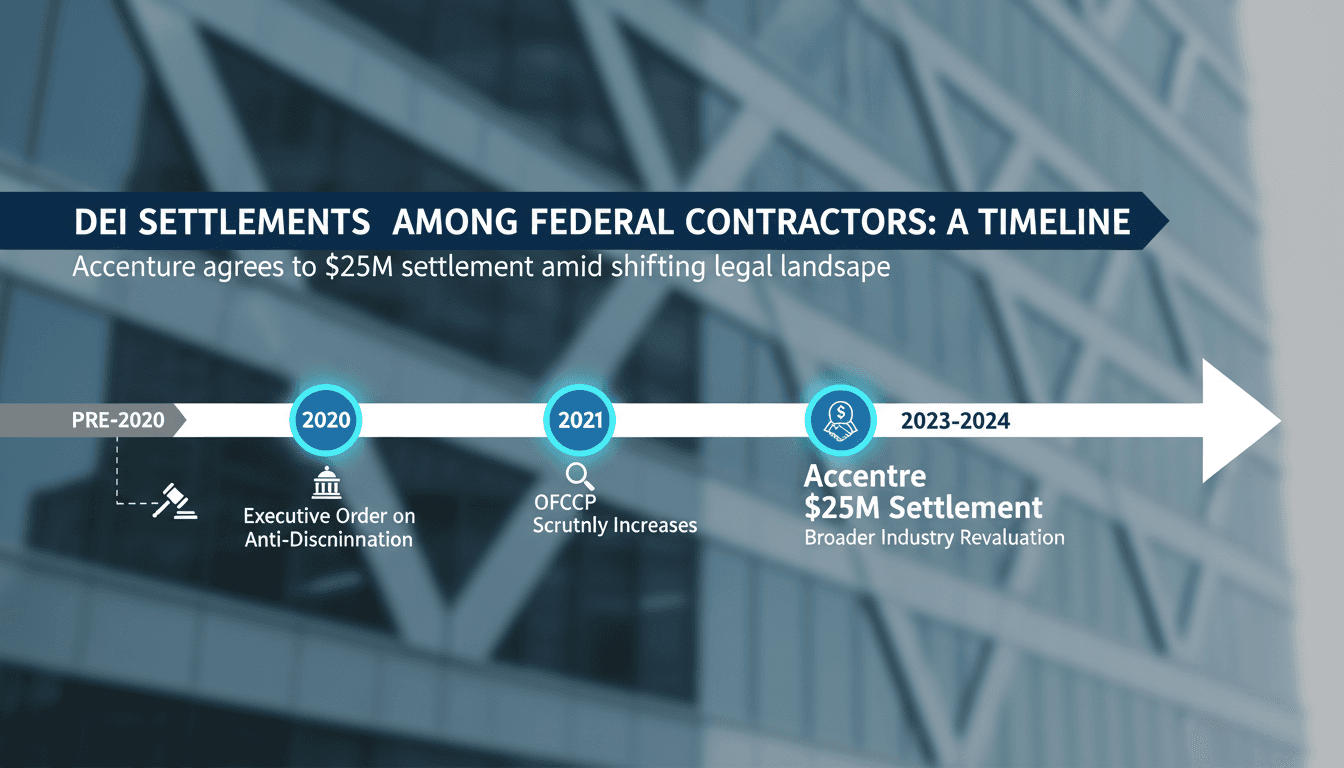
The settlement signals a tightening landscape for diversity, equity, and inclusion (DEI) initiatives in federal contracting.
Why it matters
This case highlights the increasing scrutiny on DEI practices and their compliance with federal anti-discrimination laws.
What happened (in 30 seconds)
- Accenture agreed to pay $25 million to settle allegations of discriminatory hiring practices related to race and sex.
- The settlement resolves claims that Accenture Federal Services falsely certified compliance with federal anti-discrimination requirements.
- This action is part of a broader initiative by the U.S. Department of Justice to enforce merit-based employment practices among federal contractors.
The context you actually need
- Executive orders from the Trump administration directed federal contractors to eliminate DEI practices viewed as discriminatory.
- The DOJ's Civil Rights Fraud Initiative aims to pursue violations of the False Claims Act by contractors certifying compliance while allegedly engaging in discriminatory practices.
- Previous settlements against other contractors, including IBM and Deloitte, indicate a trend of increased enforcement against DEI initiatives.
What's really happening
The $25 million settlement between Accenture and the U.S. Department of Justice (DOJ) is a significant marker in the evolving landscape of diversity, equity, and inclusion (DEI) practices within federal contracting. The allegations against Accenture Federal Services stem from claims that the company maintained non-public workforce demographic goals, which were tracked through monthly scorecards. These scorecards categorized progress as green, yellow, or red, indicating how well the company was meeting its diversity targets.
The DOJ's investigation revealed that Accenture prioritized candidates based on race and sex for promotions and restricted access to certain training programs based on these factors. For instance, the "Amplify to Elevate" program, which ran from 2022 to 2025, was reportedly limited to specific demographic groups. This approach raised concerns about compliance with federal anti-discrimination laws, leading to the settlement under the False Claims Act without any admission of liability from Accenture.
The broader implications of this settlement are profound. It reflects a growing trend among federal contractors to reassess their DEI initiatives in light of increased scrutiny from the DOJ. The Trump administration's executive orders aimed at curtailing DEI practices deemed discriminatory have set a precedent that is now being enforced through legal actions. The DOJ's Civil Rights Fraud Initiative is actively pursuing contractors that certify compliance with equal opportunity requirements while allegedly engaging in discriminatory decision-making.
As a result, companies are likely to reevaluate their DEI strategies to ensure they align with federal regulations and avoid potential legal repercussions. This settlement may also deter other contractors from implementing aggressive DEI initiatives that could be perceived as discriminatory, leading to a scaling back of such programs across the industry. The Accenture case serves as a cautionary tale for organizations navigating the complex intersection of diversity initiatives and compliance with federal laws.
Who feels it first (and how)
- Federal contractors: They will need to reassess their DEI practices to ensure compliance with federal regulations.
- HR professionals: They may face increased pressure to align hiring and promotion practices with merit-based standards.
- Diversity advocates: They could see a reduction in support for DEI initiatives within corporate structures.
What to watch next
- Future settlements: Keep an eye on additional settlements involving other federal contractors as the DOJ continues its enforcement efforts.
- Policy changes: Watch for potential shifts in federal contracting policies that may further impact DEI initiatives.
- Corporate responses: Observe how companies adjust their DEI strategies in response to this settlement and ongoing scrutiny.
Accenture has settled for $25 million without admitting liability.
Other federal contractors will face increased scrutiny and potential legal challenges regarding their DEI practices.
The long-term impact on the overall corporate landscape regarding DEI initiatives remains to be seen.
Frequently Asked Questions
- Why it matters?
- This case highlights the increasing scrutiny on DEI practices and their compliance with federal anti-discrimination laws.
- What happened (in 30 seconds)?
- Accenture agreed to pay $25 million to settle allegations of discriminatory hiring practices related to race and sex. The settlement resolves claims that Accenture Federal Services falsely certified compliance with federal anti-discrimination requirements. This action is part of a broader initiative by the U.S. Department of Justice to enforce merit-based employment practices among federal contractors.
- What's really happening?
- The $25 million settlement between Accenture and the U.S. Department of Justice (DOJ) is a significant marker in the evolving landscape of diversity, equity, and inclusion (DEI) practices within federal contracting. The allegations against Accenture Federal Services stem from claims that the company maintained non-public workforce demographic goals, which were tracked through monthly scorecards. These scorecards categorized progress as green, yellow, or red, indicating how well the company was m
- Who feels it first (and how)?
- Federal contractors: They will need to reassess their DEI practices to ensure compliance with federal regulations. HR professionals: They may face increased pressure to align hiring and promotion practices with merit-based standards. Diversity advocates: They could see a reduction in support for DEI initiatives within corporate structures.
- What to watch next?
- Future settlements: Keep an eye on additional settlements involving other federal contractors as the DOJ continues its enforcement efforts. Policy changes: Watch for potential shifts in federal contracting policies that may further impact DEI initiatives. Corporate responses: Observe how companies adjust their DEI strategies in response to this settlement and ongoing scrutiny.
Market-moving headlines impacting equities, bonds, and related risk assets.
"Real-time catalysts and volatility drivers across indices and sectors."
— A47 Editor
Accenture to pay $25 million to settle US government allegations over DEI
Accenture has agreed to pay $25 million to settle allegations from the US government regarding its diversity, equity, and inclusion (DEI) practices. This settlement comes amid increasing scrutiny of corporate compliance with federal DEI regulations.
U.S. business news, corporate developments, and economy.
"The Wall Street Journal is respected for deep financial and economic reporting with a center-right editorial perspective."
— A47 Editor
Accenture to Pay $25 Million to Resolve DOJ Discrimination Claims
Accenture has agreed to pay $25 million to resolve allegations from the Department of Justice (DOJ) that it discriminated based on race or sex in its hiring practices to meet non-public workforce composition goals. This settlement highlights ongoing ...
Technology business and AI-related headlines.
"Data-driven tech newsroom with global scope."
— A47 Editor
Accenture Settles With Justice Department Over DEI Policies
Accenture Plc has agreed to pay $25 million to the US Justice Department to settle allegations that it considered race and sex in its hiring and promotion practices, raising concerns about its diversity, equity, and inclusion (DEI) policies.
Technology business news, market impacts, and innovation trends.
"Bloomberg is a premier financial and tech news provider, respected for its in-depth reporting and analytical rigor."
— A47 Editor
Accenture Settles With Justice Department Over DEI Policies
Accenture Plc has agreed to pay $25 million to the US Justice Department to settle allegations that it considered race and sex in its hiring and promotion practices, raising concerns about its diversity, equity, and inclusion (DEI) policies.