
FDA Leadership Changes Boost Investor Confidence in Rare-Disease Biotech
Why it matters
The regulatory landscape for rare-disease drug approvals is becoming more favorable, potentially unlocking significant investment opportunities.
What happened (in 30 seconds)
- FDA leadership changes have eased the stringent scrutiny on rare-disease drug approvals.
- Investor confidence is returning, with capital reallocations toward rare-disease biotech firms.
- Market recovery is underway, reversing previous declines in share prices for these companies.
The context you actually need
- Increased skepticism from the FDA under previous leadership led to a sharp decline in rare-disease biotech investments, with 84% of investors pulling back.
- Operation TrialBlazer, a broader initiative, aims to enhance clinical trial efficiency and support orphan drug development.
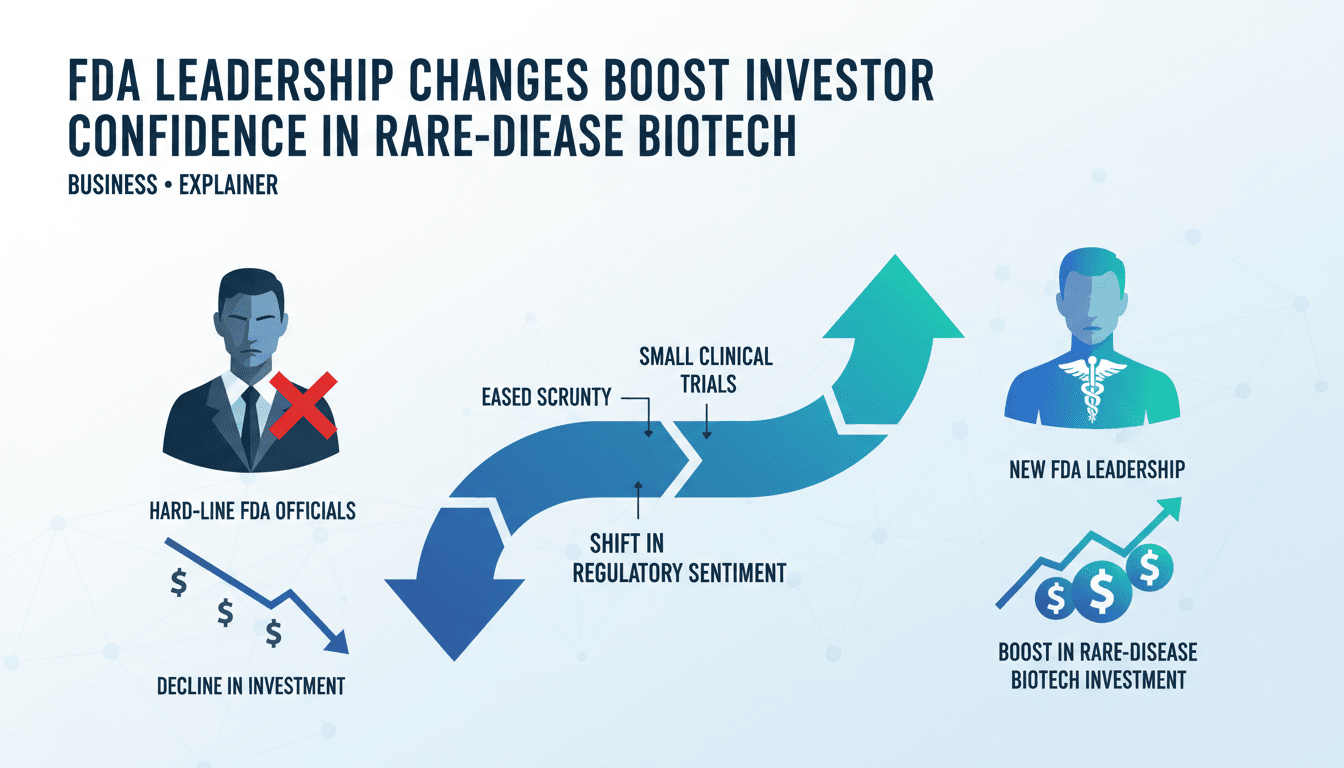
- Recent leadership changes at the FDA have removed hard-liners, fostering a more flexible regulatory environment.
What's really happening
The recent transition in FDA leadership marks a pivotal moment for the rare-disease biotech sector. Under the previous administration, the FDA adopted a hard-line approach, particularly scrutinizing drug approvals based on small clinical trials that lacked placebo controls. This led to a significant pullback from investors, with a reported 84% reducing or exiting their investments in rare-disease companies by Q1 2026. The heightened skepticism resulted in delays and rejections of potential therapies, stifling innovation and market confidence.
However, the departure of these hard-liners has shifted the regulatory sentiment. Investors are now viewing the rare-disease sector as less risky, prompting a renewed interest in funding these companies. The Wall Street Journal's analysis highlights how this regulatory pivot is making rare-disease investments more attractive, reversing earlier market declines. The FDA's ongoing efforts under Operation TrialBlazer further emphasize accelerated clinical research timelines and increased flexibility for orphan drugs, which are crucial for companies developing treatments for rare conditions.
This shift is not just about regulatory changes; it reflects a broader trend in the biotech industry where investors are increasingly looking for opportunities in sectors that were previously deemed too risky. The renewed investor confidence is likely to lead to increased funding for research and development in rare diseases, potentially resulting in more therapies reaching the market. As the FDA continues to adapt its approach, the implications for the biotech landscape could be profound, fostering an environment where innovation thrives.
Moreover, the implications extend beyond the U.S. market. Dubai-based investors and funds with exposure to U.S. biotech may see portfolio gains from this renewed momentum in the rare-disease sector, even though there is no direct local regulatory impact identified. This global perspective on investment opportunities highlights the interconnectedness of markets and the importance of regulatory environments in shaping investment strategies.
Who feels it first (and how)
- Biotech investors: Increased confidence may lead to higher investments in rare-disease firms.
- Rare-disease biotech companies: Potential for accelerated funding and development timelines.
- Patients with rare diseases: More therapies could reach the market, improving treatment options.
What to watch next
- FDA announcements: Keep an eye on new guidelines or approvals that could signal further regulatory easing.
- Investment trends: Monitor capital flows into rare-disease biotech to gauge ongoing investor confidence.
- Clinical trial outcomes: Watch for results from ongoing trials that could influence market sentiment and investment decisions.
The FDA has shifted its regulatory stance, easing scrutiny on rare-disease drug approvals.
Increased investment in rare-disease biotech will continue as confidence grows.
The long-term impact of these changes on the overall biotech market remains to be seen.
Frequently Asked Questions
- Why it matters?
- The regulatory landscape for rare-disease drug approvals is becoming more favorable, potentially unlocking significant investment opportunities.
- What happened (in 30 seconds)?
- FDA leadership changes have eased the stringent scrutiny on rare-disease drug approvals. Investor confidence is returning, with capital reallocations toward rare-disease biotech firms. Market recovery is underway, reversing previous declines in share prices for these companies.
- What's really happening?
- The recent transition in FDA leadership marks a pivotal moment for the rare-disease biotech sector. Under the previous administration, the FDA adopted a hard-line approach, particularly scrutinizing drug approvals based on small clinical trials that lacked placebo controls. This led to a significant pullback from investors, with a reported 84% reducing or exiting their investments in rare-disease companies by Q1 2026. The heightened skepticism resulted in delays and rejections of potential thera
- Who feels it first (and how)?
- Biotech investors: Increased confidence may lead to higher investments in rare-disease firms. Rare-disease biotech companies: Potential for accelerated funding and development timelines. Patients with rare diseases: More therapies could reach the market, improving treatment options.
- What to watch next?
- FDA announcements: Keep an eye on new guidelines or approvals that could signal further regulatory easing. Investment trends: Monitor capital flows into rare-disease biotech to gauge ongoing investor confidence. Clinical trial outcomes: Watch for results from ongoing trials that could influence market sentiment and investment decisions.
Public health, medical research, healthcare policy, and pharmaceutical developments.
"Dow Jones is a major financial news provider with a professional tone and broad coverage, including specialized health-sector reporting."
— A47 Editor
Heard on the Street: With the Food and Drug Administration’s hard-liners gone, investors are rushing back into rare-disease bets
With the departure of hard-liners from the Food and Drug Administration (FDA), investors are increasingly returning to the rare-disease sector, signaling a renewed confidence in the potential for innovative treatments. This shift comes as the FDA has...
Markets desk coverage, trading insights, and investor updates.
"WSJ’s markets reporting provides in-depth analysis and context for investors."
— A47 Editor
Trump Administration Shift Puts This Corner of Biotech Back in Favor
The Trump Administration's recent shift has led to the departure of hard-liners from the Food and Drug Administration, prompting a renewed interest from investors in the rare-disease biotech sector. This change is seen as a positive development for t...
Tech business coverage, major deals, product launches, and Silicon Valley trends.
"WSJ’s tech section offers authoritative reporting on the intersection of technology and business, including exclusive industry analysis."
— A47 Editor
Trump Administration Shift Puts This Corner of Biotech Back in Favor
The recent shift in the Trump Administration has led to the departure of hard-liners from the Food and Drug Administration, prompting a renewed interest from investors in the rare-disease biotech sector. This change is seen as a positive development ...