
OpenAI Projects $278 Billion Negative Cash Flow Through 2030 Amid Heavy Infrastructure Spending
Why it matters
OpenAI's projected cash burn underscores the financial pressures facing AI firms as they scale operations amid fierce competition for computing resources.
What happened (in 30 seconds)
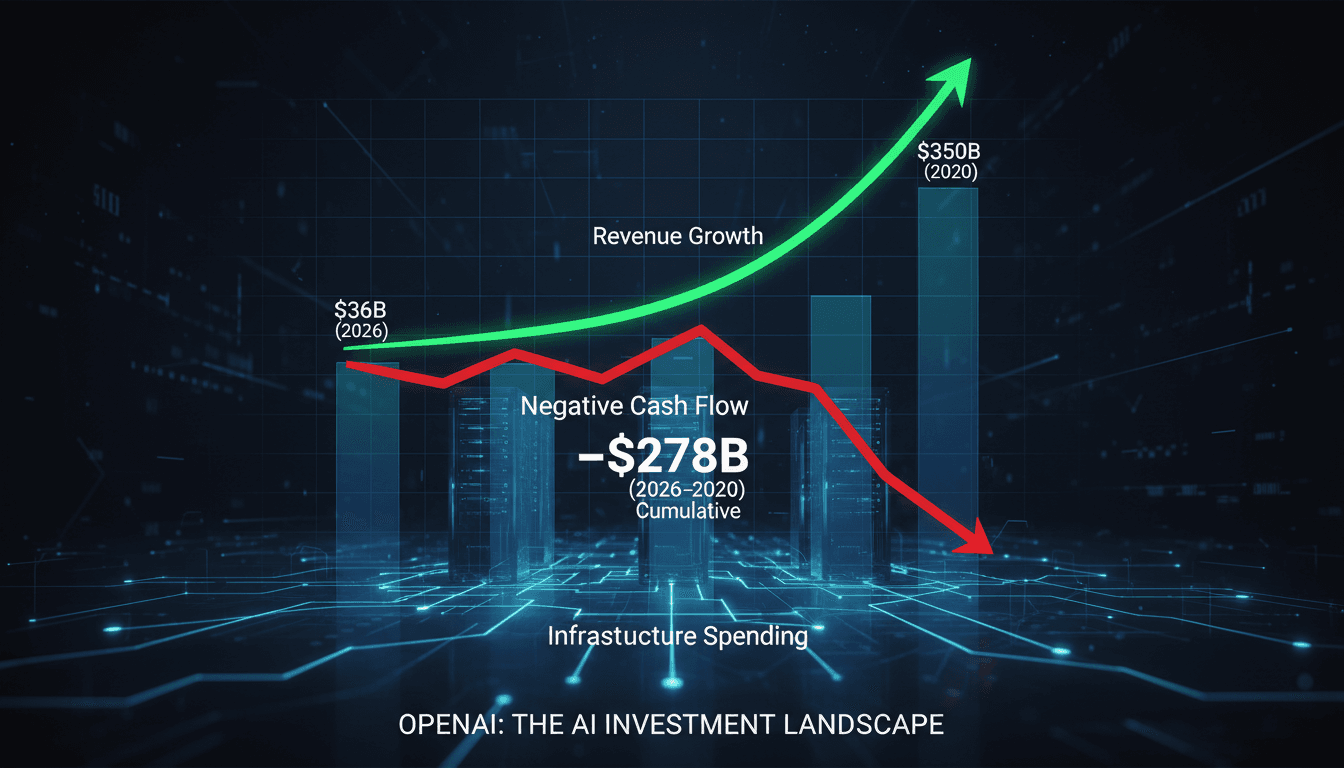
- OpenAI disclosed a projected cumulative negative free cash flow of $278 billion from 2026 to 2030, driven by infrastructure spending.
- Revenue is expected to rise dramatically, from $36 billion in 2026 to $350 billion by 2030, totaling around $840 billion over the period.
- The company is seeking additional funding discussions, potentially valuing it above $1.2 trillion, while delaying an IPO due to AI safety concerns.
The context you actually need
- AI development is accelerating globally, with organizations vying for advanced computing resources to train large-scale models.
- OpenAI previously raised $122 billion in March 2026, but internal forecasts suggest this capital will be exhausted by 2028 under current spending plans.
- Earlier projections had indicated an even steeper cash burn of $305 billion, highlighting the intense financial demands of AI infrastructure.
What's really happening
OpenAI's financial projections reveal a stark reality for the AI sector: the cost of scaling operations is skyrocketing. The company anticipates a staggering $278 billion in cumulative negative free cash flow through 2030, primarily due to aggressive investments in computing infrastructure. This spending is essential for maintaining a competitive edge in a rapidly evolving market where the demand for advanced AI capabilities is surging.
The projected revenue growth—from $36 billion in 2026 to $350 billion in 2030—paints a picture of a company poised for significant expansion. However, the disparity between revenue and expenditure raises critical questions about sustainability. OpenAI's commitment to investing approximately $856 billion in compute and infrastructure over the same period suggests a strategy focused on long-term dominance rather than immediate profitability. This approach reflects a broader trend in the tech industry, where companies prioritize growth and market share over short-term financial health.
The internal presentation that led to these projections was prepared for a major computing infrastructure deal, indicating that OpenAI is not just reacting to market conditions but actively shaping them. The company is in early discussions with investors for a potential funding round that could elevate its valuation beyond $1.2 trillion. This move underscores the urgency for capital to support its ambitious plans, especially as earlier projections indicated an even more severe cash burn scenario.
CEO Sam Altman's comments about deferring an IPO due to AI safety considerations further complicate the narrative. While the company seeks additional funding, the delay in going public may impact investor confidence and market perceptions. The financial community is closely watching how OpenAI navigates these challenges, as its decisions could set precedents for other AI firms.
In summary, OpenAI's projections highlight a critical juncture for the AI industry, where the balance between investment and revenue generation will determine the future landscape. The company's strategy reflects a willingness to absorb significant losses in pursuit of long-term goals, but it also raises questions about the viability of such an approach in a competitive market.
Who feels it first (and how)
- Investors: Those looking to fund AI ventures may face increased scrutiny regarding financial sustainability.
- Tech companies: Firms competing for computing resources will feel the pressure to innovate and invest heavily.
- Startups: New entrants in the AI space may struggle to secure funding as investors become more cautious.
- Consumers: Users of AI technologies may experience shifts in service availability or pricing as companies adjust to financial realities.
What to watch next
- Funding rounds: Keep an eye on OpenAI's discussions with investors, as successful funding could influence market dynamics.
- Infrastructure investments: Monitor how other AI firms respond to OpenAI's spending patterns and whether they follow suit.
- Market reactions: Watch for shifts in investor sentiment towards AI companies, particularly regarding their cash flow management.
OpenAI projects a $278 billion cash burn through 2030.
Other AI firms may adopt similar aggressive spending strategies to remain competitive.
The long-term impact of these financial strategies on the overall AI market and investor confidence.
Frequently Asked Questions
- Why it matters?
- OpenAI's projected cash burn underscores the financial pressures facing AI firms as they scale operations amid fierce competition for computing resources.
- What happened (in 30 seconds)?
- OpenAI disclosed a projected cumulative negative free cash flow of $278 billion from 2026 to 2030, driven by infrastructure spending. Revenue is expected to rise dramatically, from $36 billion in 2026 to $350 billion by 2030, totaling around $840 billion over the period. The company is seeking additional funding discussions, potentially valuing it above $1.2 trillion, while delaying an IPO due to AI safety concerns.
- What's really happening?
- OpenAI's financial projections reveal a stark reality for the AI sector: the cost of scaling operations is skyrocketing. The company anticipates a staggering $278 billion in cumulative negative free cash flow through 2030, primarily due to aggressive investments in computing infrastructure. This spending is essential for maintaining a competitive edge in a rapidly evolving market where the demand for advanced AI capabilities is surging. The projected revenue growth—from $36 billion in 2026 to $
- Who feels it first (and how)?
- Investors: Those looking to fund AI ventures may face increased scrutiny regarding financial sustainability. Tech companies: Firms competing for computing resources will feel the pressure to innovate and invest heavily. Startups: New entrants in the AI space may struggle to secure funding as investors become more cautious. Consumers: Users of AI technologies may experience shifts in service availability or pricing as companies adjust to financial realities.
- What to watch next?
- Funding rounds: Keep an eye on OpenAI's discussions with investors, as successful funding could influence market dynamics. Infrastructure investments: Monitor how other AI firms respond to OpenAI's spending patterns and whether they follow suit. Market reactions: Watch for shifts in investor sentiment towards AI companies, particularly regarding their cash flow management.
U.S. company headlines: M&A, product launches, legal/regulatory actions, and leadership moves.
"U.S.-centric corporate tape; good for tracking single-name catalysts."
— A47 Editor
OpenAI expects $278 billion cash burn through 2030 - FT
OpenAI has projected a significant cash burn of $278 billion through 2030, driven by substantial investments in infrastructure and increasing competitive pressures in the AI market. This forecast highlights the financial challenges the company antici...
Curated tech headlines including AI stories.
"Influential aggregator surfacing the day’s top tech/AI links."
— A47 Editor
Leaked presentation: OpenAI expects negative free cash flow of $278B from 2026 to 2030 and projects its revenue will grow from $36B this year to $350B in 2030 (Financial Times)
A leaked presentation reveals that OpenAI anticipates a staggering negative free cash flow of $278 billion from 2026 to 2030, while projecting its revenue to increase from $36 billion this year to $350 billion by 2030. This forecast highlights the fi...
Technology business and AI-related headlines.
"Data-driven tech newsroom with global scope."
— A47 Editor
OpenAI Sees Burning Through $278 Billion by 2030: FT
OpenAI has projected a staggering negative free cash flow of $278 billion from 2026 to the end of 2030, as reported by the Financial Times. This forecast highlights the company's anticipated financial challenges amid its ongoing expansion and investm...
Technology business news, market impacts, and innovation trends.
"Bloomberg is a premier financial and tech news provider, respected for its in-depth reporting and analytical rigor."
— A47 Editor
OpenAI Sees Burning Through $278 Billion by 2030: FT
OpenAI has projected a staggering negative free cash flow of $278 billion from 2026 to the end of 2030, as reported by the Financial Times. This forecast highlights the company's anticipated financial challenges amid its ongoing expansion and investm...
Editor-curated FT homepage stories spanning markets, business, world, and opinion.
"The Financial Times is a globally respected business publication with a centrist/center-left tone and strong markets focus."
— A47 Editor
OpenAI expects to burn $280bn by 2030
OpenAI has projected a staggering $280 billion in negative cash flows by 2030 as it invests heavily in infrastructure while facing significant price pressures in the competitive AI market. This forecast highlights the financial challenges the company...