
AI Demand Drives Increased Investment in Life Sciences Sector
Why it matters
The increasing integration of AI in life sciences is transforming operational efficiencies and driving significant investment interest.
What happened (in 30 seconds)
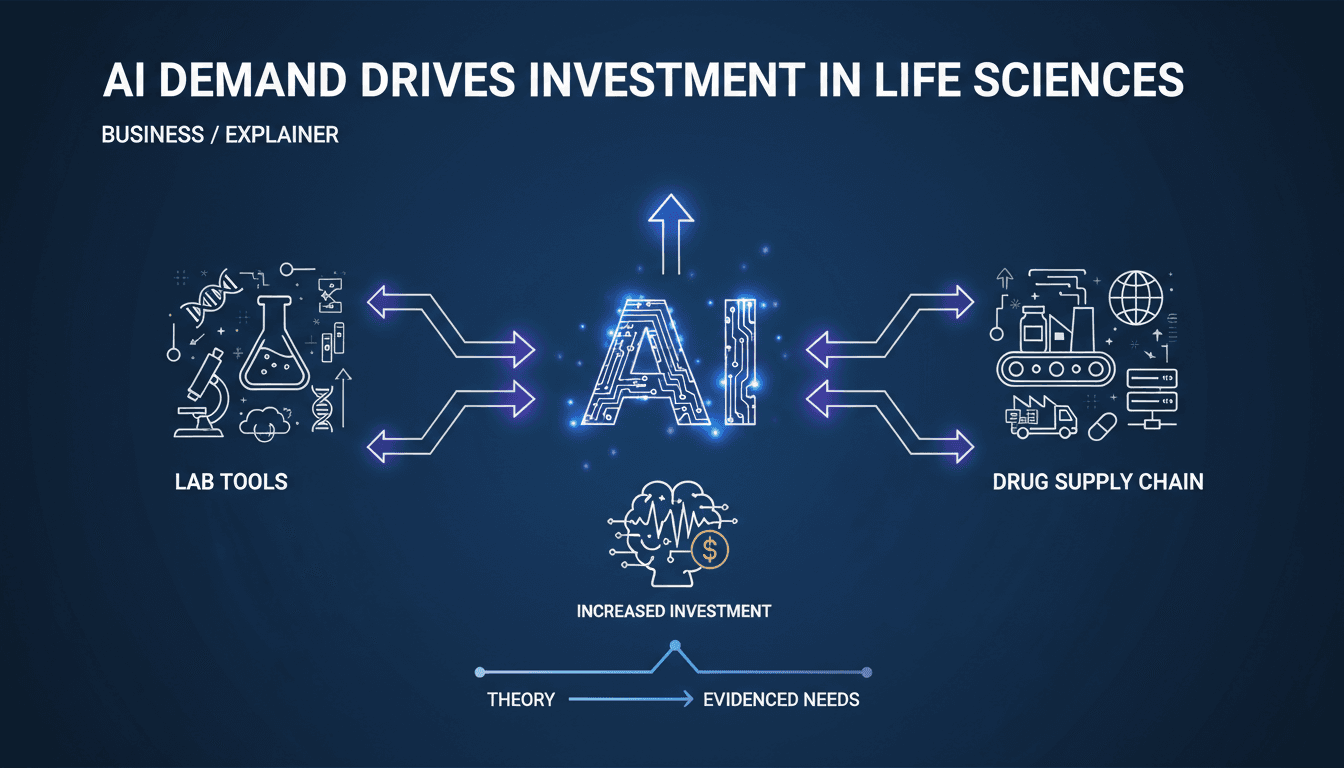
- Investors are betting on life-sciences companies due to a surge in AI-related demand for lab tools and drug supply chain firms.
- RBC Capital Markets analysts report that AI demand is shifting from theoretical applications to evidenced needs for biological data generation.
- Market commentary highlights ongoing discussions in global financial markets, particularly focusing on U.S. and European health care equities.
The context you actually need
- AI applications in health care are expanding beyond drug discovery to include operational efficiencies and data-intensive processes in research and manufacturing.
- Investment in pharma and biotech has remained steady amid evolving regulatory and technological landscapes, setting the stage for AI-driven growth.
- Demand signals vary across the life sciences value chain, indicating a structured shift in focus from research labs to preclinical and bioprocessing firms.
What's really happening
The health care sector is witnessing a pronounced shift as artificial intelligence (AI) moves from a theoretical concept to a practical necessity. Analysts from RBC Capital Markets have noted that this transition is evidenced by comments from company executives, indicating a growing need for biological data generation across the entire life sciences value chain. This demand is not uniform; it varies significantly depending on the position of companies within the value chain.
Initially, the focus is on research and laboratory settings, where the demand for AI-driven instruments and consumables is surging. As these tools become more integrated into research processes, the need for preclinical contract research organizations (CROs) will follow, as they require advanced data analytics to streamline drug development. Eventually, this trend will extend to contract development and manufacturing organizations (CDMOs) and bioprocessing firms, which will need to adapt their operations to leverage AI for efficiency and productivity.
The implications of this shift are profound. Companies that can effectively harness AI technologies will likely gain a competitive edge, attracting more investment and potentially leading to higher valuations. Conversely, firms that fail to adapt may find themselves at a disadvantage, struggling to keep pace with the evolving landscape. This creates a dynamic environment where investors are closely monitoring life-sciences equities for signals of AI-related growth.
Moreover, the ongoing discussions in global financial markets reflect a broader trend of increasing interest in AI applications across various sectors. The health care industry, in particular, stands to benefit from advancements in AI, as these technologies can enhance operational efficiencies, reduce costs, and ultimately improve patient outcomes. As the market continues to evolve, the integration of AI into life sciences will likely become a key driver of investment strategies.
Who feels it first (and how)
- Investors in life sciences companies will see immediate impacts on stock valuations and investment opportunities.
- Research institutions and laboratories will experience increased demand for AI-driven tools and technologies.
- Preclinical CROs and CDMOs will need to adapt their operations to incorporate AI, affecting their operational strategies and workforce requirements.
What to watch next
- Investment trends in AI-driven life sciences: Monitor how investor sentiment shifts as companies report on AI integration and its impact on their operations.
- Regulatory changes: Keep an eye on evolving regulations that may affect the deployment of AI technologies in health care, influencing market dynamics.
- Technological advancements: Watch for breakthroughs in AI applications that could further enhance operational efficiencies and data generation capabilities in life sciences.
AI demand in life sciences is increasing, with significant investment interest.
Companies that effectively integrate AI will outperform their competitors in the market.
The long-term regulatory landscape for AI applications in health care remains uncertain.
Frequently Asked Questions
- Why it matters?
- The increasing integration of AI in life sciences is transforming operational efficiencies and driving significant investment interest.
- What happened (in 30 seconds)?
- Investors are betting on life-sciences companies due to a surge in AI-related demand for lab tools and drug supply chain firms. RBC Capital Markets analysts report that AI demand is shifting from theoretical applications to evidenced needs for biological data generation. Market commentary highlights ongoing discussions in global financial markets, particularly focusing on U.S. and European health care equities.
- What's really happening?
- The health care sector is witnessing a pronounced shift as artificial intelligence (AI) moves from a theoretical concept to a practical necessity. Analysts from RBC Capital Markets have noted that this transition is evidenced by comments from company executives, indicating a growing need for biological data generation across the entire life sciences value chain. This demand is not uniform; it varies significantly depending on the position of companies within the value chain. Initially, the focu
- Who feels it first (and how)?
- Investors in life sciences companies will see immediate impacts on stock valuations and investment opportunities. Research institutions and laboratories will experience increased demand for AI-driven tools and technologies. Preclinical CROs and CDMOs will need to adapt their operations to incorporate AI, affecting their operational strategies and workforce requirements.
- What to watch next?
- Investment trends in AI-driven life sciences: Monitor how investor sentiment shifts as companies report on AI integration and its impact on their operations. Regulatory changes: Keep an eye on evolving regulations that may affect the deployment of AI technologies in health care, influencing market dynamics. Technological advancements: Watch for breakthroughs in AI applications that could further enhance operational efficiencies and data generation capabilities in life sciences.
Markets desk coverage, trading insights, and investor updates.
"WSJ’s markets reporting provides in-depth analysis and context for investors."
— A47 Editor
Health Care Roundup: Market Talk
The latest Market Talks from The Wall Street Journal provide insights into the health care sector, focusing on key players such as AstraZeneca and Fresenius. AstraZeneca has reported strong demand for its cancer and rare-disease treatments, reflectin...
Tech business coverage, major deals, product launches, and Silicon Valley trends.
"WSJ’s tech section offers authoritative reporting on the intersection of technology and business, including exclusive industry analysis."
— A47 Editor
Health Care Roundup: Market Talk
The latest health care market discussions highlight significant developments involving AstraZeneca, including a recent $2 billion investment in Summit Therapeutics aimed at enhancing collaboration on cancer treatments. This investment aligns with Ast...
Tech business coverage, major deals, product launches, and Silicon Valley trends.
"WSJ’s tech section offers authoritative reporting on the intersection of technology and business, including exclusive industry analysis."
— A47 Editor
Health Care Roundup: Market Talk
Roche Holding and AstraZeneca are making headlines in the latest health care market discussions, particularly with AstraZeneca's recent announcement of a $2 billion investment in Summit Therapeutics. This investment aims to bolster their collaboratio...