
Ripple Prime Launches Leveraged ETF Swap Financing to Compete with Wall Street Banks
Why it matters
Ripple Prime's entry into leveraged ETF financing challenges traditional banking dominance, potentially lowering costs and increasing competition in the market.
What happened (in 30 seconds)
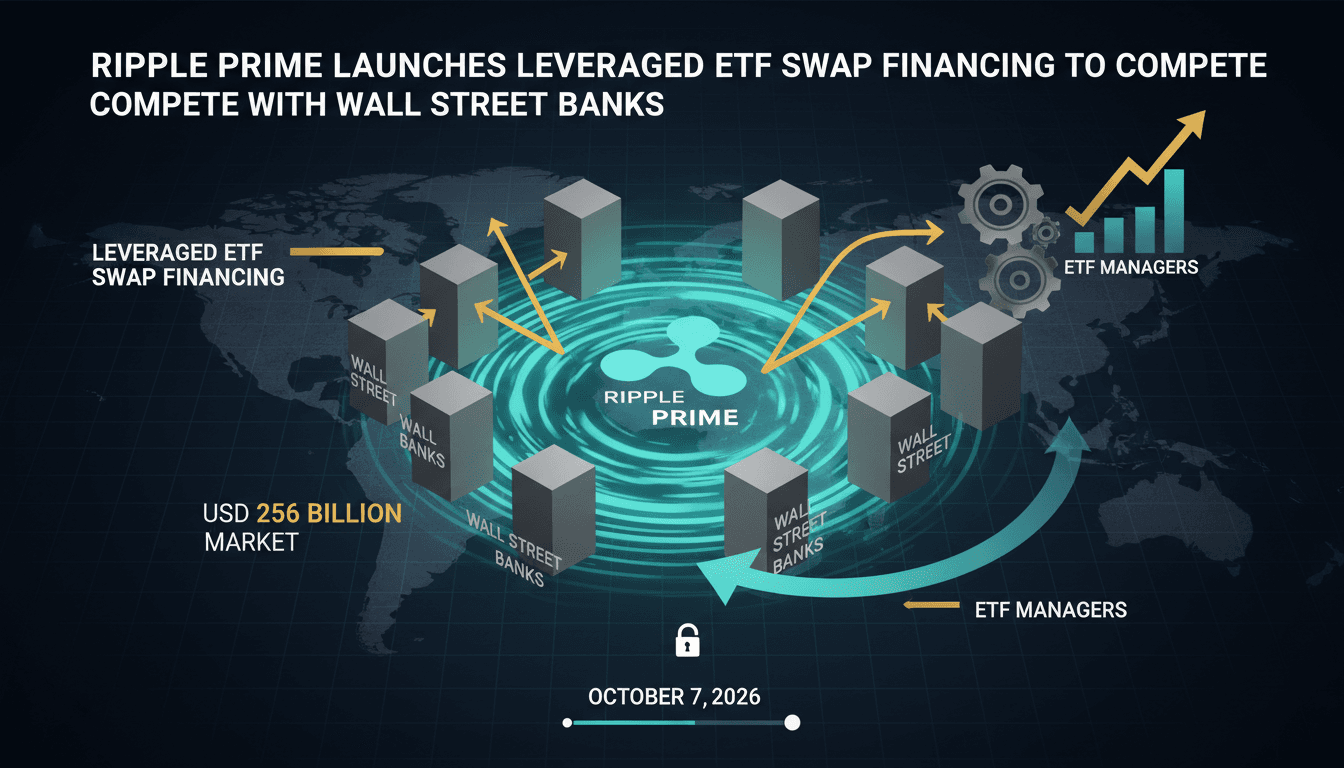
- On October 7, 2026, Ripple Prime began offering total return swap financing to leveraged ETFs, a sector historically controlled by Wall Street banks.
- Ripple's recent capital raise and service expansion to Brevan Howard positions it as a significant nonbank competitor in a $256 billion market.
- Market reaction was muted, with XRP declining over 5% following the announcement, indicating cautious investor sentiment.
The context you actually need
- Ripple Prime was formed after Ripple's $1.25 billion acquisition of Hidden Road, allowing it to expand into equities and derivatives.
- The leveraged ETF market includes 593 funds in the U.S. with over $256 billion in assets, highlighting significant growth potential for Ripple Prime.
- Regulatory pressures on traditional banks have opened the door for nonbank entities like Ripple to enter the financing space, creating new opportunities for ETF managers.
What's really happening
Ripple Prime's foray into leveraged ETF financing represents a strategic pivot in the financial services landscape, particularly as it relates to nonbank entities. Historically, Wall Street banks have dominated this sector, leveraging their established relationships and regulatory advantages to provide financing solutions. However, Ripple's recent moves signal a shift in this dynamic.
The firm, which rebranded from Hidden Road after its acquisition, has been aggressively expanding its service offerings. By launching Delta One total return swap capabilities in August 2026 and securing substantial capital through senior notes and facilities, Ripple Prime is well-positioned to challenge traditional players. The total return swap financing allows ETF managers to gain leveraged exposure to indices or stocks without the need for direct ownership, effectively multiplying their potential returns.
A notable example of Ripple Prime's new offerings is its arrangement with the Tradr 2X Long SNDK Daily ETF, which pays Ripple the overnight bank funding rate plus a four-percentage-point spread. This model not only provides ETF managers with necessary liquidity but also introduces competitive pricing that could disrupt existing market norms.
The broader implications of this shift are significant. As nonbank entities like Ripple Prime gain traction, traditional banks may be forced to reevaluate their pricing structures and service offerings. Stricter regulatory capital requirements have already made it challenging for banks to maintain their previous levels of service in this area, creating a vacuum that Ripple is now filling. This could lead to lower costs for ETF managers and, ultimately, better returns for investors.
Moreover, Ripple Prime's expansion into this space comes at a time when the ETF market is experiencing rapid growth, with 593 leveraged ETFs in the U.S. alone. This growth is fueled by increasing investor interest in alternative investment strategies and the proliferation of new ETF issuers. As Ripple Prime continues to build its client base among ETF providers and hedge funds, it could further accelerate this trend, reshaping the competitive landscape of the financial services industry.
Who feels it first (and how)
- ETF Managers: They will benefit from potentially lower financing costs and increased options for liquidity.
- Hedge Funds: Firms like Brevan Howard may find new opportunities for leveraging their investments through Ripple Prime's offerings.
- Traditional Banks: They may face pressure to adapt their services and pricing in response to increased competition from nonbank entities.
What to watch next
- Client Growth: Monitor Ripple Prime's expansion of its client base among ETF providers and hedge funds, as this will indicate its market penetration.
- Regulatory Developments: Watch for any changes in regulations that could impact nonbank financing options or traditional banks' operations.
- Market Reaction: Keep an eye on XRP's price movements and overall market sentiment towards Ripple Prime's new services, as this could signal investor confidence.
Ripple Prime has entered the leveraged ETF financing market, challenging traditional banks.
Increased competition will lead to lower costs for ETF managers and potentially better returns for investors.
The long-term impact on traditional banks and their ability to adapt to this new competitive landscape remains uncertain.
Frequently Asked Questions
- Why it matters?
- Ripple Prime's entry into leveraged ETF financing challenges traditional banking dominance, potentially lowering costs and increasing competition in the market.
- What happened (in 30 seconds)?
- On October 7, 2026, Ripple Prime began offering total return swap financing to leveraged ETFs, a sector historically controlled by Wall Street banks. Ripple's recent capital raise and service expansion to Brevan Howard positions it as a significant nonbank competitor in a $256 billion market. Market reaction was muted, with XRP declining over 5% following the announcement, indicating cautious investor sentiment.
- What's really happening?
- Ripple Prime's foray into leveraged ETF financing represents a strategic pivot in the financial services landscape, particularly as it relates to nonbank entities. Historically, Wall Street banks have dominated this sector, leveraging their established relationships and regulatory advantages to provide financing solutions. However, Ripple's recent moves signal a shift in this dynamic. The firm, which rebranded from Hidden Road after its acquisition, has been aggressively expanding its service o
- Who feels it first (and how)?
- ETF Managers: They will benefit from potentially lower financing costs and increased options for liquidity. Hedge Funds: Firms like Brevan Howard may find new opportunities for leveraging their investments through Ripple Prime's offerings. Traditional Banks: They may face pressure to adapt their services and pricing in response to increased competition from nonbank entities.
- What to watch next?
- Client Growth: Monitor Ripple Prime's expansion of its client base among ETF providers and hedge funds, as this will indicate its market penetration. Regulatory Developments: Watch for any changes in regulations that could impact nonbank financing options or traditional banks' operations. Market Reaction: Keep an eye on XRP's price movements and overall market sentiment towards Ripple Prime's new services, as this could signal investor confidence.
Real-time updates, analysis, and reports on the blockchain and cryptocurrency sectors.
"Crypto News delivers real-time updates, analysis, and reports on the blockchain and cryptocurrency sectors."
— A47 Editor
Ripple challenges Wall Street banks with leveraged ETF financing push
Ripple has entered the leveraged exchange-traded fund financing sector through its subsidiary, Ripple Prime, which provides funding for investment products aiming to amplify the daily performance of individual stocks and market indexes. This strategi...
Covers blockchain, cryptocurrency news, project analysis, and market insights.
"CoinDesk is a well-established cryptocurrency and blockchain news provider, offering comprehensive insights, market data, and industry research."
— A47 Editor
Ripple is earning fees financing leveraged stock bets, a business long run by banks
Ripple has made a significant move in the financial sector by acquiring Hidden Road for $1.25 billion, enabling the crypto company to facilitate leveraged stock bets on major stocks like Nvidia and Sandisk. This acquisition marks Ripple's entry into ...
Markets desk coverage, trading insights, and investor updates.
"WSJ’s markets reporting provides in-depth analysis and context for investors."
— A47 Editor
Ripple, Crypto’s Payments Giant, Breaks Into Wall Street
Ripple, a prominent player in the cryptocurrency sector, is making significant strides by entering the leveraged exchange-traded fund (ETF) financing market, traditionally controlled by major banks. This move marks a pivotal moment for the firm as it...