
CoreWeave Faces Debt Crisis Amid Rising Bond Yields in AI Sector
Why it matters
The distress in CoreWeave's debt highlights vulnerabilities in the neocloud AI financing model, potentially reshaping investor confidence across the sector.
What happened (in 30 seconds)
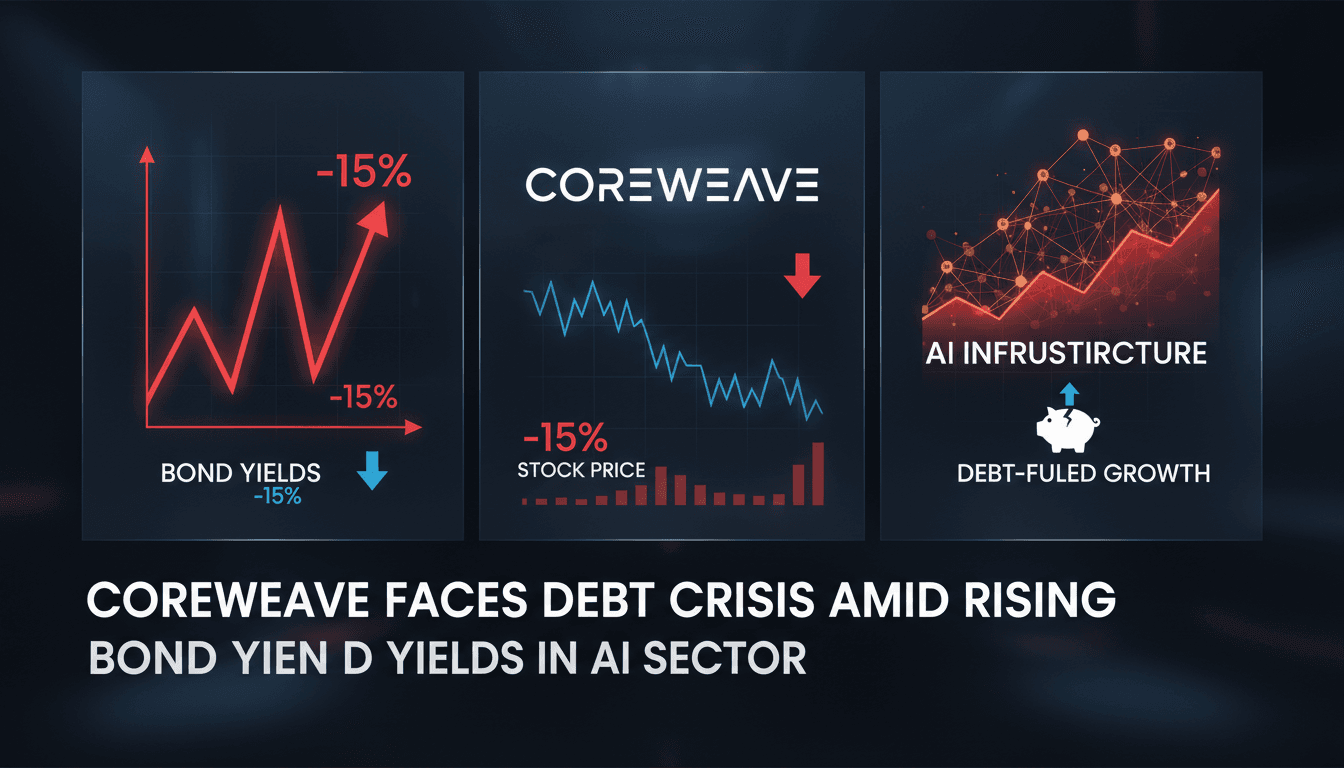
- CoreWeave's bond yields surged to approximately 15% in mid-October 2026, indicating severe distress.
- The company's stock price dropped over 15% amid investor concerns about its $35-50 billion debt and ongoing losses.
- Peer neocloud stocks also declined, reflecting broader market anxiety about debt sustainability in the AI infrastructure space.
The context you actually need
- Rapid expansion of AI infrastructure since 2023 has led neocloud providers like CoreWeave to heavily rely on debt for GPU acquisitions.
- A refinancing wall looms with significant debt maturities concentrated between 2026 and 2028, exacerbated by rising interest rates.
- Investor scrutiny is increasing as hardware depreciation raises questions about long-term cash flow sustainability despite substantial customer backlogs.
What's really happening
In mid-October 2026, CoreWeave faced a critical juncture as yields on its 2032 bonds surged toward 15%, approximately 1,000 basis points over government bonds. This spike signaled distress and triggered a selloff that saw the company's stock price plummet by more than 15%. The backdrop to this turmoil is CoreWeave's staggering debt load, estimated between $35 billion and $50 billion, alongside reported net losses exceeding $1 billion in the first half of the year.
Investor sentiment soured as prominent figures, including Chamath Palihapitiya, publicly questioned the sustainability of CoreWeave's aggressive debt-fueled expansion strategy. Despite these challenges, CoreWeave maintains a substantial backlog of $103.7 billion in performance obligations from major customers, which the company cites as a buffer against immediate financial distress. However, this backlog raises its own set of concerns regarding cash flow and the ability to convert these obligations into actual revenue.
The broader neocloud sector reacted negatively, with stocks of peer companies like Oracle experiencing declines in sympathy. This selloff reflects a growing apprehension among investors about the viability of the neocloud model, particularly as rising interest rates and hardware depreciation create a challenging environment for debt repayment. While NVIDIA provided some assurances regarding capacity, the overall sentiment remains cautious, with analysts highlighting balance sheet weaknesses relative to peers.
The situation underscores a critical moment for the neocloud sector, as the heavy reliance on debt financing to support rapid growth raises questions about long-term sustainability. Investors are now closely monitoring how CoreWeave navigates this crisis and whether it can stabilize its financial position amidst increasing scrutiny.
Who feels it first (and how)
- Investors: Those holding CoreWeave or peer neocloud stocks may see immediate impacts on their portfolios.
- Tech companies: Firms relying on neocloud services could face disruptions or increased costs.
- Financial institutions: Lenders and bondholders may reassess risk exposure to the AI infrastructure sector.
What to watch next
- Interest rate trends: Rising rates could further strain neocloud financing, impacting growth and investment.
- CoreWeave's financial disclosures: Upcoming earnings reports will reveal how the company is managing its debt and cash flow.
- Market sentiment shifts: Watch for changes in investor confidence in neoclouds, which could influence stock prices across the sector.
CoreWeave's bond yields have surged, indicating distress.
Increased scrutiny on debt sustainability across the neocloud sector.
The long-term impact on CoreWeave's operations and its ability to convert backlog into revenue.
Frequently Asked Questions
- Why it matters?
- The distress in CoreWeave's debt highlights vulnerabilities in the neocloud AI financing model, potentially reshaping investor confidence across the sector.
- What happened (in 30 seconds)?
- CoreWeave's bond yields surged to approximately 15% in mid-October 2026, indicating severe distress. The company's stock price dropped over 15% amid investor concerns about its $35-50 billion debt and ongoing losses. Peer neocloud stocks also declined, reflecting broader market anxiety about debt sustainability in the AI infrastructure space.
- What's really happening?
- In mid-October 2026, CoreWeave faced a critical juncture as yields on its 2032 bonds surged toward 15%, approximately 1,000 basis points over government bonds. This spike signaled distress and triggered a selloff that saw the company's stock price plummet by more than 15%. The backdrop to this turmoil is CoreWeave's staggering debt load, estimated between $35 billion and $50 billion, alongside reported net losses exceeding $1 billion in the first half of the year. Investor sentiment soured as
- Who feels it first (and how)?
- Investors: Those holding CoreWeave or peer neocloud stocks may see immediate impacts on their portfolios. Tech companies: Firms relying on neocloud services could face disruptions or increased costs. Financial institutions: Lenders and bondholders may reassess risk exposure to the AI infrastructure sector.
- What to watch next?
- Interest rate trends: Rising rates could further strain neocloud financing, impacting growth and investment. CoreWeave's financial disclosures: Upcoming earnings reports will reveal how the company is managing its debt and cash flow. Market sentiment shifts: Watch for changes in investor confidence in neoclouds, which could influence stock prices across the sector.
Curated insights and thought leadership in enterprise technology.
"Ciente.io delivers curated insights, thought leadership, and trends in B2B tech and innovation."
— A47 Editor
CoreWeave’s Debt Crunch: Are Neoclouds Heading for a Reckoning?
CoreWeave is currently facing a severe debt crisis, with investors demanding exorbitant yields of 1,000 basis points over government bonds, which has pushed the company's debt into distressed territory. This financial turmoil has resulted in a signif...
Markets desk coverage, trading insights, and investor updates.
"WSJ’s markets reporting provides in-depth analysis and context for investors."
— A47 Editor
Stock Pickers Burned by the AI Boom Think Their Moment Has Finally Arrived
CoreWeave's shares recently experienced a decline, signaling a potential shift in the trading landscape as investors reassess their positions amid rising borrowing costs and concerns over the company's financial stability.
Technology business and AI-related headlines.
"Data-driven tech newsroom with global scope."
— A47 Editor
Big Take: CoreWeave And The Fragile AI Economy
CoreWeave is facing significant financial strain, with its debt situation causing concern among investors, as discussed in the latest episode of the Big Take podcast. The company's challenges reflect broader issues within the AI economy, particularly...
Technology business news, market impacts, and innovation trends.
"Bloomberg is a premier financial and tech news provider, respected for its in-depth reporting and analytical rigor."
— A47 Editor
Big Take: CoreWeave And The Fragile AI Economy
CoreWeave is facing significant financial strain, with its debt situation causing concern among investors, as discussed in the latest episode of the Big Take podcast. The company's challenges reflect broader issues within the AI economy, particularly...
Business, investment, entrepreneurship, leadership, and innovation.
"Forbes is known for its coverage of business leaders, market trends, and entrepreneurial ventures with a pro-business editorial stance."
— A47 Editor
CoreWeave Shares Briefly Drop To Lowest Point Of 2026 As Goldman Sachs Issues Upgrade
CoreWeave's shares have dropped to their lowest point of 2026, coinciding with an upgrade from Goldman Sachs, as concerns about the company's financial stability continue to mount. Nvidia CEO Jensen Huang recently expressed confidence in CoreWeave de...