
CoreWeave Faces Debt Crisis Amid Rising Bond Yields and Market Scrutiny
Why it matters
The distress in CoreWeave's debt highlights vulnerabilities in the neocloud financing model, potentially reshaping investor confidence in AI infrastructure.
What happened (in 30 seconds)
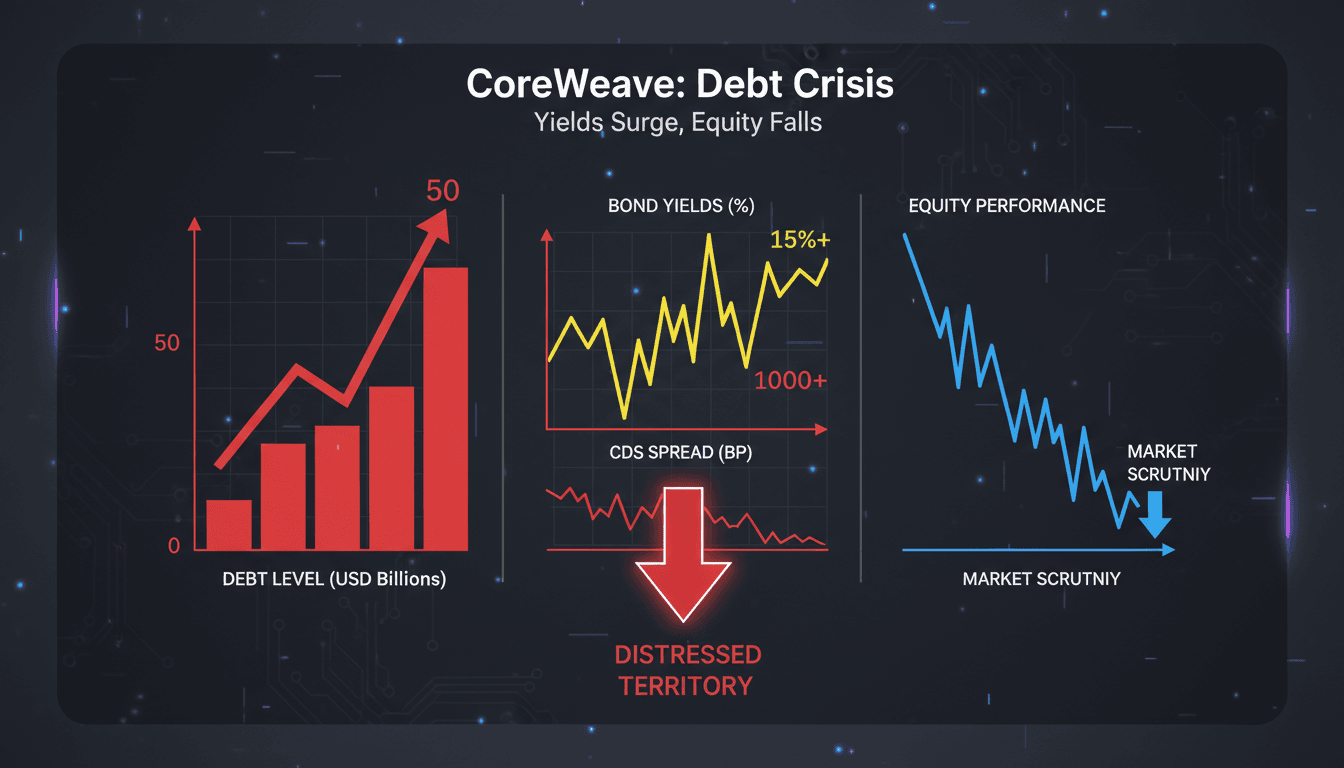
- CoreWeave's debt instruments entered distressed territory as bond yields surged above 15% and credit default swap spreads exceeded 1,000 basis points.
- Equity shares of CoreWeave declined by over 20-30%, raising concerns about the sustainability of debt-fueled growth in the AI sector.
- Investor scrutiny intensified, with major players like Microsoft and OpenAI facing pressure despite a $103.7 billion backlog of performance obligations.
The context you actually need
- Rapid AI expansion since 2023 has led neocloud providers like CoreWeave to accumulate significant debt for infrastructure development.
- High-leverage financing has been common in the sector, with CoreWeave raising multiple private credit facilities amid soaring demand from AI developers.
- Market reactions have included public commentary from influential figures, amplifying concerns about the long-term viability of debt-dependent models in AI.
What's really happening
In mid-October 2026, CoreWeave's unsecured bonds, issued earlier in the year, faced a sharp decline, pushing yields to approximately 15-16% and five-year credit default swap (CDS) spreads to 1,000-1,200 basis points. This financial distress was compounded by a significant drop in equity shares, which fell over 20-30% during the same period. The company's mounting debt, estimated at around $50 billion, is primarily tied to its aggressive expansion in the AI data center space, which has been fueled by a surge in demand for GPU resources.
Despite a reported loss exceeding $1 billion in the first half of 2026, CoreWeave maintains a substantial backlog of non-cancellable obligations totaling $103.7 billion, with major contracts from industry giants like Microsoft and OpenAI. This backlog provides a cushion but also raises questions about the sustainability of such a high level of debt, especially as investor expectations for returns increase.
The situation has drawn scrutiny from market analysts and influential figures, including Elon Musk and Chamath Palihapitiya, who have voiced concerns about the sustainability of private credit in the AI sector. The distress signals from CoreWeave have not only affected its stock but have also prompted a broader examination of the neocloud financing model, which relies heavily on high-leverage strategies. Similar pressures have been observed in other companies within the sector, such as Oracle, indicating a potential systemic issue.
As bond yields rise and equity markets exhibit volatility, the implications for future financing in the AI infrastructure space are significant. Investors are now more cautious, and the episode may mark a turning point in how credit is priced in the AI sector. The ongoing scrutiny could lead to tighter lending conditions and a reevaluation of risk in high-leverage financing models, impacting not just CoreWeave but the entire neocloud ecosystem.
Who feels it first (and how)
- Investors: Those holding CoreWeave's bonds or stocks will experience immediate financial impacts due to declining asset values.
- AI Developers: Companies relying on CoreWeave for GPU resources may face uncertainties regarding service continuity and pricing.
- Credit Markets: Private credit investors may reassess their risk appetite, leading to tighter lending conditions across the sector.
What to watch next
- Bond Yield Trends: Watch for changes in bond yields and CDS spreads, as they will indicate investor sentiment and risk perception in the AI infrastructure market.
- Market Reactions: Monitor how other neocloud providers respond to CoreWeave's situation, as their strategies may signal broader industry shifts.
- Regulatory Scrutiny: Keep an eye on potential regulatory changes that could arise from increased market volatility and scrutiny of high-leverage financing practices.
CoreWeave is experiencing significant financial distress, with rising bond yields and declining equity values.
Increased scrutiny on neocloud financing models will lead to tighter lending conditions and a reevaluation of risk in the sector.
The long-term viability of CoreWeave and similar companies remains uncertain, particularly regarding their ability to meet performance obligations.
Frequently Asked Questions
- Why it matters?
- The distress in CoreWeave's debt highlights vulnerabilities in the neocloud financing model, potentially reshaping investor confidence in AI infrastructure.
- What happened (in 30 seconds)?
- CoreWeave's debt instruments entered distressed territory as bond yields surged above 15% and credit default swap spreads exceeded 1,000 basis points. Equity shares of CoreWeave declined by over 20-30%, raising concerns about the sustainability of debt-fueled growth in the AI sector. Investor scrutiny intensified, with major players like Microsoft and OpenAI facing pressure despite a $103.7 billion backlog of performance obligations.
- What's really happening?
- In mid-October 2026, CoreWeave's unsecured bonds, issued earlier in the year, faced a sharp decline, pushing yields to approximately 15-16% and five-year credit default swap (CDS) spreads to 1,000-1,200 basis points. This financial distress was compounded by a significant drop in equity shares, which fell over 20-30% during the same period. The company's mounting debt, estimated at around $50 billion, is primarily tied to its aggressive expansion in the AI data center space, which has been fuele
- Who feels it first (and how)?
- Investors: Those holding CoreWeave's bonds or stocks will experience immediate financial impacts due to declining asset values. AI Developers: Companies relying on CoreWeave for GPU resources may face uncertainties regarding service continuity and pricing. Credit Markets: Private credit investors may reassess their risk appetite, leading to tighter lending conditions across the sector.
- What to watch next?
- Bond Yield Trends: Watch for changes in bond yields and CDS spreads, as they will indicate investor sentiment and risk perception in the AI infrastructure market. Market Reactions: Monitor how other neocloud providers respond to CoreWeave's situation, as their strategies may signal broader industry shifts. Regulatory Scrutiny: Keep an eye on potential regulatory changes that could arise from increased market volatility and scrutiny of high-leverage financing practices.
Curated insights and thought leadership in enterprise technology.
"Ciente.io delivers curated insights, thought leadership, and trends in B2B tech and innovation."
— A47 Editor
CoreWeave’s Debt Crunch: Are Neoclouds Heading for a Reckoning?
CoreWeave is currently grappling with a severe debt crisis, as investors demand yields of 1,000 basis points over government bonds, pushing the company's debt into distressed territory. This financial turmoil has led to a significant drop in stock pr...
Markets desk coverage, trading insights, and investor updates.
"WSJ’s markets reporting provides in-depth analysis and context for investors."
— A47 Editor
Stock Pickers Burned by the AI Boom Think Their Moment Has Finally Arrived
CoreWeave's shares recently experienced a decline, signaling a potential shift in the trading landscape as investors reassess their positions amid rising borrowing costs and concerns over the company's financial stability.
Technology business and AI-related headlines.
"Data-driven tech newsroom with global scope."
— A47 Editor
Big Take: CoreWeave And The Fragile AI Economy
CoreWeave is facing significant financial strain, with its debt situation causing concern among investors, as discussed in the latest episode of the Big Take podcast. The company's challenges reflect broader issues within the AI economy, particularly...
Technology business news, market impacts, and innovation trends.
"Bloomberg is a premier financial and tech news provider, respected for its in-depth reporting and analytical rigor."
— A47 Editor
Big Take: CoreWeave And The Fragile AI Economy
CoreWeave is facing significant financial strain, with its debt situation causing concern among investors, as discussed in the latest episode of the Big Take podcast. The company's challenges reflect broader issues within the AI economy, particularly...
Consumer tech and culture with frequent AI coverage.
"Influential tech outlet covering AI products and policy."
— A47 Editor
CoreWeave’s debt is becoming the whole AI industry’s problem
CoreWeave's financial situation has deteriorated significantly, with its bonds slipping into distressed territory, prompting concerns from investors and industry observers. Chamath Palihapitiya, known for his insights into SPACs, raised questions abo...
Tech news, reviews, and analysis of consumer electronics, science, art, and culture.
"The Verge is a technology-focused media outlet known for in-depth reporting, product reviews, and coverage of the intersection between technology and culture."
— A47 Editor
CoreWeave’s debt is becoming the whole AI industry’s problem
CoreWeave's financial situation has deteriorated significantly, with its bonds slipping into distressed territory, prompting concerns from investors and industry observers. Chamath Palihapitiya, known for his insights into SPACs, raised questions abo...
Business, investment, entrepreneurship, leadership, and innovation.
"Forbes is known for its coverage of business leaders, market trends, and entrepreneurial ventures with a pro-business editorial stance."
— A47 Editor
CoreWeave Shares Briefly Drop To Lowest Point Of 2026 As Goldman Sachs Issues Upgrade
CoreWeave's shares have dropped to their lowest point of 2026, coinciding with an upgrade from Goldman Sachs, as concerns about the company's financial stability continue to mount. Nvidia CEO Jensen Huang recently expressed confidence in CoreWeave de...