
Mark Zuckerberg Implements Meta Stock Restructuring to Mitigate California Billionaire Tax Impact
Why it matters
This move highlights the ongoing tension between wealth management strategies and regulatory frameworks in high-tax states.
What happened (in 30 seconds)
- Meta Platforms announced a new Class C nonvoting stock structure to help Mark Zuckerberg manage potential tax liabilities.
- Zuckerberg will sell shares to cover an estimated $11 billion tax under California's proposed Proposition 40 while retaining control of the company.
- The plan was approved by Meta's board and is set to take effect in January 2027, pending voter approval of the tax measure.
The context you actually need
- Proposition 40 proposes a one-time 5% tax on California billionaires, projected to raise up to $100 billion for public services.
- Zuckerberg's control over Meta is significant; he holds about 60% of the voting power despite owning only 13% of the shares.
- Negotiations began in July 2026, with Zuckerberg agreeing to remain a California resident for eight years as part of the deal.
What's really happening
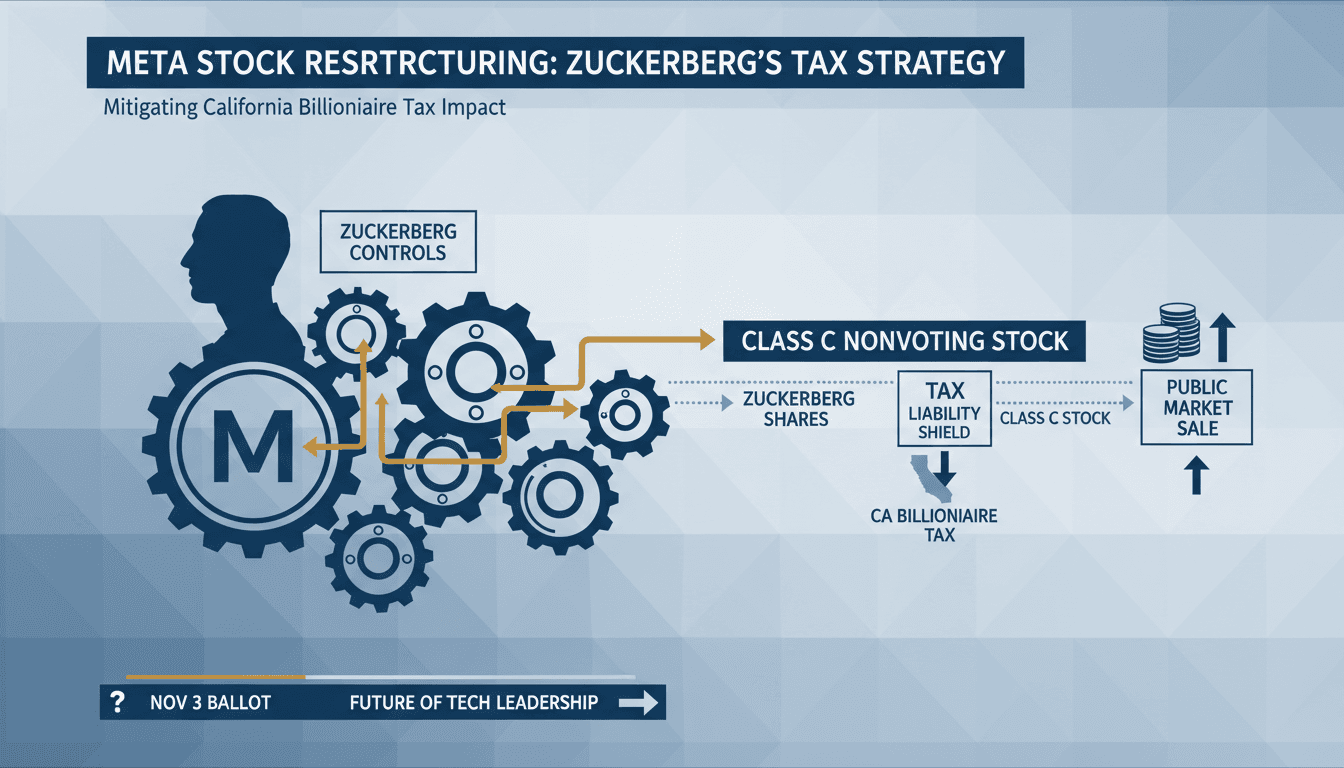
On October 22, 2026, Meta Platforms revealed a strategic restructuring of its stock to address the looming threat of California's Proposition 40, which proposes a one-time 5% wealth tax on billionaires. This tax could impose an estimated liability of $11 billion on Mark Zuckerberg, the company's founder and CEO. To navigate this financial challenge without losing control of Meta, Zuckerberg and the board devised a plan to create a new Class C nonvoting stock structure.
This structure allows Zuckerberg to sell up to 20% of his new shares—equivalent to 10% of his economic stake—without diluting his voting power. The arrangement is designed to provide liquidity while maintaining the existing dual-class voting system, which favors Class B shares held by Zuckerberg. The SEC filings indicate that this restructuring is not merely a reaction to the tax but also a proactive measure to facilitate capital raising and employee compensation, particularly for Meta's AI initiatives.
The negotiations leading to this decision were extensive, culminating in a Founder Alignment Agreement that commits Zuckerberg to remain a California resident for eight years. This residency is crucial for Meta, as it ensures that Zuckerberg's leadership remains anchored in the state, which is vital for operational coordination and strategic decision-making. The board's approval of this plan reflects a broader trend among tech leaders to find innovative solutions to navigate increasing tax burdens while preserving their influence over their companies.
As the November 3 ballot measure approaches, the implications of this restructuring extend beyond Zuckerberg and Meta. It raises questions about how other billionaires in California might respond to similar tax liabilities and whether they will pursue comparable strategies to maintain control over their companies. The outcome of Proposition 40 could set a precedent for how wealth is taxed in high-income states and influence corporate governance practices across the tech industry.
Who feels it first (and how)
- Tech executives: They may consider similar stock restructuring to manage tax liabilities.
- Investors: Those holding Meta shares will monitor the impact on stock value and governance.
- California residents: Voters will feel the effects of Proposition 40 on public services and tax structures.
What to watch next
- Voter response: The outcome of the November 3 vote on Proposition 40 will determine the immediate financial implications for Zuckerberg and other billionaires.
- Market reactions: Watch how other tech companies respond to potential tax liabilities and whether they adopt similar stock structures.
- Legislative trends: Monitor any changes in tax policy that could affect high-net-worth individuals in California and beyond.
Zuckerberg's restructuring plan is designed to mitigate tax liabilities while retaining control of Meta.
Other billionaires may explore similar strategies if Proposition 40 passes.
The long-term effects of this tax on California's economy and tech industry remain to be seen.
Frequently Asked Questions
- Why it matters?
- This move highlights the ongoing tension between wealth management strategies and regulatory frameworks in high-tax states.
- What happened (in 30 seconds)?
- Meta Platforms announced a new Class C nonvoting stock structure to help Mark Zuckerberg manage potential tax liabilities. Zuckerberg will sell shares to cover an estimated $11 billion tax under California's proposed Proposition 40 while retaining control of the company. The plan was approved by Meta's board and is set to take effect in January 2027, pending voter approval of the tax measure.
- What's really happening?
- On October 22, 2026, Meta Platforms revealed a strategic restructuring of its stock to address the looming threat of California's Proposition 40, which proposes a one-time 5% wealth tax on billionaires. This tax could impose an estimated liability of $11 billion on Mark Zuckerberg, the company's founder and CEO. To navigate this financial challenge without losing control of Meta, Zuckerberg and the board devised a plan to create a new Class C nonvoting stock structure. This structure allows Zu
- Who feels it first (and how)?
- Tech executives: They may consider similar stock restructuring to manage tax liabilities. Investors: Those holding Meta shares will monitor the impact on stock value and governance. California residents: Voters will feel the effects of Proposition 40 on public services and tax structures.
- What to watch next?
- Voter response: The outcome of the November 3 vote on Proposition 40 will determine the immediate financial implications for Zuckerberg and other billionaires. Market reactions: Watch how other tech companies respond to potential tax liabilities and whether they adopt similar stock structures. Legislative trends: Monitor any changes in tax policy that could affect high-net-worth individuals in California and beyond.
Startup news with frequent AI coverage.
"Covers launches, funding, and product updates in AI."
— A47 Editor
Mark Zuckerberg’s creative plan to pay California’s proposed billionaire tax without losing control of Meta
Mark Zuckerberg, CEO of Meta, has initiated a strategy to address California's proposed billionaire tax by launching a new class of stock that allows him to maintain control of the company while potentially mitigating his tax liabilities. This move i...
Tech business coverage, major deals, product launches, and Silicon Valley trends.
"WSJ’s tech section offers authoritative reporting on the intersection of technology and business, including exclusive industry analysis."
— A47 Editor
Mark Zuckerberg Threatened to Leave California. Meta’s Board Cut Him a Deal.
Mark Zuckerberg, CEO of Meta, has reached an agreement with the company's board to receive new shares, allowing him to remain in California amid concerns over a proposed billionaire tax that could jeopardize his voting control of the company. This de...
Technology business and AI-related headlines.
"Data-driven tech newsroom with global scope."
— A47 Editor
Meta Offers Zuckerberg New Shares to Shield Him From Wealth Tax
Meta has signed an agreement with CEO Mark Zuckerberg to provide him with new shares, ensuring he remains in California amid discussions of a potential wealth tax in the state. This move comes as Zuckerberg has expressed concerns about the implicatio...
Technology business news, market impacts, and innovation trends.
"Bloomberg is a premier financial and tech news provider, respected for its in-depth reporting and analytical rigor."
— A47 Editor
Meta Offers Zuckerberg New Shares to Shield Him From Wealth Tax
Meta has signed an agreement with CEO Mark Zuckerberg to provide him with new shares, ensuring he remains in California amid discussions of a potential wealth tax in the state. This move comes as Zuckerberg has expressed concerns about the implicatio...