
Bank of Italy study reveals stablecoin remittances lack cost advantages over traditional methods
What happened
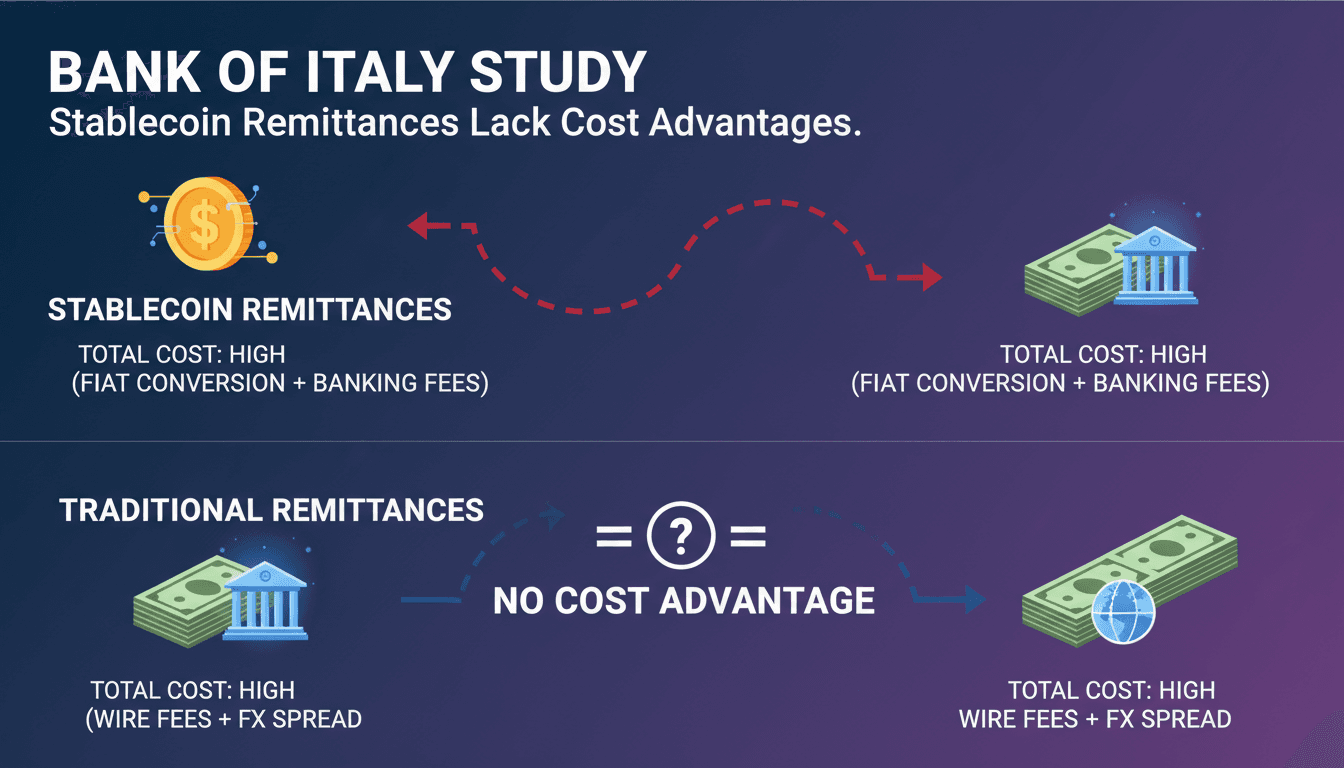
The Bank of Italy has published a study revealing that stablecoin remittances frequently incur costs similar to those of traditional remittance methods. The research indicates that significant fiat conversion costs and banking infrastructure are the primary contributors to these expenses, rather than blockchain fees. This finding emerged from a mystery-shopping experiment conducted across ten remittance corridors.
The study found that stablecoin remittances could cost users up to 9% due to fiat on- and off-ramps. This percentage underscores the potential financial burden on users who may have assumed stablecoins would offer a more economical solution. The research challenges the perception that stablecoins are inherently cheaper for remittance transactions.
The Context
The Bank of Italy's study, published in August 2026, sheds light on the complexities of remittance costs in the digital currency era. As stablecoins gain traction in the financial ecosystem, understanding their cost structure becomes increasingly important for consumers and businesses alike. The research suggests that the anticipated advantages of stablecoins may not materialize due to the underlying banking infrastructure that supports these transactions.
The findings are particularly relevant as the remittance market continues to evolve, with various stakeholders, including regulators and financial institutions, closely monitoring developments. The study's implications could reshape how consumers approach remittance solutions and influence future regulatory frameworks surrounding stablecoins.
Takeaway
The Bank of Italy's findings may prompt further investigations into the efficiency of stablecoins in the remittance market. As the landscape shifts, stakeholders should remain vigilant regarding potential regulatory changes that could impact stablecoin usage. Emerging technologies may also play a role in reducing costs in the remittance sector, warranting attention from industry participants.
Future research will be essential to assess the long-term viability of stablecoins as a cost-effective alternative for remittances. The evolving dynamics of the remittance market will likely influence how consumers and businesses navigate their options in the coming years.
Covers blockchain, cryptocurrency news, project analysis, and market insights.
"CoinDesk is a well-established cryptocurrency and blockchain news provider, offering comprehensive insights, market data, and industry research."
— A47 Editor
Bank of Italy research suggests stablecoins aren't necessarily cheaper for remittances
Research from the Bank of Italy indicates that stablecoin remittances do not consistently offer a cost advantage over traditional transfer methods, with a mystery-shopping experiment revealing that exchange fees and banking infrastructure often negat...
Covers blockchain, cryptocurrency news, project analysis, and market insights.
"Cointelegraph is a leading crypto-focused media outlet known for timely news, analysis, and educational content related to blockchain and digital assets."
— A47 Editor
Bank of Italy finds no consistent cost advantage for stablecoin remittances
The Bank of Italy's recent research indicates that stablecoin remittances do not consistently offer a cost advantage over traditional methods, with fiat conversion costs and payment infrastructure being the primary factors influencing remittance cost...
Real-time updates, analysis, and reports on the blockchain and cryptocurrency sectors.
"Crypto News delivers real-time updates, analysis, and reports on the blockchain and cryptocurrency sectors."
— A47 Editor
Stablecoin remittances hit 9% in Bank of Italy test
A recent test conducted by the Bank of Italy revealed that stablecoin remittances can incur costs of up to 9%, primarily driven by fiat on- and off-ramps across ten different corridors. This finding highlights the financial implications of using stab...