
BIP-110 Proposal Rejected by Bitcoin Miners Sparking Governance Debate
What happened
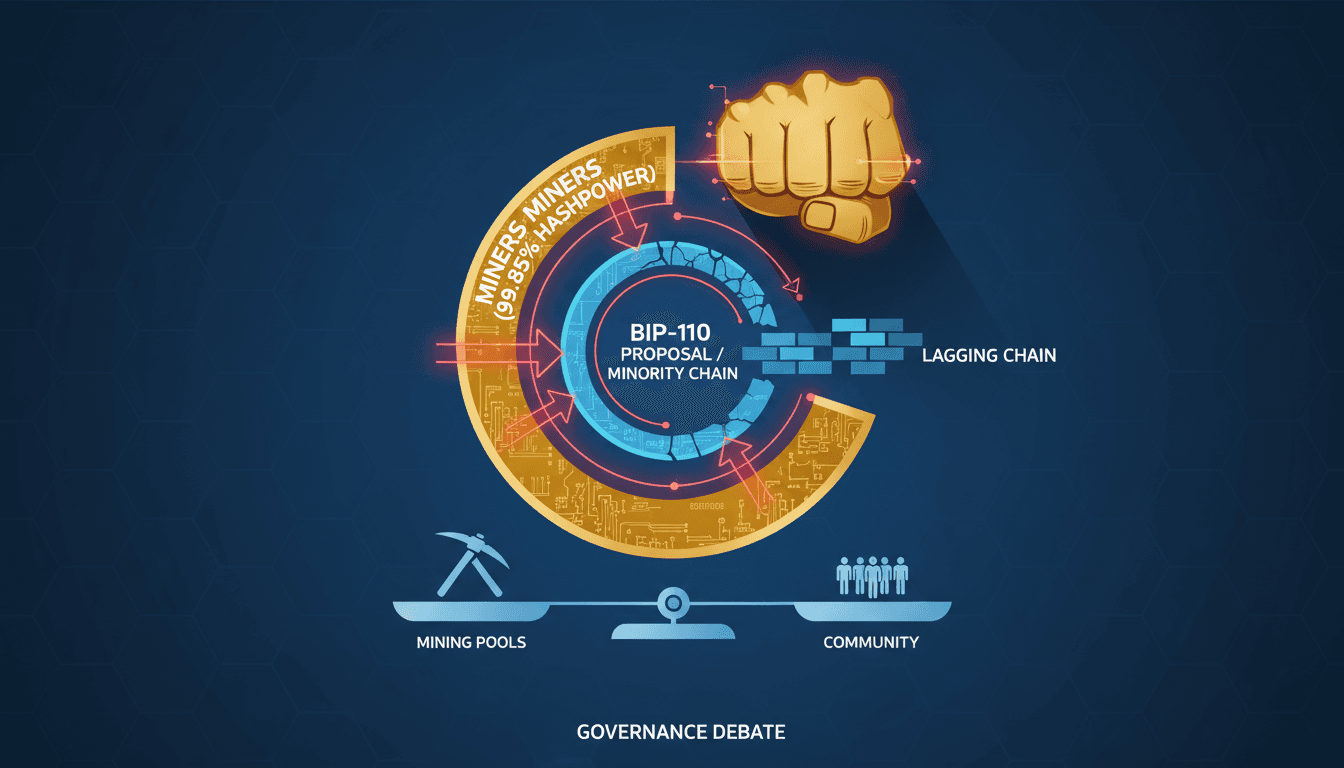
The BIP-110 proposal, which aimed to implement a soft fork in Bitcoin to combat spam transactions, was ultimately rejected by miners. This rejection, supported by an overwhelming 99.85% of hashpower, led to the creation of a minority chain that has struggled to gain traction. While the main Bitcoin chain continued to produce over 300 blocks, the breakaway chain managed to produce only two blocks during the same timeframe.
This decisive rejection has been described as the most significant governance failure since the SegWit2x controversy. The implications of this event are profound, as it highlights the challenges faced by proposals that seek to alter Bitcoin's operational framework.
The Context
BIP-110 was designed to restrict non-financial transactions in order to reduce spam on the Bitcoin network. However, the overwhelming opposition from miners indicates a significant governance failure, raising concerns about the centralized control exerted by major mining pools. The timing of this rejection is critical, as it reflects ongoing tensions within the Bitcoin community regarding how decisions are made and who holds the power.
The breakaway chain's inability to gain momentum further emphasizes the divide within the community. As discussions around governance structures intensify, the Bitcoin ecosystem may need to reevaluate how it approaches consensus and decision-making.
Takeaway
The failure of BIP-110 may prompt renewed discussions on governance structures within the Bitcoin community. Future proposals will likely need to consider more inclusive mechanisms to ensure that changes receive broader support and avoid similar outcomes. As the community reflects on this event, it will be essential to address the influence of mining pools in governance discussions.
Looking ahead, stakeholders should monitor potential new proposals aimed at addressing transaction spam in Bitcoin, as well as ongoing debates about the role of mining pools in shaping the network's future.
Covers Bitcoin plus altcoin news, market updates, and educational resources.
"Bitcoin.com provides news, market data, and guides focused on Bitcoin and the wider crypto industry."
— A47 Editor
Why BIP-110 Failed: Flawed Soft Fork Design or Miner Capture?
Bitcoin Improvement Proposal 110 (BIP-110) has struggled to gain traction, currently receiving only 2.53% support from miners, far below the 55% threshold needed for consensus. This lack of backing has led to significant splits within the Bitcoin net...
Real-time updates, analysis, and reports on the blockchain and cryptocurrency sectors.
"Crypto News delivers real-time updates, analysis, and reports on the blockchain and cryptocurrency sectors."
— A47 Editor
BIP-110 is dead: what Bitcoin’s failed anti-spam fork reveals about governance in 2026
The Bitcoin Improvement Proposal 110 (BIP-110) has effectively failed, having only managed to mine two blocks before freezing, with a staggering 99.85% of hashpower remaining on the original Bitcoin chain. This marks a significant governance rejectio...
Covers blockchain, cryptocurrency news, project analysis, and market insights.
"CoinDesk is a well-established cryptocurrency and blockchain news provider, offering comprehensive insights, market data, and industry research."
— A47 Editor
Bitcoin’s BIP-110 fork is 300 blocks behind BTC and six years from fixing itself
Bitcoin's BIP-110 fork has fallen significantly behind the main Bitcoin chain, currently lagging by over 300 blocks after producing only two blocks since its split on Saturday. This lack of progress highlights the ongoing challenges faced by the fork...