
BIP-110 Bitcoin fork stalls after minimal miner support
Here's what it means for you.
The stalling of the BIP-110 Bitcoin fork highlights the critical role of miner support in the viability of blockchain projects. With only two blocks mined and zero miner signaling, the future of this fork is in jeopardy. Stakeholders in the cryptocurrency space should monitor potential changes to the proof-of-work algorithm, as these adjustments could determine the chain's ability to attract miners and regain momentum. The situation underscores the challenges faced by minority chains in a competitive environment where miner participation is essential for success. As discussions unfold, the broader Bitcoin community's reactions will also be pivotal in shaping the narrative around BIP-110.
What happened
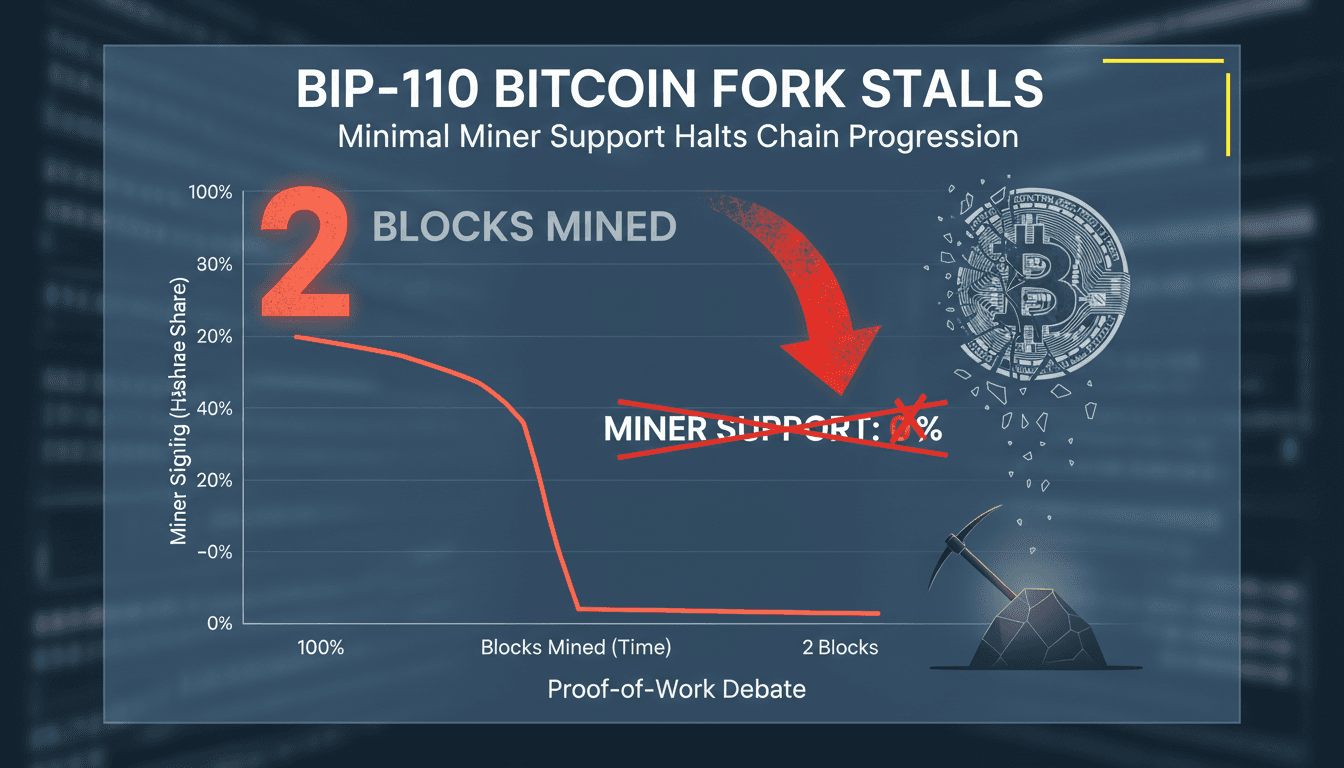
The BIP-110 Bitcoin fork has become inactive after mining just two blocks. This lack of activity is attributed to a significant drop in miner support, which has fallen to zero. Initially, miner support for BIP-110 was only 2.53%, and the chain has now fallen behind by 111 blocks compared to the main Bitcoin chain.
The fork began mandatory signaling on August 8, 2026, but has since stalled, raising concerns about its future. Without renewed miner interest, the BIP-110 chain faces an uncertain path ahead.
The Context
BIP-110 split from Bitcoin during a mandatory signaling period, which is crucial for determining the acceptance of proposed changes within the network. The lack of miner signaling indicates a broader disinterest or concern among miners regarding the fork's viability. As the chain currently sits 111 blocks behind Bitcoin, it highlights the competitive nature of the blockchain ecosystem.
The discussions surrounding potential changes to the proof-of-work algorithm are essential for reviving the chain's activity. Stakeholders are now considering how to attract more miners to ensure the longevity of BIP-110.
Takeaway
The future of the BIP-110 chain hinges on whether changes to its proof-of-work algorithm can attract more miners. Without a substantial increase in miner support, the chain may struggle to gain traction and could remain inactive. Observers should watch for any proposed adjustments and the reactions from the broader Bitcoin community.
As discussions continue, the outcome will significantly impact the perception and potential revival of the BIP-110 fork. The next steps taken by its proponents will be critical in determining its viability in the competitive landscape of cryptocurrencies.
Covers Bitcoin plus altcoin news, market updates, and educational resources.
"Bitcoin.com provides news, market data, and guides focused on Bitcoin and the wider crypto industry."
— A47 Editor
BIP-110 Backers Plot Minority Chain’s PoW Reset to ‘Fire’ Bitcoin Miners
Supporters of Bitcoin Improvement Proposal 110 (BIP-110) are strategizing a proof-of-work (PoW) reset aimed at sidelining Bitcoin miners who currently show minimal support for the proposal, which stands at only 2.53%, far below the 55% required for c...
Real-time updates, analysis, and reports on the blockchain and cryptocurrency sectors.
"Crypto News delivers real-time updates, analysis, and reports on the blockchain and cryptocurrency sectors."
— A47 Editor
Bitcoin BIP-110 split widens as fork freezes at 2 blocks
Bitcoin's BIP-110 branch has stalled after successfully mining only two blocks, falling significantly behind the main chain by 111 blocks as miner support dwindles to zero. This lack of backing has raised concerns about the viability of the proposal,...
Real-time updates, analysis, and reports on the blockchain and cryptocurrency sectors.
"Crypto News delivers real-time updates, analysis, and reports on the blockchain and cryptocurrency sectors."
— A47 Editor
Bitcoin BIP-110 enters mandatory phase at 2.53% support
Bitcoin's BIP-110 has entered a mandatory signaling phase with only 2.53% miner support, significantly below the 55% required for consensus, leading to a stall after mining just two blocks. This lack of backing has resulted in a gap of 98 blocks behi...