
GnosisDAO Approves Transition of Gnosis Chain to Ethereum Rollup Model
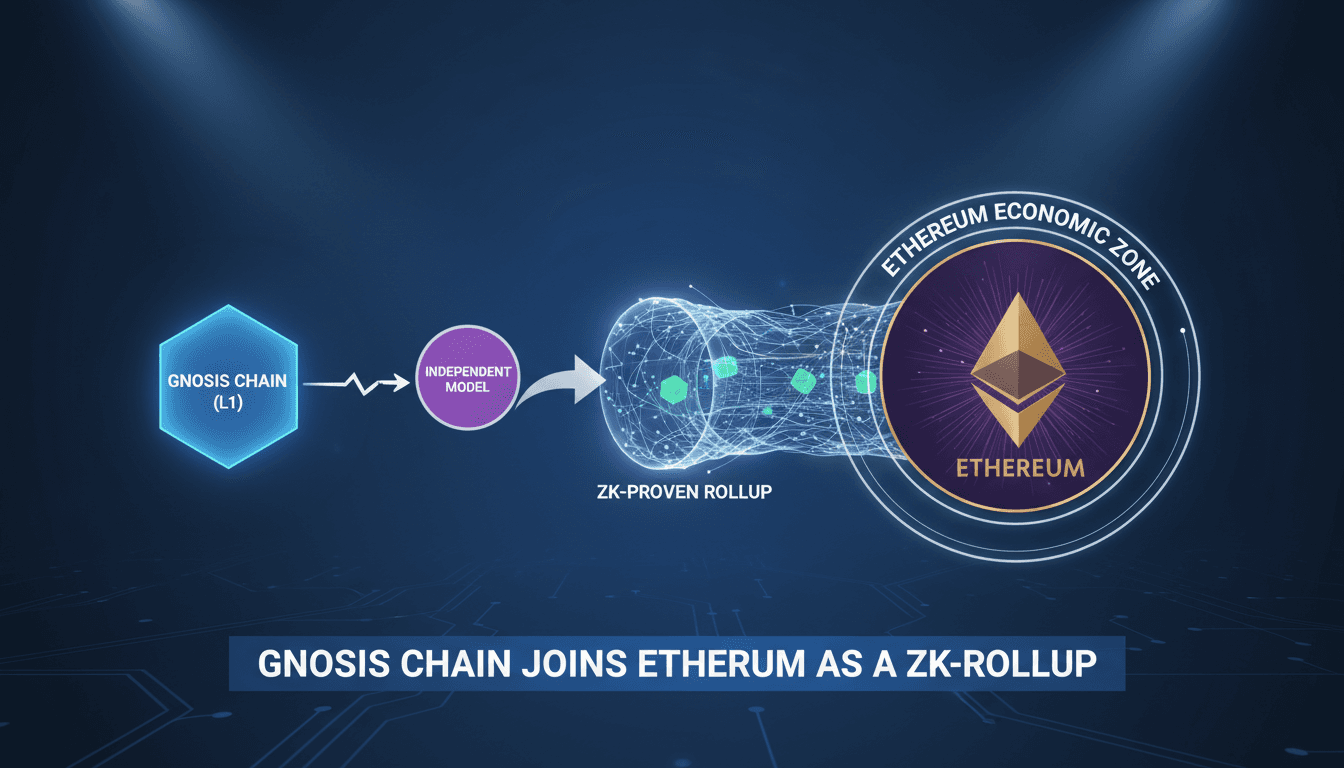
Why it matters
The transition positions Gnosis Chain within the rapidly evolving Ethereum ecosystem, potentially increasing its utility and security.
What happened (in 30 seconds)
- GnosisDAO approved GIP-153 on August 19-20, 2026, mandating Gnosis Chain's transition to a ZK-proven rollup on Ethereum.
- The proposal passed with 123,158 GNO votes in favor, surpassing the required quorum of 75,000 votes.
- Implementation is pending technical development and testing, with a target genesis in late 2026 or early 2027.
The context you actually need
- Gnosis Chain has operated independently as a Layer 1 network, incurring costs that diluted non-stakers by approximately 2.3% annually.
- The Ethereum ecosystem is shifting towards rollup architectures for better scaling and security, prompting GnosisDAO to align with this trend.
- The integration into the Ethereum Economic Zone (EEZ) framework aims to enhance Gnosis Chain's competitive edge and user experience.
What's really happening
Gnosis Chain's transition to a ZK-proven rollup is a strategic move to align with broader Ethereum trends favoring rollup architectures. This decision, encapsulated in GIP-153, reflects a growing recognition within the blockchain community that independent Layer 1 networks face significant competitive disadvantages. By adopting a rollup model, Gnosis Chain can inherit Ethereum's robust security framework, which is crucial for maintaining user trust and network integrity.
The approval of GIP-153, which garnered 123,158 votes in favor, indicates strong community support for this transition. The governance process, executed via Snapshot vote, highlights the decentralized nature of decision-making within GnosisDAO. The proposal not only mandates the technical shift but also unlocks approximately 350,000 staked GNO tokens, which can be repurposed to enhance the network's functionality and liquidity.
Transitioning to a ZK-proven rollup means that Gnosis Chain will leverage zero-knowledge proofs to ensure transaction validity while maintaining privacy. This technology is pivotal for scaling, as it allows for a higher throughput of transactions without compromising security. Users will continue to pay gas fees in xDAI, ensuring a seamless experience during the transition.
The shift also addresses the financial sustainability of Gnosis Chain. Previously, the independent validator model required ongoing treasury-funded staking subsidies, which were not fully covered by network fees. By integrating into the Ethereum Economic Zone, Gnosis Chain can reduce reliance on these subsidies, potentially leading to a more sustainable economic model.
However, the transition is not without its challenges. The implementation phase will require significant technical development and testing to ensure that the new rollup operates smoothly and securely. The timeline for this transition is set for late 2026 or early 2027, but the exact details will depend on the outcomes of the engineering efforts and community feedback.
Who feels it first (and how)
- Developers: They will need to adapt their applications to the new rollup architecture, potentially enhancing performance and security.
- GNO token holders: They stand to benefit from the unlocking of staked tokens and the potential increase in the value of GNO as the network becomes more integrated with Ethereum.
- Users of Gnosis Chain: They will experience improved transaction speeds and security, making decentralized applications more reliable and efficient.
What to watch next
- Technical development updates: Monitoring progress on the engineering front will be crucial to understanding the timeline for the transition.
- Community proposals: Additional governance proposals may emerge to address funding or operational parameters as the implementation phase unfolds.
- Market reactions: Observing how the broader crypto market responds to Gnosis Chain's transition could provide insights into the perceived value of rollup architectures.
GnosisDAO approved GIP-153, initiating the transition to a ZK-proven rollup.
The integration will enhance Gnosis Chain's security and scalability, aligning it with Ethereum's roadmap.
The specific timeline and technical challenges that may arise during the implementation phase.
Frequently Asked Questions
- Why it matters?
- The transition positions Gnosis Chain within the rapidly evolving Ethereum ecosystem, potentially increasing its utility and security.
- What happened (in 30 seconds)?
- GnosisDAO approved GIP-153 on August 19-20, 2026, mandating Gnosis Chain's transition to a ZK-proven rollup on Ethereum. The proposal passed with 123,158 GNO votes in favor, surpassing the required quorum of 75,000 votes. Implementation is pending technical development and testing, with a target genesis in late 2026 or early 2027.
- What's really happening?
- Gnosis Chain's transition to a ZK-proven rollup is a strategic move to align with broader Ethereum trends favoring rollup architectures. This decision, encapsulated in GIP-153, reflects a growing recognition within the blockchain community that independent Layer 1 networks face significant competitive disadvantages. By adopting a rollup model, Gnosis Chain can inherit Ethereum's robust security framework, which is crucial for maintaining user trust and network integrity. The approval of GIP-153
- Who feels it first (and how)?
- Developers: They will need to adapt their applications to the new rollup architecture, potentially enhancing performance and security. GNO token holders: They stand to benefit from the unlocking of staked tokens and the potential increase in the value of GNO as the network becomes more integrated with Ethereum. Users of Gnosis Chain: They will experience improved transaction speeds and security, making decentralized applications more reliable and efficient.
- What to watch next?
- Technical development updates: Monitoring progress on the engineering front will be crucial to understanding the timeline for the transition. Community proposals: Additional governance proposals may emerge to address funding or operational parameters as the implementation phase unfolds. Market reactions: Observing how the broader crypto market responds to Gnosis Chain's transition could provide insights into the perceived value of rollup architectures.
Bitcoin news, technical analysis, and forecasts across crypto markets.
"NewsBTC covers Bitcoin news, technical analysis, and forecasts across crypto markets and major blockchain projects."
— A47 Editor
GnosisDAO Approves Gnosis Chain Shift Toward Ethereum Rollup Model
GnosisDAO has approved the transition of Gnosis Chain to an Ethereum rollup model, marking a significant operational shift for the blockchain. This decision aligns with the growing trend of Layer 2 solutions aimed at enhancing scalability and efficie...
Real-time updates, analysis, and reports on the blockchain and cryptocurrency sectors.
"Crypto News delivers real-time updates, analysis, and reports on the blockchain and cryptocurrency sectors."
— A47 Editor
GnosisDAO approves Gnosis Chain’s move to Ethereum L2
GnosisDAO has approved the transition of Gnosis Chain into an Ethereum rollup, signaling a significant shift in its operational framework. The current validator set for Gnosis Chain is set to retire following the launch of the Ethereum rollup, known ...
Covers blockchain, cryptocurrency news, project analysis, and market insights.
"Cointelegraph is a leading crypto-focused media outlet known for timely news, analysis, and educational content related to blockchain and digital assets."
— A47 Editor
GnosisDAO approves Gnosis Chain for Ethereum Economic Zone
GnosisDAO has approved the transition of Gnosis Chain to an Ethereum Economic Zone (EEZ) rollup, allowing it to settle directly on the Ethereum network instead of relying on an independent validator set. This decision marks a significant operational ...