
GnosisDAO Approves Transition of Gnosis Chain to Ethereum Rollup Model
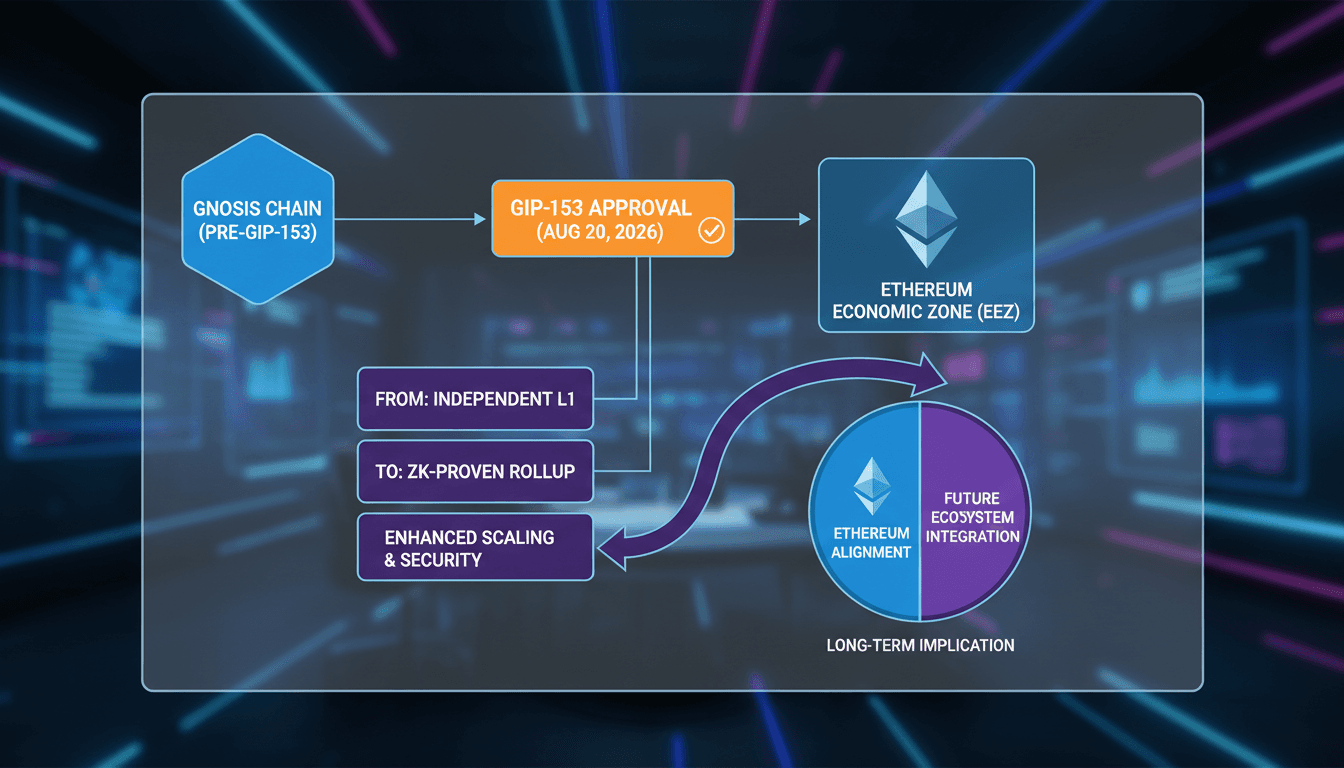
Here's what it means for you.
If you're involved in blockchain or crypto, this shift could enhance security and scalability for your projects.
Why it matters
This transition aligns Gnosis Chain with Ethereum's robust security framework, potentially influencing broader market trends in blockchain architecture.
What happened (in 30 seconds)
- GnosisDAO approved GIP-153 on August 20, 2026, allowing Gnosis Chain to transition to a ZK-proven Ethereum rollup.
- The vote passed with 123,158 GNO in favor, establishing a governance mandate for the chain to settle on Ethereum while retaining xDAI gas payments.
- Implementation is pending, with no immediate migration occurring, as engineering and testing are required before the transition.
The context you actually need
- Gnosis Chain previously operated as a standalone Layer 1 network, maintaining independent consensus while aligning with Ethereum's tooling and values.
- The broader Ethereum ecosystem is increasingly favoring rollup architectures for enhanced scaling and security, prompting projects to consider settlement on the Ethereum mainnet.
- This decision unlocks approximately 350,000 staked GNO, which could influence liquidity and governance dynamics within the Gnosis ecosystem.
What's really happening
On August 20, 2026, GnosisDAO conducted a decisive Snapshot vote on GIP-153, marking a pivotal moment for Gnosis Chain. The proposal's approval signifies a strategic shift from an independent Layer 1 blockchain to a ZK-proven rollup model within the Ethereum Economic Zone (EEZ). This transition is designed to enhance security by leveraging Ethereum's established infrastructure while allowing Gnosis Chain to retain its unique features, such as xDAI gas payments.
The decision reflects a broader trend within the blockchain space, where projects are increasingly recognizing the benefits of rollup architectures. These architectures not only provide scalability but also inherit security from the Ethereum mainnet, making them an attractive option for projects looking to bolster their operational integrity. By moving towards a rollup model, Gnosis Chain aims to align itself more closely with Ethereum's ecosystem, which has been gaining traction as a preferred environment for decentralized applications (dApps) and smart contracts.
However, the transition is not without its complexities. The approval of GIP-153 does not trigger an immediate migration; instead, it sets the stage for a series of engineering and testing phases that will be necessary to ensure a smooth transition. This means that while the governance decision has been made, the actual implementation will take time and careful coordination among stakeholders.
The unlocking of approximately 350,000 staked GNO is another critical aspect of this transition. This liquidity could play a significant role in governance and operational decisions moving forward, as it provides GnosisDAO with additional resources to navigate the complexities of the transition. The decision to retain xDAI gas payments is also noteworthy, as it allows Gnosis Chain to maintain a familiar transaction model for its users, potentially easing the transition for existing participants.
In summary, GnosisDAO's approval of GIP-153 is a strategic move that aligns Gnosis Chain with Ethereum's security and ecosystem, while also preserving key operational features. The transition to a ZK-proven rollup model is indicative of a larger trend within the blockchain space, as projects seek to enhance their scalability and security by leveraging established networks.
Who feels it first (and how)
- Developers: Those building on Gnosis Chain will need to adapt to the new rollup model and its implications for dApp development.
- Investors: Stakeholders holding GNO may see changes in liquidity and governance dynamics as the transition unfolds.
- Users: Current users of Gnosis Chain will experience changes in transaction processes and gas payment structures.
What to watch next
- Implementation Timeline: Keep an eye on the engineering and testing phases, as delays or accelerations could impact market sentiment.
- Market Reactions: Monitor GNO price movements and trading volumes as the transition progresses, which could indicate investor confidence.
- Ecosystem Developments: Watch for new partnerships or integrations that may arise as Gnosis Chain aligns more closely with Ethereum.
GnosisDAO approved GIP-153, initiating the transition process.
The transition will enhance Gnosis Chain's security and scalability over time.
The exact timeline for implementation and its immediate market impact remains uncertain.
Frequently Asked Questions
- Why it matters?
- This transition aligns Gnosis Chain with Ethereum's robust security framework, potentially influencing broader market trends in blockchain architecture.
- What happened (in 30 seconds)?
- GnosisDAO approved GIP-153 on August 20, 2026, allowing Gnosis Chain to transition to a ZK-proven Ethereum rollup. The vote passed with 123,158 GNO in favor, establishing a governance mandate for the chain to settle on Ethereum while retaining xDAI gas payments. Implementation is pending, with no immediate migration occurring, as engineering and testing are required before the transition.
- What's really happening?
- On August 20, 2026, GnosisDAO conducted a decisive Snapshot vote on GIP-153, marking a pivotal moment for Gnosis Chain. The proposal's approval signifies a strategic shift from an independent Layer 1 blockchain to a ZK-proven rollup model within the Ethereum Economic Zone (EEZ). This transition is designed to enhance security by leveraging Ethereum's established infrastructure while allowing Gnosis Chain to retain its unique features, such as xDAI gas payments. The decision reflects a broader t
- Who feels it first (and how)?
- Developers: Those building on Gnosis Chain will need to adapt to the new rollup model and its implications for dApp development. Investors: Stakeholders holding GNO may see changes in liquidity and governance dynamics as the transition unfolds. Users: Current users of Gnosis Chain will experience changes in transaction processes and gas payment structures.
- What to watch next?
- Implementation Timeline: Keep an eye on the engineering and testing phases, as delays or accelerations could impact market sentiment. Market Reactions: Monitor GNO price movements and trading volumes as the transition progresses, which could indicate investor confidence. Ecosystem Developments: Watch for new partnerships or integrations that may arise as Gnosis Chain aligns more closely with Ethereum.
Bitcoin news, technical analysis, and forecasts across crypto markets.
"NewsBTC covers Bitcoin news, technical analysis, and forecasts across crypto markets and major blockchain projects."
— A47 Editor
GnosisDAO Approves Gnosis Chain Shift Toward Ethereum Rollup Model
GnosisDAO has approved the transition of Gnosis Chain to an Ethereum rollup model, marking a significant operational shift for the blockchain. This decision aligns with the growing trend of Layer 2 solutions aimed at enhancing scalability and efficie...
Real-time updates, analysis, and reports on the blockchain and cryptocurrency sectors.
"Crypto News delivers real-time updates, analysis, and reports on the blockchain and cryptocurrency sectors."
— A47 Editor
GnosisDAO approves Gnosis Chain’s move to Ethereum L2
GnosisDAO has approved the transition of Gnosis Chain into an Ethereum rollup, signaling a significant shift in its operational framework. The current validator set for Gnosis Chain is set to retire following the launch of the Ethereum rollup, known ...
Covers blockchain, cryptocurrency news, project analysis, and market insights.
"Cointelegraph is a leading crypto-focused media outlet known for timely news, analysis, and educational content related to blockchain and digital assets."
— A47 Editor
GnosisDAO approves Gnosis Chain for Ethereum Economic Zone
GnosisDAO has approved the transition of Gnosis Chain to an Ethereum Economic Zone (EEZ) rollup, allowing it to settle directly on the Ethereum network instead of relying on an independent validator set. This decision marks a significant operational ...