
Pakistan Implements Licensing Framework for Crypto Providers with September 5 Deadline
Why it matters
This regulatory framework aims to formalize Pakistan's burgeoning cryptocurrency market, potentially affecting millions of users and service providers.
What happened (in 30 seconds)
- Pakistan's Virtual Assets Regulatory Authority (PVARA) activated its licensing framework in late August 2026.
- Existing virtual asset service providers (VASPs) must apply for a no-objection certificate (NOC) by September 5, 2026, or cease operations.
- The framework targets an estimated 30-40 million crypto users in Pakistan, aiming to enforce compliance and integrate with the banking system.
The context you actually need
- Prior to this, Pakistan's cryptocurrency sector operated largely unregulated since a 2018 advisory from the State Bank of Pakistan.
- The Virtual Assets Act, 2026, established PVARA as the federal regulator and provided a six-month transition period for existing providers.
- Public consultations were held from June 11 to July 2, 2026, leading to the final regulations and the opening of the licensing portal.
What's really happening
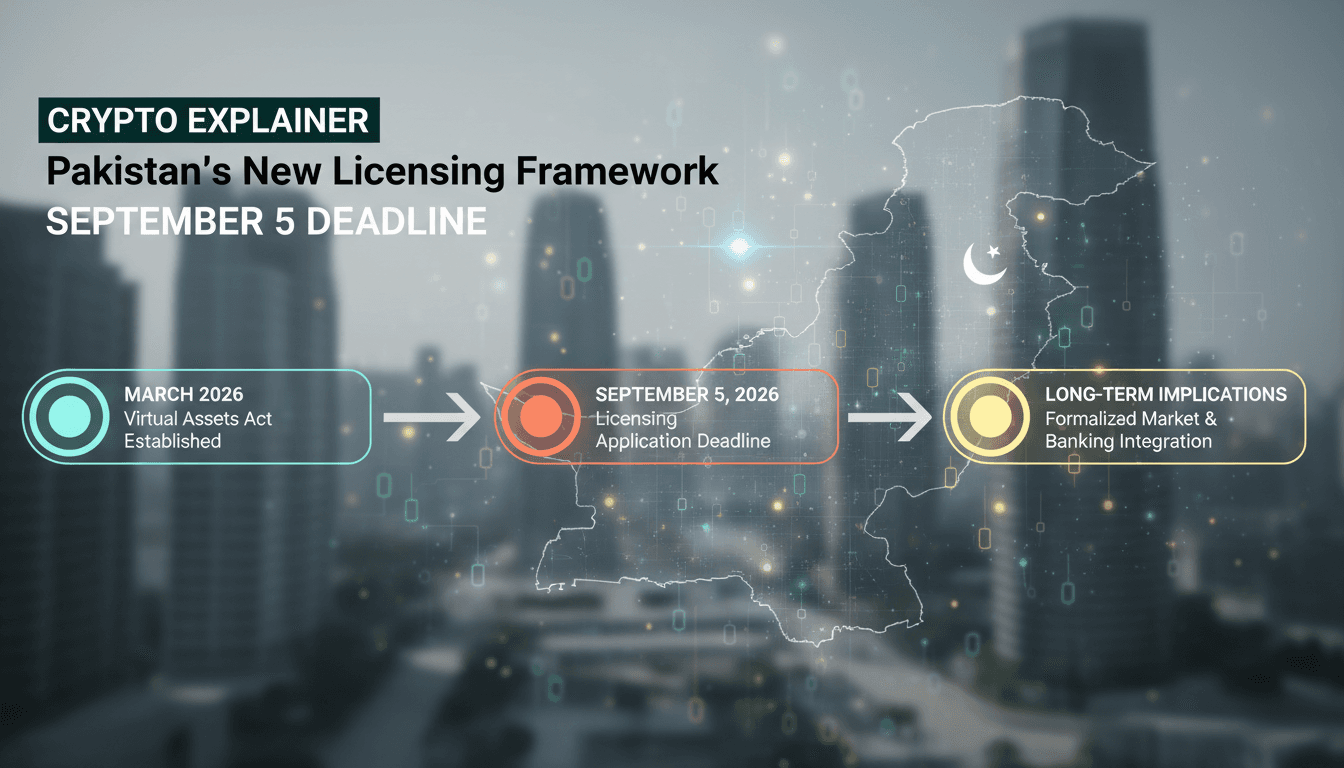
The activation of Pakistan's Virtual Assets Regulatory Authority (PVARA) licensing framework marks a significant shift in the country's approach to cryptocurrency regulation. The Virtual Assets Act, effective March 5, 2026, was designed to bring order to a previously chaotic market, where an estimated 30-40 million users engaged with virtual assets without formal oversight. The new regulations require existing virtual asset service providers (VASPs) to apply for a no-objection certificate (NOC) by September 5, 2026, or face the prospect of halting operations.
This regulatory move is not merely about compliance; it aims to integrate licensed entities into the formal banking system, which had been restricted since the 2018 advisory. The State Bank of Pakistan's April 2026 circular allowed licensed providers access to segregated banking accounts, reversing previous limitations. This integration is crucial for fostering consumer protection and enhancing the legitimacy of the crypto market in Pakistan.
The licensing framework encompasses various categories, including exchanges, custody services, derivatives, and mining operations. Each category comes with stringent requirements, such as Know Your Customer (KYC) and Anti-Money Laundering (AML) protocols, cybersecurity measures, and local incorporation mandates. These requirements are designed to ensure that operators adhere to international standards, thereby increasing consumer trust and reducing the risk of fraud.
PVARA Chairman Bilal bin Saqib emphasized that the framework is intended to protect consumers while facilitating economic integration. Early movers like Binance and HTX have already received preliminary NOCs, indicating a willingness among some providers to comply with the new regulations. However, the looming September 5 deadline poses a challenge for many transitional operators who may not be prepared to meet the new standards.
In the short term, non-compliant firms may face service disruptions, which could affect users relying on these platforms for transactions. In the long term, the establishment of a regulated environment may lead to standardized compliance across the sector, potentially paving the way for innovations such as remittances and tokenized assets. However, the immediate market response has shown no significant shifts, suggesting that stakeholders are still assessing the implications of these new regulations.
Who feels it first (and how)
- Existing virtual asset service providers (VASPs): Must navigate the licensing process or cease operations.
- Crypto users in Pakistan: Approximately 30-40 million users may face service disruptions if providers do not comply.
- Financial institutions: Banks may need to adapt to new compliance requirements for dealing with licensed crypto entities.
What to watch next
- Compliance rates: Monitor how many VASPs successfully apply for NOCs by the September 5 deadline, as this will indicate market stability.
- User sentiment: Keep an eye on how crypto users react to potential service disruptions and the overall trust in licensed providers.
- Market expansion: Watch for developments in remittances and tokenized assets as licensed entities begin to explore new opportunities.
The licensing portal is open, and the September 5 deadline is approaching.
Some VASPs will successfully obtain NOCs, while others may cease operations.
The long-term impact on user trust and market dynamics remains to be seen.
Frequently Asked Questions
- Why it matters?
- This regulatory framework aims to formalize Pakistan's burgeoning cryptocurrency market, potentially affecting millions of users and service providers.
- What happened (in 30 seconds)?
- Pakistan's Virtual Assets Regulatory Authority (PVARA) activated its licensing framework in late August 2026. Existing virtual asset service providers (VASPs) must apply for a no-objection certificate (NOC) by September 5, 2026, or cease operations. The framework targets an estimated 30-40 million crypto users in Pakistan, aiming to enforce compliance and integrate with the banking system.
- What's really happening?
- The activation of Pakistan's Virtual Assets Regulatory Authority (PVARA) licensing framework marks a significant shift in the country's approach to cryptocurrency regulation. The Virtual Assets Act, effective March 5, 2026, was designed to bring order to a previously chaotic market, where an estimated 30-40 million users engaged with virtual assets without formal oversight. The new regulations require existing virtual asset service providers (VASPs) to apply for a no-objection certificate (NOC)
- Who feels it first (and how)?
- Existing virtual asset service providers (VASPs): Must navigate the licensing process or cease operations. Crypto users in Pakistan: Approximately 30-40 million users may face service disruptions if providers do not comply. Financial institutions: Banks may need to adapt to new compliance requirements for dealing with licensed crypto entities.
- What to watch next?
- Compliance rates: Monitor how many VASPs successfully apply for NOCs by the September 5 deadline, as this will indicate market stability. User sentiment: Keep an eye on how crypto users react to potential service disruptions and the overall trust in licensed providers. Market expansion: Watch for developments in remittances and tokenized assets as licensed entities begin to explore new opportunities.
Covers Bitcoin plus altcoin news, market updates, and educational resources.
"Bitcoin.com provides news, market data, and guides focused on Bitcoin and the wider crypto industry."
— A47 Editor
Pakistan Puts Crypto Firms on Notice as Sept. 5 Deadline Looms
Pakistan's Virtual Assets Regulatory Authority (PVARA) has issued a notice to cryptocurrency firms, mandating that they apply for a No Objection Certificate (NOC) by September 5, 2026, to continue operations under the new regulatory framework. This i...
Covers blockchain, cryptocurrency news, project analysis, and market insights.
"CoinDesk is a well-established cryptocurrency and blockchain news provider, offering comprehensive insights, market data, and industry research."
— A47 Editor
Pakistan kicks off crypto licensing regime with Sept. 5 registration deadline
Pakistan has initiated a new licensing regime for cryptocurrency service providers, requiring companies to submit applications for a no-objection certificate by September 5, 2026, or cease operations. This move is part of the country's efforts to reg...
Covers blockchain, cryptocurrency news, project analysis, and market insights.
"Cointelegraph is a leading crypto-focused media outlet known for timely news, analysis, and educational content related to blockchain and digital assets."
— A47 Editor
Pakistan opens crypto licensing portal, sets Sept. 5 deadline for existing firms
Pakistan has opened a licensing portal for cryptocurrency service providers, requiring existing firms to apply for a No Objection Certificate (NOC) by September 5, 2026, or cease operations under the new regulatory framework. This initiative is part ...