
Solana Validators Approve Proposal to Double Annual Disinflation Rate
Why it matters
This governance decision accelerates Solana's path to a lower inflation rate, potentially affecting market dynamics and investor confidence.
What happened (in 30 seconds)
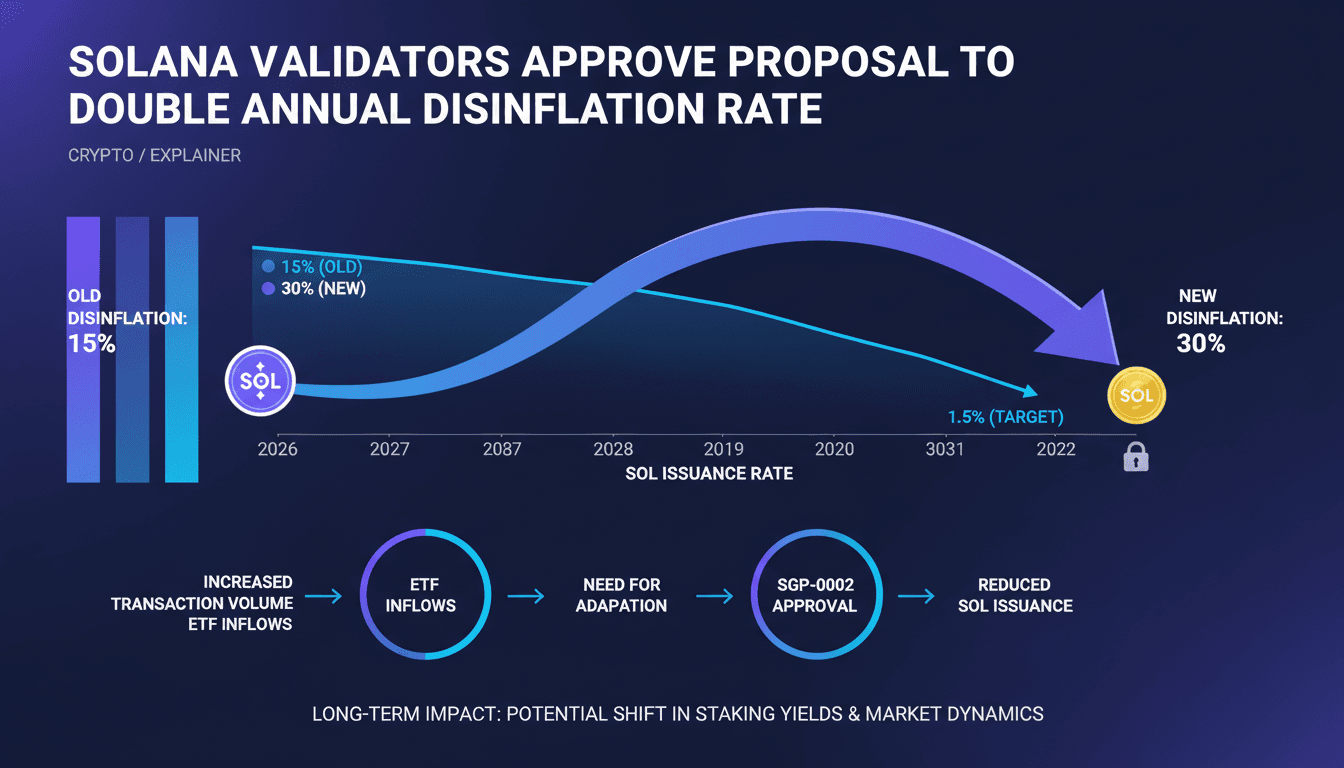
- On August 28, 2026, Solana validators approved proposal SGP-0002 to double the annual disinflation rate from 15% to 30%.
- The approval reduces projected SOL issuance by an estimated 18.9 million tokens over the next six years.
- Participation was significant, with 60.7% of eligible stake voting, and the proposal secured 67% support.
The context you actually need
- Solana's disinflationary model aims to reduce the annual inflation rate until it reaches a terminal floor of 1.5%.
- Previous discussions had explored accelerating this taper, culminating in the first binding on-chain governance vote.
- Market conditions included record transaction volumes and substantial inflows into Solana ETFs, indicating growing interest in the ecosystem.
What's really happening
The approval of SGP-0002, also known as Double Disinflation, marks a pivotal moment for Solana's governance structure. This proposal was developed by engineers at Helius and represents the first formal on-chain governance process under newly established rules. The decision to double the disinflation rate from 15% to 30% is significant because it accelerates the timeline to reach the terminal inflation target of 1.5% from approximately 5.7 years to just 2.8 years.
This change is expected to reduce the total issuance of SOL tokens by an estimated 18.9 million over the next six years, which could have profound implications for the token's value and staking rewards. The validators' vote saw a strong turnout, with 176.29 million SOL in favor and 66.19 million against, surpassing the required two-thirds supermajority. Notably, Kraken, a major player in the ecosystem, reversed its initial opposition to support the proposal, indicating a shift in sentiment among key stakeholders.
The broader context includes a surge in Solana's transaction volumes and significant inflows into U.S. Solana ETFs, which have exceeded $1 billion in assets. This environment of increasing demand for SOL could amplify the effects of the disinflationary measures, as a reduced issuance rate may lead to a tighter supply of tokens in circulation. As staking yields are projected to decline over time due to this reduced issuance, investors may need to reassess their strategies in light of these changes.
The failed parallel proposal, SGP-0003, which aimed to implement a fee-burn mechanism, highlights the complexities of governance in decentralized networks. While the fee-burn proposal did not pass, the overwhelming support for the Solana Constitution (SGP-0001) indicates a strong desire for structured governance among validators. This governance evolution is crucial as it sets the stage for future proposals and the overall direction of the Solana ecosystem.
Who feels it first (and how)
- SOL Holders: Immediate impact on token value and staking yields.
- Validators: Changes in governance dynamics and potential shifts in staking strategies.
- Investors in Solana ETFs: Potential changes in asset performance linked to SOL's issuance rate.
- Developers and Projects on Solana: Adjustments in project funding and tokenomics due to reduced supply.
What to watch next
- Market Reaction: Monitor SOL's price movements and trading volumes post-approval to gauge investor sentiment.
- Staking Yields: Keep an eye on how staking rewards evolve as issuance slows, impacting long-term staking strategies.
- Future Proposals: Watch for new governance proposals that may emerge in response to this decision, particularly around fee structures and ecosystem incentives.
The disinflation rate has officially doubled, impacting SOL issuance.
Staking yields will decline over time as the supply of SOL decreases.
The long-term market reaction to this governance decision and its effects on SOL's price stability.
Frequently Asked Questions
- Why it matters?
- This governance decision accelerates Solana's path to a lower inflation rate, potentially affecting market dynamics and investor confidence.
- What happened (in 30 seconds)?
- On August 28, 2026, Solana validators approved proposal SGP-0002 to double the annual disinflation rate from 15% to 30%. The approval reduces projected SOL issuance by an estimated 18.9 million tokens over the next six years. Participation was significant, with 60.7% of eligible stake voting, and the proposal secured 67% support.
- What's really happening?
- The approval of SGP-0002, also known as Double Disinflation, marks a pivotal moment for Solana's governance structure. This proposal was developed by engineers at Helius and represents the first formal on-chain governance process under newly established rules. The decision to double the disinflation rate from 15% to 30% is significant because it accelerates the timeline to reach the terminal inflation target of 1.5% from approximately 5.7 years to just 2.8 years. This change is expected to red
- Who feels it first (and how)?
- SOL Holders: Immediate impact on token value and staking yields. Validators: Changes in governance dynamics and potential shifts in staking strategies. Investors in Solana ETFs: Potential changes in asset performance linked to SOL's issuance rate. Developers and Projects on Solana: Adjustments in project funding and tokenomics due to reduced supply.
- What to watch next?
- Market Reaction: Monitor SOL's price movements and trading volumes post-approval to gauge investor sentiment. Staking Yields: Keep an eye on how staking rewards evolve as issuance slows, impacting long-term staking strategies. Future Proposals: Watch for new governance proposals that may emerge in response to this decision, particularly around fee structures and ecosystem incentives.
Covers blockchain, cryptocurrency news, project analysis, and market insights.
"Cointelegraph is a leading crypto-focused media outlet known for timely news, analysis, and educational content related to blockchain and digital assets."
— A47 Editor
Solana validators approve proposal to accelerate SOL disinflation
Solana validators have approved a proposal to double the annual disinflation rate of SOL from 15% to 30%, aiming to reduce future token issuance while maintaining the long-term inflation target. This decision reflects a significant governance move wi...
Covers blockchain, cryptocurrency news, project analysis, and market insights.
"CoinDesk is a well-established cryptocurrency and blockchain news provider, offering comprehensive insights, market data, and industry research."
— A47 Editor
Solana vote to double disinflation passes by a hair in dramatic finish
Solana's first network-wide vote to double its annual disinflation rate narrowly passed, with significant last-minute support from Kraken and Galaxy-linked validators, highlighting the intense dynamics of governance within the blockchain community.
Covers blockchain, cryptocurrency news, project analysis, and market insights.
"CoinDesk is a well-established cryptocurrency and blockchain news provider, offering comprehensive insights, market data, and industry research."
— A47 Editor
Solana’s faster disinflation plan leads vote as $800K burn proposal trails
Solana's governance proposals have successfully cleared quorum, with a plan to slow the creation of new SOL tokens narrowly passing, while a separate proposal to increase token burns to $800,000 daily is trailing in support. This reflects ongoing dis...
Real-time updates, analysis, and reports on the blockchain and cryptocurrency sectors.
"Crypto News delivers real-time updates, analysis, and reports on the blockchain and cryptocurrency sectors."
— A47 Editor
Solana proposals could cut $1.5B in SOL issuance
Solana voters are currently deliberating on proposals that could lead to a significant reduction in SOL issuance, potentially cutting $1.5 billion in new tokens. These proposals include measures for faster disinflation and resource-fee burns aimed at...