
FinCEN Links $12.7 Billion in Digital Asset Scams to Southeast Asian Criminal Networks
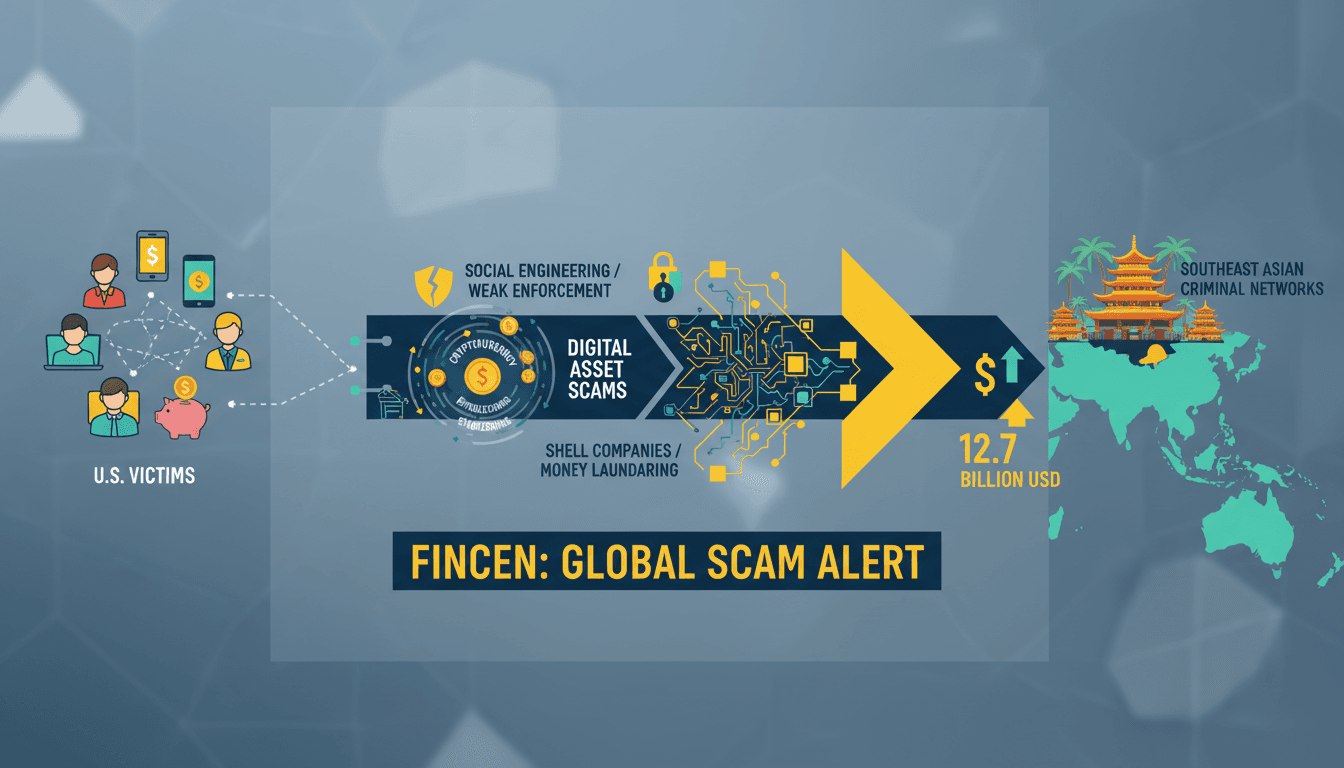
Here's what it means for you.
If you engage in digital asset investments, heightened scrutiny and potential regulatory changes are on the horizon.
Why it matters
The alarming scale of these scams poses significant risks to investors and financial institutions globally.
What happened (in 30 seconds)
- FinCEN identified approximately $12.7 billion in suspected digital asset scams linked to Southeast Asian criminal organizations.
- The report analyzed 33,904 Bank Secrecy Act filings from September 2023 to December 2025, revealing widespread manipulation of victims.
- Criminal operations exploit social engineering tactics, laundering proceeds through stablecoins and shell companies.
The context you actually need
- Southeast Asia has become a hotspot for transnational criminal networks due to weak enforcement and the rise of digital asset platforms.
- Legislative efforts in Myanmar and Cambodia are underway to combat these scams, reflecting growing international pressure.
- Victims are primarily U.S. residents targeted through sophisticated schemes like pig butchering and romance scams.
What's really happening
The FinCEN report released on September 3, 2026, sheds light on a staggering $12.7 billion in suspected financial activity tied to digital asset scams, primarily orchestrated by transnational criminal organizations in Southeast Asia. This analysis is based on a comprehensive review of 33,904 Bank Secrecy Act (BSA) filings from September 2023 to December 2025, revealing a troubling trend in the manipulation of victims into transferring funds to fraudulent cryptocurrency platforms.
These scams typically involve a multi-layered approach where victims are lured through social engineering tactics, often under the guise of legitimate investment opportunities. The term "pig butchering" refers to a specific method where scammers build a relationship with victims, gradually convincing them to invest larger sums into fake platforms. Once the funds are transferred, the criminals launder the proceeds through a network of stablecoins, primarily USDT, and shell companies, ultimately routing the money to non-U.S. exchanges.
The report highlights a monthly growth in BSA filings averaging 10.9%, indicating that financial institutions are increasingly aware of the risks associated with these scams. Money services businesses and banks account for the majority of these submissions, reflecting a growing concern within the financial sector. In response, FinCEN has issued an alert urging financial institutions to enhance their vigilance and reporting practices, particularly regarding stablecoin transfers and suspicious patterns linked to overseas scam centers.
The broader implications of this analysis are significant. As digital assets continue to gain traction, the potential for exploitation by criminal organizations increases. The weak enforcement mechanisms in Southeast Asia, coupled with the rapid rise of digital asset platforms, create an environment ripe for fraud. This situation is exacerbated by human trafficking, where individuals are forced into labor within these scam operations, further complicating the landscape of financial crime.
Legislative responses in the region, such as Myanmar's July 2026 legislation imposing severe penalties for scam-related violence and Cambodia's proposed anti-scam measures, reflect a growing recognition of the need to address these industrial-scale fraud centers. However, the effectiveness of these measures remains to be seen, as the international community continues to scrutinize the operations of these criminal networks.
Who feels it first (and how)
- U.S. investors: Individuals engaging in digital asset investments are at risk of losing significant amounts of money.
- Financial institutions: Banks and money services businesses must enhance compliance measures and reporting protocols.
- Southeast Asian governments: Authorities face pressure to implement effective regulations and combat transnational crime.
What to watch next
- Increased regulatory scrutiny: Expect tighter regulations on digital asset transactions as authorities respond to the growing threat of scams.
- Legislative developments: Monitor new laws in Southeast Asia aimed at curbing fraud and protecting victims.
- Victim support initiatives: Watch for programs aimed at educating potential investors about the risks associated with digital asset scams.
$12.7 billion in suspected scams linked to Southeast Asian criminal organizations.
Enhanced regulatory measures and increased vigilance from financial institutions.
The long-term effectiveness of regional legislative efforts to combat these scams.
Frequently Asked Questions
- Why it matters?
- The alarming scale of these scams poses significant risks to investors and financial institutions globally.
- What happened (in 30 seconds)?
- FinCEN identified approximately $12.7 billion in suspected digital asset scams linked to Southeast Asian criminal organizations. The report analyzed 33,904 Bank Secrecy Act filings from September 2023 to December 2025, revealing widespread manipulation of victims. Criminal operations exploit social engineering tactics, laundering proceeds through stablecoins and shell companies.
- What's really happening?
- The FinCEN report released on September 3, 2026, sheds light on a staggering $12.7 billion in suspected financial activity tied to digital asset scams, primarily orchestrated by transnational criminal organizations in Southeast Asia. This analysis is based on a comprehensive review of 33,904 Bank Secrecy Act (BSA) filings from September 2023 to December 2025, revealing a troubling trend in the manipulation of victims into transferring funds to fraudulent cryptocurrency platforms. These scams ty
- Who feels it first (and how)?
- U.S. investors: Individuals engaging in digital asset investments are at risk of losing significant amounts of money. Financial institutions: Banks and money services businesses must enhance compliance measures and reporting protocols. Southeast Asian governments: Authorities face pressure to implement effective regulations and combat transnational crime.
- What to watch next?
- Increased regulatory scrutiny: Expect tighter regulations on digital asset transactions as authorities respond to the growing threat of scams. Legislative developments: Monitor new laws in Southeast Asia aimed at curbing fraud and protecting victims. Victim support initiatives: Watch for programs aimed at educating potential investors about the risks associated with digital asset scams.
Covers blockchain, cryptocurrency news, project analysis, and market insights.
"Cointelegraph is a leading crypto-focused media outlet known for timely news, analysis, and educational content related to blockchain and digital assets."
— A47 Editor
FinCEN ties $13B in crypto scams to non-US operations
The Financial Crimes Enforcement Network (FinCEN) has linked approximately $13 billion in cryptocurrency scams to transnational criminal organizations operating primarily from Southeast Asia, targeting U.S. residents. This alarming trend highlights t...
Real-time updates, analysis, and reports on the blockchain and cryptocurrency sectors.
"Crypto News delivers real-time updates, analysis, and reports on the blockchain and cryptocurrency sectors."
— A47 Editor
FinCEN flags $12.7B tied to Southeast Asia crypto investment scams
The U.S. Treasury's Financial Crimes Enforcement Network (FinCEN) has identified approximately $12.7 billion in suspicious financial activities linked to cryptocurrency investment scams primarily orchestrated from Southeast Asia, based on nearly 34,0...
Covers Bitcoin plus altcoin news, market updates, and educational resources.
"Bitcoin.com provides news, market data, and guides focused on Bitcoin and the wider crypto industry."
— A47 Editor
Treasury Flags Nearly $13 Billion Tied to Overseas Crypto Scams
The U.S. Treasury Department has flagged nearly $13 billion linked to overseas cryptocurrency scams, indicating a significant concern over the rising prevalence of fraudulent activities in the digital asset space. This alert highlights the ongoing ch...