
FinCEN Identifies $12.7 Billion in Suspected Crypto Scams Linked to Southeast Asia
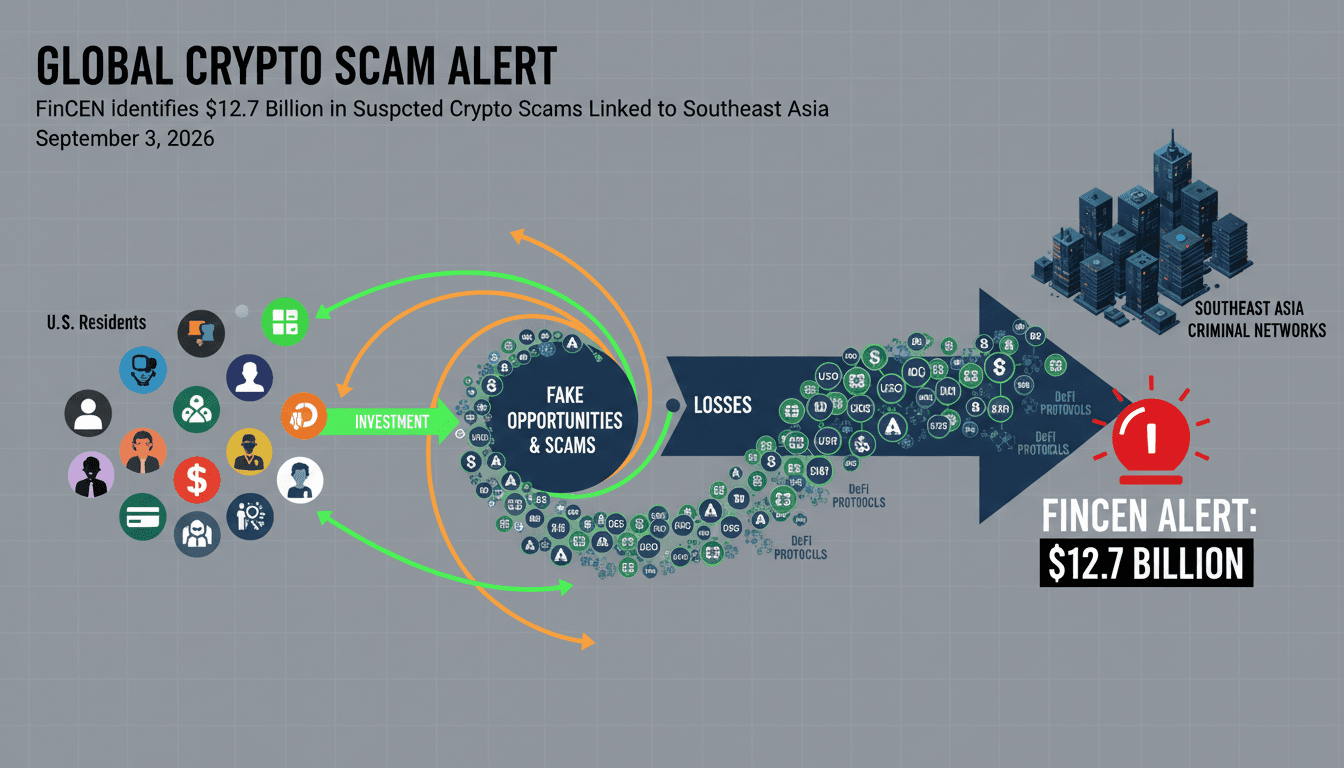
Here's what it means for you.
If you engage with digital assets, heightened scrutiny and compliance measures are likely to affect your transactions.
Why it matters
The scale of these scams highlights vulnerabilities in the digital asset ecosystem, impacting investor confidence and regulatory frameworks.
What happened (in 30 seconds)
- FinCEN identified approximately $12.7 billion in suspected crypto investment scams linked to Southeast Asian operations.
- The analysis covered 33,904 Bank Secrecy Act filings from September 2023 to December 2025, revealing extensive fraud networks.
- Transnational criminal organizations are using sophisticated methods, including social engineering and stablecoin transfers, to launder proceeds.
The context you actually need
- Digital asset scams have surged globally since the early 2020s, with tactics evolving to exploit investor psychology.
- Southeast Asia has become a hub for these operations, often involving coerced labor and fortified scam centers.
- Regulatory responses are increasing, with countries like Myanmar and Cambodia enacting laws to combat these criminal activities.
What's really happening
The recent FinCEN analysis sheds light on a troubling trend in the digital asset landscape: the rise of sophisticated scams that exploit both technology and human psychology. With $12.7 billion in suspected fraudulent activity identified, the scale of these operations is staggering. The report indicates that these scams are primarily orchestrated by transnational criminal organizations based in fortified compounds across Southeast Asia, particularly in Myanmar, Cambodia, and Laos.
These organizations employ a variety of tactics to lure victims, including "pig butchering" schemes, where scammers build trust over time before convincing individuals to invest in fake cryptocurrency opportunities. The use of social engineering techniques is prevalent, as scammers create fake personas and fabricate stories to gain the trust of potential victims. Once individuals are ensnared, their funds are often converted into stablecoins, primarily USDT, which are then laundered through decentralized finance (DeFi) protocols or non-U.S. exchanges.
The implications of this analysis are significant. Financial institutions are now under increased pressure to enhance their monitoring and reporting practices. FinCEN has issued an alert urging these institutions to be vigilant about suspicious patterns, particularly concerning stablecoin transfers and the use of shell companies. This heightened scrutiny is likely to lead to stricter compliance requirements for crypto exchanges and payment processors, which may affect transaction speeds and costs for users.
Moreover, the international community is recognizing the need for cooperation in combating these scams. Countries in Southeast Asia are advancing anti-scam legislation, imposing severe penalties on those involved in these operations. This regulatory push reflects a growing acknowledgment of the threat posed by these transnational networks, which not only defraud individuals but also undermine the integrity of the financial system.
As the landscape evolves, the intersection of digital assets and regulatory frameworks will continue to be a focal point. The challenge lies in balancing innovation in the crypto space with the need for robust protections against fraud.
Who feels it first (and how)
- Investors: Individuals engaging with digital assets may face increased scrutiny and potential delays in transactions.
- Financial institutions: Banks and crypto exchanges will need to enhance compliance measures, impacting operational costs.
- Regulatory bodies: Increased pressure to enforce anti-fraud measures and collaborate internationally on enforcement actions.
What to watch next
- Regulatory developments: Monitor new legislation in Southeast Asian countries aimed at combating scams, as these could set precedents for global standards.
- Market compliance trends: Watch for shifts in compliance practices among crypto exchanges and payment processors, which may affect user experience.
- Suspicious activity reports: Keep an eye on the volume of suspicious filings, as a sustained increase could indicate ongoing vulnerabilities in the market.
$12.7 billion in suspected scams linked to Southeast Asia.
Increased regulatory scrutiny and compliance requirements for financial institutions and crypto exchanges.
The long-term impact on investor confidence in digital assets.
Frequently Asked Questions
- Why it matters?
- The scale of these scams highlights vulnerabilities in the digital asset ecosystem, impacting investor confidence and regulatory frameworks.
- What happened (in 30 seconds)?
- FinCEN identified approximately $12.7 billion in suspected crypto investment scams linked to Southeast Asian operations. The analysis covered 33,904 Bank Secrecy Act filings from September 2023 to December 2025, revealing extensive fraud networks. Transnational criminal organizations are using sophisticated methods, including social engineering and stablecoin transfers, to launder proceeds.
- What's really happening?
- The recent FinCEN analysis sheds light on a troubling trend in the digital asset landscape: the rise of sophisticated scams that exploit both technology and human psychology. With $12.7 billion in suspected fraudulent activity identified, the scale of these operations is staggering. The report indicates that these scams are primarily orchestrated by transnational criminal organizations based in fortified compounds across Southeast Asia, particularly in Myanmar, Cambodia, and Laos. These organi
- Who feels it first (and how)?
- Investors: Individuals engaging with digital assets may face increased scrutiny and potential delays in transactions. Financial institutions: Banks and crypto exchanges will need to enhance compliance measures, impacting operational costs. Regulatory bodies: Increased pressure to enforce anti-fraud measures and collaborate internationally on enforcement actions.
- What to watch next?
- Regulatory developments: Monitor new legislation in Southeast Asian countries aimed at combating scams, as these could set precedents for global standards. Market compliance trends: Watch for shifts in compliance practices among crypto exchanges and payment processors, which may affect user experience. Suspicious activity reports: Keep an eye on the volume of suspicious filings, as a sustained increase could indicate ongoing vulnerabilities in the market.
Covers blockchain, cryptocurrency news, project analysis, and market insights.
"Cointelegraph is a leading crypto-focused media outlet known for timely news, analysis, and educational content related to blockchain and digital assets."
— A47 Editor
FinCEN ties $13B in crypto scams to non-US operations
The Financial Crimes Enforcement Network (FinCEN) has linked approximately $13 billion in cryptocurrency scams to transnational criminal organizations operating primarily from Southeast Asia, targeting U.S. residents. This alarming trend highlights t...
Real-time updates, analysis, and reports on the blockchain and cryptocurrency sectors.
"Crypto News delivers real-time updates, analysis, and reports on the blockchain and cryptocurrency sectors."
— A47 Editor
FinCEN flags $12.7B tied to Southeast Asia crypto investment scams
The U.S. Treasury's Financial Crimes Enforcement Network (FinCEN) has identified approximately $12.7 billion in suspicious financial activities linked to cryptocurrency investment scams primarily orchestrated from Southeast Asia, based on nearly 34,0...
Covers Bitcoin plus altcoin news, market updates, and educational resources.
"Bitcoin.com provides news, market data, and guides focused on Bitcoin and the wider crypto industry."
— A47 Editor
Treasury Flags Nearly $13 Billion Tied to Overseas Crypto Scams
The U.S. Treasury Department has flagged nearly $13 billion linked to overseas cryptocurrency scams, indicating a significant concern over the rising prevalence of fraudulent activities in the digital asset space. This alert highlights the ongoing ch...