
Bitcoin Stays Below $80,000 as Yen Strengthens Amid Geopolitical Tensions
Here's what it means for you.
If you’re invested in cryptocurrencies or global markets, the interplay of currency strength and oil prices could directly impact your portfolio.
Why it matters
The dynamics between Bitcoin, the yen, and oil prices highlight the interconnectedness of global financial markets and their influence on risk assets.
What happened (in 30 seconds)
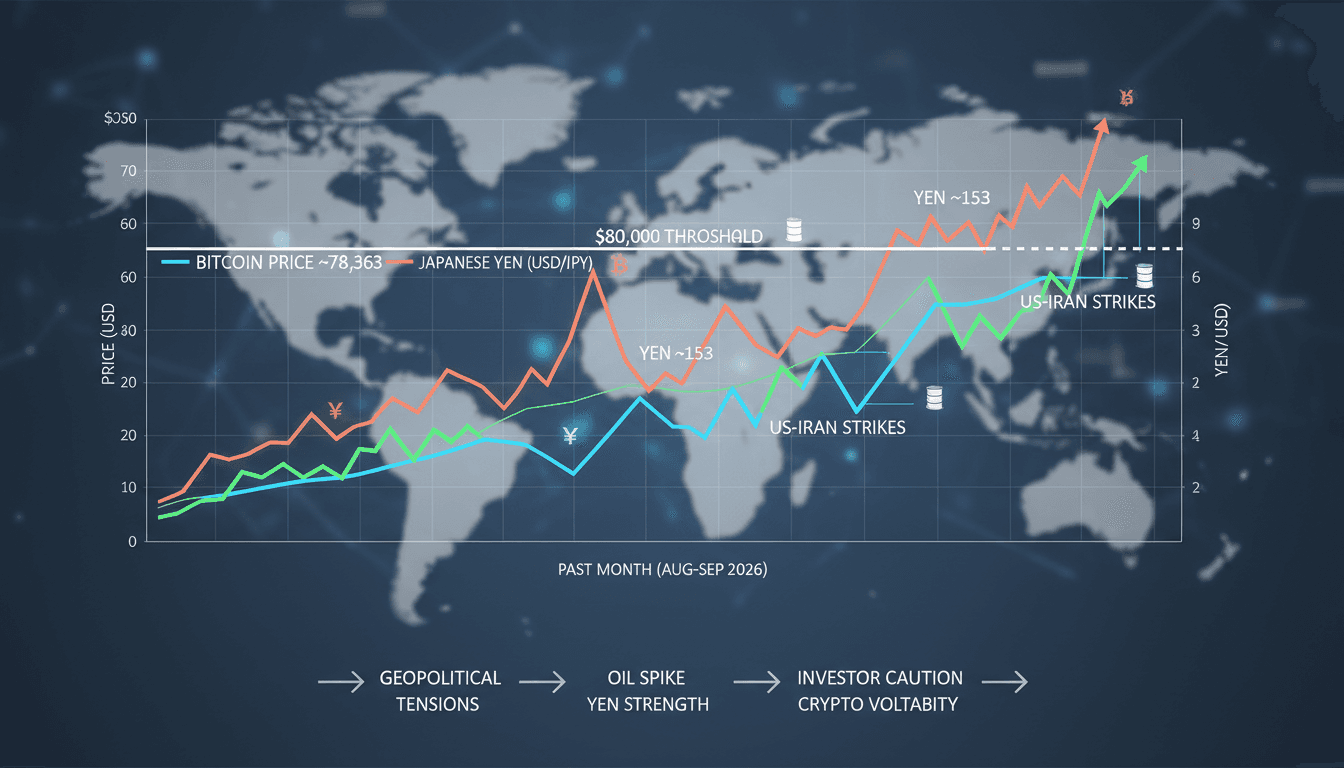
- Bitcoin traded around $78,363, failing to reclaim the $80,000 mark amid geopolitical tensions.
- The Japanese yen strengthened to approximately 153 per dollar, its highest level since February 2026, driven by market intervention expectations.
- Oil prices surged, with Brent crude exceeding $101 per barrel, contributing to a risk-off sentiment in global markets.
The context you actually need
- Prior interventions by the US and Japan had already strengthened the yen, reducing USD/JPY rates amid record short positions.
- Expectations of a Bank of Japan rate hike on September 28 have heightened focus on currency markets and their impact on liquidity.
- US-Iran geopolitical tensions have driven oil prices higher, further complicating the risk landscape for cryptocurrencies.
What's really happening
On September 9, 2026, Bitcoin's inability to reclaim the $80,000 threshold reflects broader market dynamics influenced by currency fluctuations and geopolitical events. Bitcoin traded at approximately $78,363, down 0.4% on the day, as traders reacted to rising oil prices and the strengthening yen. The yen's appreciation to around 153 per dollar, a 6.5% increase since early August, is significant, as it marks the highest level since February 2026. This shift is largely attributed to comments made by US Treasury Secretary Scott Bessent, who indicated a readiness for further yen interventions, stating, "I am the house now" regarding the currency's future.
The backdrop of rising Brent crude prices, which surpassed $101 per barrel, has created a risk-off sentiment in the markets. This sentiment has led to declines in US stocks and a cautious approach among Bitcoin traders. The combination of these factors has resulted in a carry trade unwind, where investors are forced to close positions that were profitable when the yen was weaker. As the yen strengthens, the cost of holding these positions increases, leading to further selling pressure on risk assets, including cryptocurrencies.
The anticipated Bank of Japan (BOJ) rate hike on September 28 adds another layer of complexity. With record short positions in the yen exceeding 5 trillion yen, the market is poised for potential volatility. If the BOJ does raise rates, it could further strengthen the yen, exacerbating the pressure on Bitcoin and other risk assets. The interconnectedness of these markets means that movements in one can have cascading effects on others, particularly in a global economy where liquidity is paramount.
As Bitcoin struggles to regain its footing, the implications for traders and investors are clear: the current environment is fraught with uncertainty, and the interplay between currency strength, oil prices, and geopolitical tensions will continue to shape market dynamics.
Who feels it first (and how)
- Cryptocurrency traders: Directly impacted by Bitcoin's price movements and volatility.
- Oil market participants: Affected by rising crude prices and their implications for inflation and economic growth.
- Forex traders: Those trading the yen will feel the effects of Bessent's comments and BOJ policy decisions.
- Investors in risk assets: Broader market participants will experience shifts in portfolio valuations due to these dynamics.
What to watch next
- Bank of Japan's September 28 meeting: This will clarify monetary policy direction and could influence yen strength and risk asset valuations.
- Geopolitical developments: Any escalation in US-Iran tensions could further impact oil prices and market sentiment.
- Bitcoin trading volume: A significant increase or decrease could indicate shifts in trader sentiment and potential price movements.
Bitcoin is currently trading below $80,000, and the yen is at its strongest level since February 2026.
Continued volatility in Bitcoin and other risk assets as market participants react to currency and oil price movements.
The long-term impact of potential BOJ interventions and geopolitical tensions on global markets.
Frequently Asked Questions
- Why it matters?
- The dynamics between Bitcoin, the yen, and oil prices highlight the interconnectedness of global financial markets and their influence on risk assets.
- What happened (in 30 seconds)?
- Bitcoin traded around $78,363, failing to reclaim the $80,000 mark amid geopolitical tensions. The Japanese yen strengthened to approximately 153 per dollar, its highest level since February 2026, driven by market intervention expectations. Oil prices surged, with Brent crude exceeding $101 per barrel, contributing to a risk-off sentiment in global markets.
- What's really happening?
- On September 9, 2026, Bitcoin's inability to reclaim the $80,000 threshold reflects broader market dynamics influenced by currency fluctuations and geopolitical events. Bitcoin traded at approximately $78,363, down 0.4% on the day, as traders reacted to rising oil prices and the strengthening yen. The yen's appreciation to around 153 per dollar, a 6.5% increase since early August, is significant, as it marks the highest level since February 2026. This shift is largely attributed to comments made
- Who feels it first (and how)?
- Cryptocurrency traders: Directly impacted by Bitcoin's price movements and volatility. Oil market participants: Affected by rising crude prices and their implications for inflation and economic growth. Forex traders: Those trading the yen will feel the effects of Bessent's comments and BOJ policy decisions. Investors in risk assets: Broader market participants will experience shifts in portfolio valuations due to these dynamics.
- What to watch next?
- Bank of Japan's September 28 meeting: This will clarify monetary policy direction and could influence yen strength and risk asset valuations. Geopolitical developments: Any escalation in US-Iran tensions could further impact oil prices and market sentiment. Bitcoin trading volume: A significant increase or decrease could indicate shifts in trader sentiment and potential price movements.
Covers blockchain, cryptocurrency news, project analysis, and market insights.
"Cointelegraph is a leading crypto-focused media outlet known for timely news, analysis, and educational content related to blockchain and digital assets."
— A47 Editor
Bitcoin fails to reclaim $80K as Bessent fuels yen strength around 153 per dollar
Bitcoin's price has struggled to reclaim the $80,000 mark, trending lower alongside U.S. stocks amid escalating tensions with Iran and comments from U.S. Treasury Secretary Scott Bessent, which have raised concerns about a potential unwind of yen car...
Covers Bitcoin plus altcoin news, market updates, and educational resources.
"Bitcoin.com provides news, market data, and guides focused on Bitcoin and the wider crypto industry."
— A47 Editor
Bitcoin Price Stalls at $79K as US-Iran Strikes Shake Oil Markets
Bitcoin's price has stalled at approximately $79,000 amid escalating tensions between the U.S. and Iran, particularly following military strikes that have impacted oil markets. The volatility in cryptocurrency markets reflects broader economic uncert...
Covers blockchain, cryptocurrency news, project analysis, and market insights.
"CoinDesk is a well-established cryptocurrency and blockchain news provider, offering comprehensive insights, market data, and industry research."
— A47 Editor
Live updates: Bitcoin slips as yields head higher following Treasury buyback announcement
Bitcoin's price has slipped as U.S. Treasury yields rise following a buyback announcement, reflecting a broader trend in the cryptocurrency market. The Japanese yen has also strengthened against the dollar, briefly surpassing 153 yen per dollar, indi...