
Bitcoin Stays Below $80,000 as Yen Strengthens Amid US-Iran Tensions
Why it matters
The interplay between Bitcoin's price and the yen's strength reflects broader economic tensions that could influence global investment strategies.
What happened (in 30 seconds)
- Bitcoin failed to reclaim $80,000, trading at approximately $77,183 amid market volatility.
- The Japanese yen strengthened to 153 per dollar, its highest level since February, driven by US intervention signals.
- US military actions against Iran pushed Brent crude oil prices above $101 per barrel, contributing to a risk-off sentiment in markets.
The context you actually need
- Joint US-Japan interventions have aimed to stabilize the yen, which had previously hit multi-decade lows.
- Record short positions in the yen exceeded 5 trillion yen, raising concerns about potential market unwinds.
- Escalating tensions with Iran have led to increased oil prices, further complicating the economic landscape.
What's really happening
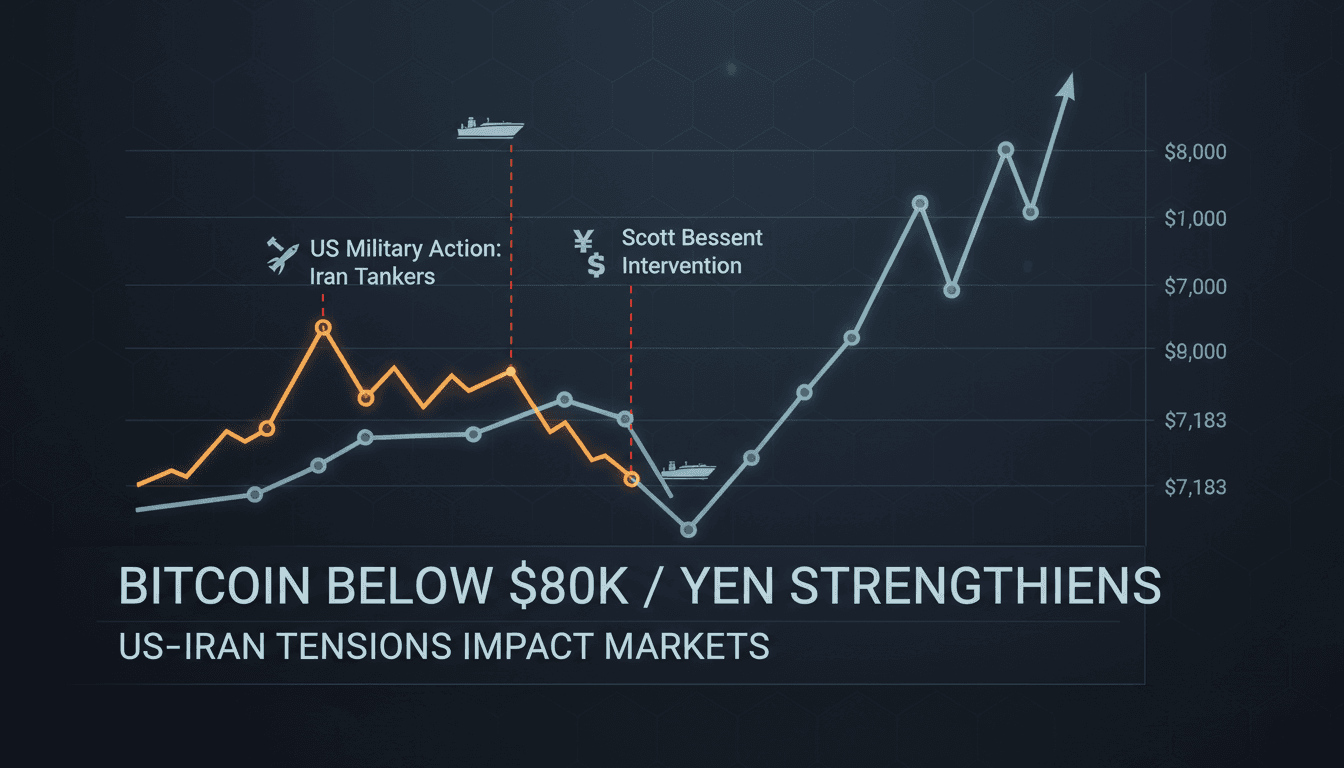
On September 9, 2026, Bitcoin's inability to breach the $80,000 mark highlights a confluence of macroeconomic pressures and geopolitical events. The cryptocurrency traded around $77,183, reflecting a 0.4% decline as risk assets faced headwinds from various fronts. The US military's recent strikes on Iranian oil tankers have escalated tensions in the Middle East, pushing Brent crude oil prices above $101 per barrel for the first time since late July. This spike in oil prices is not just a regional concern; it reverberates through global markets, affecting everything from inflation rates to consumer spending.
Simultaneously, the Japanese yen has appreciated significantly, reaching approximately 153 per US dollar, its strongest level since February. This shift is largely attributed to coordinated interventions by the US Treasury, led by Secretary Scott Bessent, who indicated a willingness to support the yen further. The yen's strength is particularly notable given the record short positions that have accumulated, exceeding 5 trillion yen. This creates a precarious situation where any unwinding of these positions could lead to increased volatility in both the yen and risk assets, including cryptocurrencies.
Bessent's remarks at Southern Methodist University emphasized the strategic advantages of intervention, suggesting that the US is prepared to act decisively to stabilize the yen. This has implications for Bitcoin traders, as the dynamics of the yen carry trade—where investors borrow in yen to invest in higher-yielding assets—are shifting. With the Bank of Japan's anticipated rate hike on September 28, the market is bracing for potential changes that could further impact the yen's value and, by extension, global liquidity.
The broader risk-off sentiment in US equities compounds these challenges for Bitcoin. As investors seek safer assets amid geopolitical uncertainties, cryptocurrencies often experience increased selling pressure. This environment creates a feedback loop where Bitcoin's price struggles to gain traction, further influenced by external factors like oil prices and currency interventions.
Who feels it first (and how)
- Cryptocurrency investors: Those holding Bitcoin may see increased volatility and potential losses as market conditions shift.
- Forex traders: Professionals trading the yen will experience heightened risks and opportunities due to intervention strategies.
- Oil market participants: Traders and companies involved in oil will feel the impact of rising prices and geopolitical tensions.
- Global investors: Individuals and institutions with diversified portfolios may need to reassess risk exposure in light of these developments.
What to watch next
- Bank of Japan's September 28 meeting: This will be crucial for understanding future monetary policy and its impact on the yen and global markets.
- US-Iran relations: Continued tensions could lead to further military actions, influencing oil prices and risk sentiment.
- Bitcoin trading volume: A significant change in trading volume could indicate shifts in investor sentiment and potential price movements.
Bitcoin is currently trading below $80,000 amid geopolitical tensions and currency fluctuations.
Continued volatility in both Bitcoin and the yen as market participants react to upcoming economic indicators and geopolitical developments.
The long-term impact of US interventions on the yen and how this will affect global risk assets, including cryptocurrencies.
Frequently Asked Questions
- Why it matters?
- The interplay between Bitcoin's price and the yen's strength reflects broader economic tensions that could influence global investment strategies.
- What happened (in 30 seconds)?
- Bitcoin failed to reclaim $80,000, trading at approximately $77,183 amid market volatility. The Japanese yen strengthened to 153 per dollar, its highest level since February, driven by US intervention signals. US military actions against Iran pushed Brent crude oil prices above $101 per barrel, contributing to a risk-off sentiment in markets.
- What's really happening?
- On September 9, 2026, Bitcoin's inability to breach the $80,000 mark highlights a confluence of macroeconomic pressures and geopolitical events. The cryptocurrency traded around $77,183, reflecting a 0.4% decline as risk assets faced headwinds from various fronts. The US military's recent strikes on Iranian oil tankers have escalated tensions in the Middle East, pushing Brent crude oil prices above $101 per barrel for the first time since late July. This spike in oil prices is not just a regiona
- Who feels it first (and how)?
- Cryptocurrency investors: Those holding Bitcoin may see increased volatility and potential losses as market conditions shift. Forex traders: Professionals trading the yen will experience heightened risks and opportunities due to intervention strategies. Oil market participants: Traders and companies involved in oil will feel the impact of rising prices and geopolitical tensions. Global investors: Individuals and institutions with diversified portfolios may need to reassess risk exposure in light
- What to watch next?
- Bank of Japan's September 28 meeting: This will be crucial for understanding future monetary policy and its impact on the yen and global markets. US-Iran relations: Continued tensions could lead to further military actions, influencing oil prices and risk sentiment. Bitcoin trading volume: A significant change in trading volume could indicate shifts in investor sentiment and potential price movements.
Covers blockchain, cryptocurrency news, project analysis, and market insights.
"Cointelegraph is a leading crypto-focused media outlet known for timely news, analysis, and educational content related to blockchain and digital assets."
— A47 Editor
Bitcoin fails to reclaim $80K as Bessent fuels yen strength around 153 per dollar
Bitcoin's price has struggled to reclaim the $80,000 mark, trending lower alongside U.S. stocks amid escalating tensions with Iran and comments from U.S. Treasury Secretary Scott Bessent, which have raised concerns about a potential unwind of yen car...
Covers Bitcoin plus altcoin news, market updates, and educational resources.
"Bitcoin.com provides news, market data, and guides focused on Bitcoin and the wider crypto industry."
— A47 Editor
Bitcoin Price Stalls at $79K as US-Iran Strikes Shake Oil Markets
Bitcoin's price has stalled at approximately $79,000 amid escalating tensions between the U.S. and Iran, particularly following military strikes that have impacted oil markets. The volatility in cryptocurrency markets reflects broader economic uncert...
Covers blockchain, cryptocurrency news, project analysis, and market insights.
"CoinDesk is a well-established cryptocurrency and blockchain news provider, offering comprehensive insights, market data, and industry research."
— A47 Editor
Live updates: Bitcoin slips as yields head higher following Treasury buyback announcement
Bitcoin's price has slipped as U.S. Treasury yields rise following a buyback announcement, reflecting a broader trend in the cryptocurrency market. The Japanese yen has also strengthened against the dollar, briefly surpassing 153 yen per dollar, indi...