
PayPal, M0, and MoonPay launch PYUSDx platform for stablecoin issuance
Here's what it means for you.
If you're a business looking to leverage stablecoins, the new PYUSDx platform could simplify your entry into the market.
Why it matters
The PYUSDx platform represents a significant shift in the stablecoin landscape, enabling businesses to issue custom tokens without the burden of managing reserves.
What happened (in 30 seconds)
- Launch Date: PayPal, M0, and MoonPay launched the PYUSDx platform on September 9, 2026.
- Initial Success: Three issuers—Saturn, Concrete, and Cap—processed over $100 million in volume at launch.
- Regulatory Considerations: The platform's compliance with the GENIUS Act is under scrutiny due to its unique reserve structure.
The context you actually need
- Stablecoin Growth: The stablecoin market has expanded rapidly, driven by regulatory changes and increased demand for digital assets.
- PYUSD Background: PayPal's PYUSD stablecoin, launched in August 2023, is backed by U.S. dollar deposits and Treasuries, setting the stage for PYUSDx.
- Barriers to Entry: Prior to PYUSDx, businesses faced significant challenges in issuing stablecoins, including reserve management and compliance requirements.
What's really happening
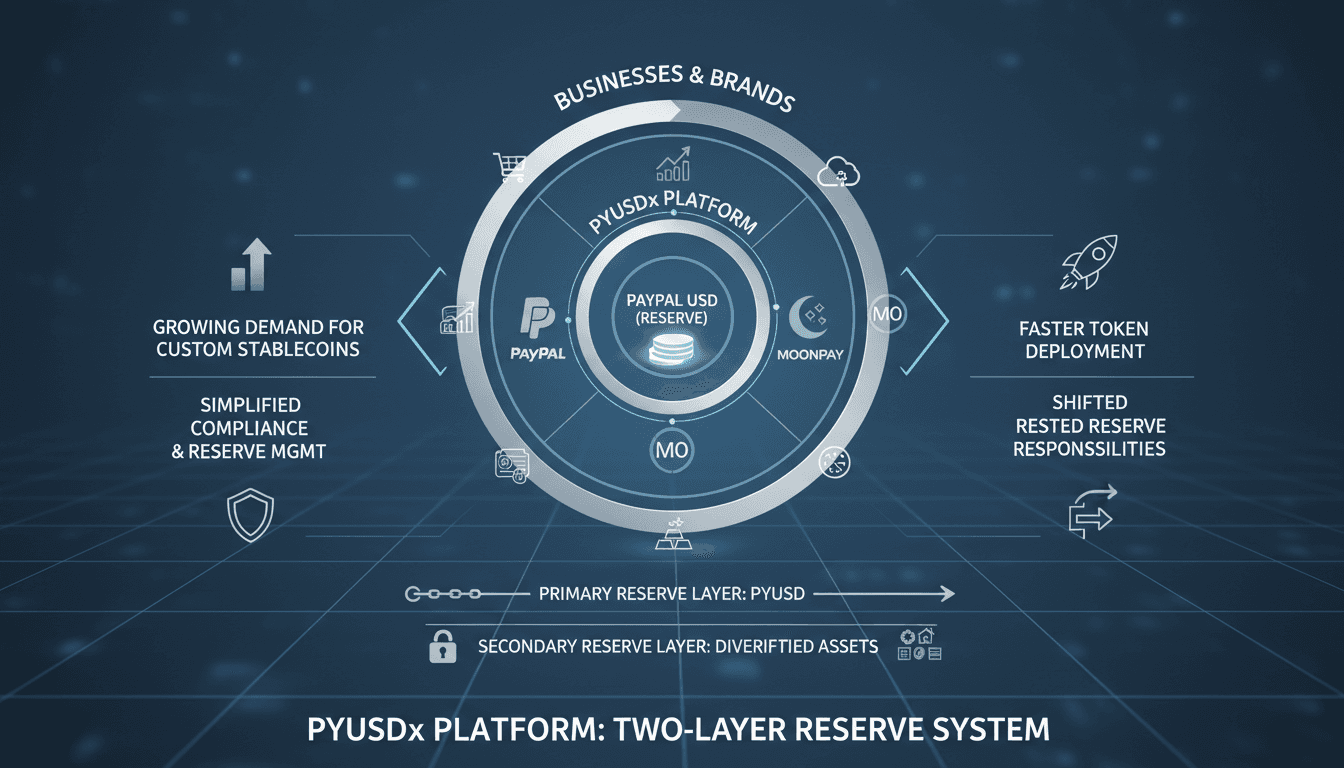
The PYUSDx platform, launched by PayPal, M0, and MoonPay, introduces a two-layer reserve system that allows businesses to issue application-specific stablecoins backed by PayPal USD (PYUSD). This innovative structure separates the monetary base layer from the application-specific product layers, addressing the high barriers that previously hindered businesses from entering the stablecoin market.
PYUSD itself is issued by Paxos Trust Company and is backed by U.S. dollar deposits and Treasuries. The PYUSDx tokens, issued by MoonPay Digital Assets Limited, are backed one-to-one by PYUSD rather than direct cash equivalents. This means that businesses can create their own stablecoins without needing to manage reserves or compliance infrastructure directly, which has been a significant hurdle in the past.
The launch of PYUSDx has already seen three initial issuers—Saturn, Concrete, and Cap—go live, collectively processing over $100 million in volume. This rapid uptake indicates strong market interest and demand for customizable stablecoins. Additional issuers, including USD.AI and Fairblock, are expected to join the platform soon, further expanding its reach.
However, the launch has also sparked discussions regarding compliance with the GENIUS Act, which mandates that stablecoins be backed by high-quality liquid assets. Critics point out that since PYUSDx tokens are backed by another stablecoin rather than directly by the assets specified in the Act, there may be regulatory implications to consider. Despite this, no formal governmental responses or market disruptions have been documented as of yet.
The PYUSDx platform positions PYUSD as a reserve asset for third-party tokens, allowing for faster deployment of branded stablecoins while shifting the responsibility of reserve management away from the issuers. This could lead to a proliferation of stablecoins tailored to specific applications, enhancing the overall ecosystem and providing businesses with more flexibility in their financial operations.
Who feels it first (and how)
- Startups and SMEs: Small and medium enterprises looking to leverage stablecoins for transactions or rewards programs.
- Fintech Companies: Firms developing financial products that require stablecoin integration.
- Investors: Individuals and institutions interested in the growing stablecoin market and its potential returns.
- Regulatory Bodies: Government agencies monitoring compliance with evolving stablecoin regulations.
What to watch next
- Regulatory Developments: Watch for updates on compliance with the GENIUS Act, as this could impact the viability of PYUSDx and similar platforms.
- Market Adoption Rates: Monitor the number of new issuers joining PYUSDx, as increased participation could signal broader acceptance of customizable stablecoins.
- Technological Innovations: Keep an eye on advancements in stablecoin technology, which may further enhance the functionality and appeal of platforms like PYUSDx.
- PYUSDx has launched and is operational with initial issuers.
- Additional issuers will join the platform, increasing market activity.
- The long-term regulatory implications of the PYUSDx structure remain uncertain.
Frequently Asked Questions
- Why it matters?
- The PYUSDx platform represents a significant shift in the stablecoin landscape, enabling businesses to issue custom tokens without the burden of managing reserves.
- What happened (in 30 seconds)?
- Launch Date: PayPal, M0, and MoonPay launched the PYUSDx platform on September 9, 2026. Initial Success: Three issuers—Saturn, Concrete, and Cap—processed over $100 million in volume at launch. Regulatory Considerations: The platform's compliance with the GENIUS Act is under scrutiny due to its unique reserve structure.
- What's really happening?
- The PYUSDx platform, launched by PayPal, M0, and MoonPay, introduces a two-layer reserve system that allows businesses to issue application-specific stablecoins backed by PayPal USD (PYUSD). This innovative structure separates the monetary base layer from the application-specific product layers, addressing the high barriers that previously hindered businesses from entering the stablecoin market. PYUSD itself is issued by Paxos Trust Company and is backed by U.S. dollar deposits and Treasuries.
- Who feels it first (and how)?
- Startups and SMEs: Small and medium enterprises looking to leverage stablecoins for transactions or rewards programs. Fintech Companies: Firms developing financial products that require stablecoin integration. Investors: Individuals and institutions interested in the growing stablecoin market and its potential returns. Regulatory Bodies: Government agencies monitoring compliance with evolving stablecoin regulations.
- What to watch next?
- Regulatory Developments: Watch for updates on compliance with the GENIUS Act, as this could impact the viability of PYUSDx and similar platforms. Market Adoption Rates: Monitor the number of new issuers joining PYUSDx, as increased participation could signal broader acceptance of customizable stablecoins. Technological Innovations: Keep an eye on advancements in stablecoin technology, which may further enhance the functionality and appeal of platforms like PYUSDx.
Real-time updates, analysis, and reports on the blockchain and cryptocurrency sectors.
"Crypto News delivers real-time updates, analysis, and reports on the blockchain and cryptocurrency sectors."
— A47 Editor
PayPal’s new platform lets anyone issue a dollar backed by a dollar
PayPal has launched a new platform allowing users to issue tokens backed by its stablecoin, PayPal USD (PYUSD), which is itself backed by actual dollars and Treasuries through Paxos. This initiative is facilitated by MoonPay, marking a significant st...
Covers Bitcoin plus altcoin news, market updates, and educational resources.
"Bitcoin.com provides news, market data, and guides focused on Bitcoin and the wider crypto industry."
— A47 Editor
Paypal, M0 and Moonpay Let Companies Build Branded Stablecoins in Days
PayPal, in collaboration with M0 and MoonPay, has launched a platform enabling companies to create branded stablecoins in just a few days, utilizing its PayPal USD (PYUSD) as a foundation. This initiative aims to streamline the process of stablecoin ...
English-language digital publication covering business, politics, technology, and current affairs.
"The Arabian Post mixes original and syndicated-style coverage with a broad regional and global business-news orientation."
— A47 Editor
PayPal broadens stablecoin reach through PYUSDx platform
PayPal has expanded its dollar-backed stablecoin offerings through the launch of the PYUSDx developer platform, which now supports three active projects and has processed over $100 million in transactions. This platform enables businesses and develop...