
India's SEBI and RBI Launch Demat 2.0 Pilot for Tokenized Corporate Bonds
Why it matters
This initiative positions India as a leader in integrating digital assets within traditional financial frameworks, potentially influencing global market practices.
What happened (in 30 seconds)
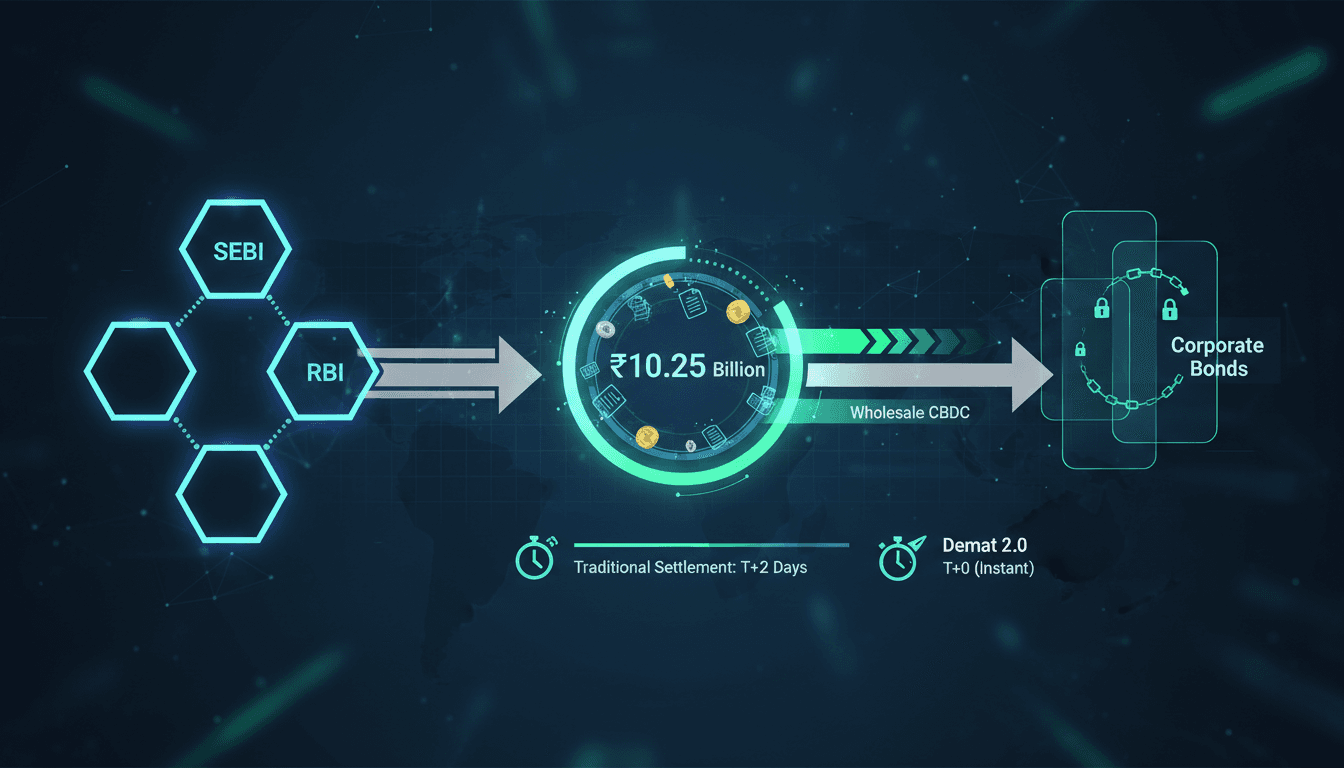
- India launched its Demat 2.0 pilot for tokenized corporate bonds on September 11, 2026, with a total issuance of 10.25 billion rupees (approximately $107 million).
- Three companies—REC Ltd., Larsen & Toubro, and IIFL—successfully issued bonds using distributed ledger technology, enhancing settlement efficiency.
- SEBI and RBI aim to reduce settlement times and maintain investor protections while expanding access to secondary trading and retail investors in future phases.
The context you actually need
- Tokenization is trending: The global financial landscape is increasingly moving towards digital assets, with tokenized securities gaining traction for their efficiency and transparency.
- India's infrastructure: This pilot builds on India's existing dematerialized securities framework and central bank digital currency (CBDC) developments, making it a significant step in modernizing the financial ecosystem.
- Regulatory support: The initiative is backed by SEBI and RBI, ensuring that it aligns with existing legal frameworks and investor protections, which is crucial for market confidence.
What's really happening
India's Demat 2.0 pilot represents a significant evolution in the country's approach to corporate bonds, leveraging distributed ledger technology (DLT) to enhance the efficiency of bond issuance and settlement. The pilot, which commenced on September 7, 2026, saw REC Ltd. raise 5 billion rupees from 18 investors, followed by Larsen & Toubro with another 5 billion rupees from four investors, and IIFL issuing 250 million rupees to a single investor. This collective issuance of 10.25 billion rupees (approximately $107 million) marks a pivotal moment in the integration of digital assets into India's financial markets.
The pilot utilizes DLT owned by depositories NSDL and CDSL, facilitating atomic settlement through the RBI's Unified Market Interface. This means that transactions can be settled instantly, significantly reducing the time it takes for funds to be transferred and securities to be delivered. The same-day fund receipt for issuers is a notable improvement over traditional settlement processes, which can take days.
The initiative is designed to maintain continuity with existing bond legal statuses and obligations, ensuring that investor protections remain intact. This is particularly important in a market where trust and regulatory compliance are paramount. The pilot is currently in its initial phase, focusing on institutional issuances, but SEBI has indicated that future phases will introduce secondary trading options and retail access, broadening the market's reach.
As the pilot progresses, it is expected to attract more issuers and investors, potentially leading to a more vibrant market for tokenized corporate bonds. The emphasis on regulatory compliance and investor protection will likely encourage participation from institutional investors, who may have previously been hesitant to engage with digital assets.
Overall, the Demat 2.0 pilot not only positions India as an early adopter of tokenized bonds but also sets a precedent for other countries looking to modernize their financial systems. The success of this initiative could inspire similar programs globally, as markets seek to leverage technology to enhance efficiency and transparency.
Who feels it first (and how)
- Institutional investors: They will benefit from faster settlement times and increased access to a new asset class.
- Corporate issuers: Companies looking to raise capital will find it easier and more efficient to issue bonds.
- Regulatory bodies: SEBI and RBI will gain insights into the operational dynamics of tokenized securities, shaping future regulations.
- Tech firms: Companies involved in DLT and financial technology will see increased demand for their solutions as tokenization becomes mainstream.
What to watch next
- Secondary trading developments: Keep an eye on how SEBI implements secondary trading platforms, as this will determine liquidity and market participation.
- Retail access rollout: The introduction of retail investor access will be crucial for expanding the market and could lead to increased participation from individual investors.
- Global response: Watch for how other countries react to India's pilot, as it may influence their own regulatory approaches to tokenized securities.
The pilot has successfully issued 10.25 billion rupees in tokenized corporate bonds.
Future phases will include secondary trading and retail access, expanding the market's reach.
The long-term impact on global markets and how other countries will respond to India's initiative remains uncertain.
Frequently Asked Questions
- Why it matters?
- This initiative positions India as a leader in integrating digital assets within traditional financial frameworks, potentially influencing global market practices.
- What happened (in 30 seconds)?
- India launched its Demat 2.0 pilot for tokenized corporate bonds on September 11, 2026, with a total issuance of 10.25 billion rupees (approximately $107 million). Three companies—REC Ltd., Larsen & Toubro, and IIFL—successfully issued bonds using distributed ledger technology, enhancing settlement efficiency. SEBI and RBI aim to reduce settlement times and maintain investor protections while expanding access to secondary trading and retail investors in future phases.
- What's really happening?
- India's Demat 2.0 pilot represents a significant evolution in the country's approach to corporate bonds, leveraging distributed ledger technology (DLT) to enhance the efficiency of bond issuance and settlement. The pilot, which commenced on September 7, 2026, saw REC Ltd. raise 5 billion rupees from 18 investors, followed by Larsen & Toubro with another 5 billion rupees from four investors, and IIFL issuing 250 million rupees to a single investor. This collective issuance of 10.25 billion rupees
- Who feels it first (and how)?
- Institutional investors: They will benefit from faster settlement times and increased access to a new asset class. Corporate issuers: Companies looking to raise capital will find it easier and more efficient to issue bonds. Regulatory bodies: SEBI and RBI will gain insights into the operational dynamics of tokenized securities, shaping future regulations. Tech firms: Companies involved in DLT and financial technology will see increased demand for their solutions as tokenization becomes mai
- What to watch next?
- Secondary trading developments: Keep an eye on how SEBI implements secondary trading platforms, as this will determine liquidity and market participation. Retail access rollout: The introduction of retail investor access will be crucial for expanding the market and could lead to increased participation from individual investors. Global response: Watch for how other countries react to India's pilot, as it may influence their own regulatory approaches to tokenized securities.
Covers blockchain, cryptocurrency news, project analysis, and market insights.
"Cointelegraph is a leading crypto-focused media outlet known for timely news, analysis, and educational content related to blockchain and digital assets."
— A47 Editor
India launches tokenized bond pilot with $107M issued
India has launched a pilot program for tokenized bonds, issuing $107 million as part of its efforts to modernize financial markets and integrate digital currencies. The Securities and Exchange Board of India (SEBI) has indicated that future phases wi...
Real-time updates, analysis, and reports on the blockchain and cryptocurrency sectors.
"Crypto News delivers real-time updates, analysis, and reports on the blockchain and cryptocurrency sectors."
— A47 Editor
India launches digital rupee settlement for bonds
India has launched a digital rupee settlement for corporate bonds, issuing ₹1,025 crore in tokenized bonds as part of its Demat 2.0 pilot program. This initiative utilizes the Reserve Bank of India's (RBI) digital currency to facilitate transactions,...
Covers blockchain, cryptocurrency news, project analysis, and market insights.
"CoinDesk is a well-established cryptocurrency and blockchain news provider, offering comprehensive insights, market data, and industry research."
— A47 Editor
India starts tokenizing $620 billion corporate bond market with digital rupee settlement
India has initiated the tokenization of its $620 billion corporate bond market, with the Securities and Exchange Board of India (SEBI) launching a pilot program that transforms corporate bonds into digital tokens, settling payments through the Reserv...