
Deutsche Bank to Launch Regulated Crypto Custody Service for Institutions in Europe
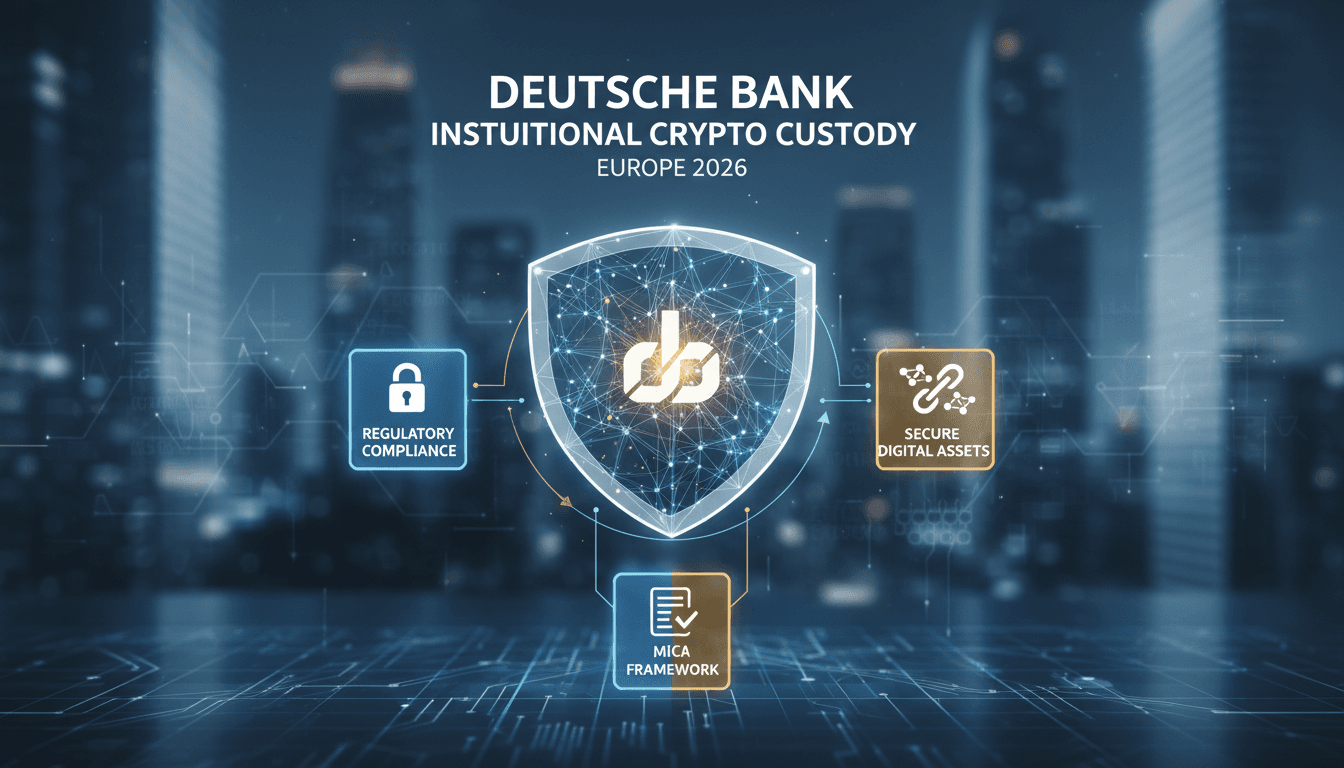
Why it matters
Deutsche Bank's move signals a significant shift towards regulated crypto infrastructure in Europe, potentially influencing global market dynamics.
What happened (in 30 seconds)
- Deutsche Bank announced plans to launch a digital asset custody service for institutional clients in Europe by the end of 2026.
- Initial offerings will include Bitcoin, Ether, and select stablecoins, pending regulatory approvals under the EU's MiCA framework.
- The service aims to provide secure management of digital assets, positioning Deutsche Bank as a regulated gateway for institutional clients.
The context you actually need
- Deutsche Bank has been exploring digital asset services for several years, aligning with the evolving regulatory landscape in Europe.
- The MiCA framework, effective from 2024, is designed to create a comprehensive regulatory environment for crypto assets, enhancing institutional confidence.
- This initiative follows similar moves by other European banks, indicating a broader trend of integrating digital assets into traditional finance without disrupting existing systems.
What's really happening
On September 16, 2026, Deutsche Bank confirmed its intent to provide custody and transfer services for a curated set of digital assets to institutional clients. This offering is particularly noteworthy as it emphasizes in-house key management with robust security protocols, which is crucial for institutional investors wary of the risks associated with digital assets. The initial assets supported will include Bitcoin, Ether, USDC, EURC, and EURAU, the latter linked to a DWS-backed venture.
The bank's strategy is to manage wallets and private keys in-house, utilizing hardware protections, multi-person approvals, and segregated storage to ensure the highest level of security. This approach not only addresses the security concerns that have historically plagued the crypto space but also aligns with the regulatory expectations set forth by the EU's MiCA framework.
Deutsche Bank is anticipating regulatory clearance via BaFin notification under MiCA, with the goal of onboarding its first clients by the end of 2026, starting in Germany. Gerald Podobnik, Co-Head of Corporate Bank, highlighted that digital assets can provide "new rails that can coexist with existing market infrastructures," suggesting that this service is not just about crypto but about enhancing the overall financial ecosystem.
The bank's move comes at a time when institutional interest in regulated crypto infrastructure is growing. With assets under management reported at $2.217 trillion as of June 30, 2026, Deutsche Bank is well-positioned to leverage its existing client base and infrastructure to facilitate this transition. The service is expected to attract a diverse range of clients, including asset managers, hedge funds, corporates, brokers, custodians, and sovereign institutions, all of whom are increasingly looking for secure and compliant ways to engage with digital assets.
As the regulatory landscape continues to evolve, Deutsche Bank's initiative could serve as a model for other financial institutions looking to enter the digital asset space. The emphasis on compliance and security may help to alleviate some of the skepticism surrounding cryptocurrencies, potentially leading to broader acceptance and integration within traditional financial markets.
Who feels it first (and how)
- Institutional investors: Asset managers and hedge funds will benefit from secure custody solutions for digital assets.
- Corporates: Companies looking to diversify their treasury holdings with digital assets will find a regulated pathway.
- Brokers and custodians: These entities will have new opportunities to offer services related to digital asset management.
- Sovereign institutions: Governments and public entities may explore digital assets for investment or operational purposes.
What to watch next
- Regulatory approvals: Keep an eye on the timeline for BaFin's approval under the MiCA framework, as this will determine the launch date and operational scope.
- Market response: Monitor how institutional investors react to the service and whether it leads to increased adoption of digital assets in Europe.
- Expansion plans: Watch for announcements regarding the potential expansion of supported assets and services based on client demand and risk assessments.
Deutsche Bank plans to launch a digital asset custody service for institutional clients in Europe.
The service will attract significant interest from institutional investors looking for secure and compliant ways to manage digital assets.
The full impact of this service on the broader market and regulatory landscape remains to be seen.
Frequently Asked Questions
- Why it matters?
- Deutsche Bank's move signals a significant shift towards regulated crypto infrastructure in Europe, potentially influencing global market dynamics.
- What happened (in 30 seconds)?
- Deutsche Bank announced plans to launch a digital asset custody service for institutional clients in Europe by the end of 2026. Initial offerings will include Bitcoin, Ether, and select stablecoins, pending regulatory approvals under the EU's MiCA framework. The service aims to provide secure management of digital assets, positioning Deutsche Bank as a regulated gateway for institutional clients.
- What's really happening?
- On September 16, 2026, Deutsche Bank confirmed its intent to provide custody and transfer services for a curated set of digital assets to institutional clients. This offering is particularly noteworthy as it emphasizes in-house key management with robust security protocols, which is crucial for institutional investors wary of the risks associated with digital assets. The initial assets supported will include Bitcoin, Ether, USDC, EURC, and EURAU, the latter linked to a DWS-backed venture. The
- Who feels it first (and how)?
- Institutional investors: Asset managers and hedge funds will benefit from secure custody solutions for digital assets. Corporates: Companies looking to diversify their treasury holdings with digital assets will find a regulated pathway. Brokers and custodians: These entities will have new opportunities to offer services related to digital asset management. Sovereign institutions: Governments and public entities may explore digital assets for investment or operational purposes.
- What to watch next?
- Regulatory approvals: Keep an eye on the timeline for BaFin's approval under the MiCA framework, as this will determine the launch date and operational scope. Market response: Monitor how institutional investors react to the service and whether it leads to increased adoption of digital assets in Europe. Expansion plans: Watch for announcements regarding the potential expansion of supported assets and services based on client demand and risk assessments.
Covers blockchain, cryptocurrency news, project analysis, and market insights.
"CoinDesk is a well-established cryptocurrency and blockchain news provider, offering comprehensive insights, market data, and industry research."
— A47 Editor
Deutsche Bank close to debuting crypto custody for institutions
Deutsche Bank is nearing the launch of its institutional crypto custody service, which will initially support a limited selection of cryptocurrencies, including Bitcoin, Ether, and stablecoins like USDC and EURC. This move comes as the bank awaits re...
Covers blockchain, cryptocurrency news, project analysis, and market insights.
"Cointelegraph is a leading crypto-focused media outlet known for timely news, analysis, and educational content related to blockchain and digital assets."
— A47 Editor
Deutsche Bank awaits regulatory nod to launch institutional crypto custody solutions
Deutsche Bank is currently awaiting regulatory approval to launch institutional custody solutions for cryptocurrencies, including Bitcoin, Ether, and select stablecoins, with plans to expand into tokenized assets thereafter.
Real-time updates, analysis, and reports on the blockchain and cryptocurrency sectors.
"Crypto News delivers real-time updates, analysis, and reports on the blockchain and cryptocurrency sectors."
— A47 Editor
Deutsche Bank to launch BTC, ETH crypto custody
Deutsche Bank is set to launch its institutional crypto custody services this year, supporting major cryptocurrencies including Bitcoin, Ether, and stablecoins such as USDC and EURC, following necessary regulatory approvals.