
CFTC Expands No-Action Relief for Passive Trading Software Providers
Why it matters
This move by the CFTC signals a significant shift in how passive trading software can operate within U.S. regulatory frameworks, potentially influencing global trading practices.
What happened (in 30 seconds)
- On September 17, 2026, the CFTC issued Staff Letter 26-25, broadening no-action relief for passive trading software providers.
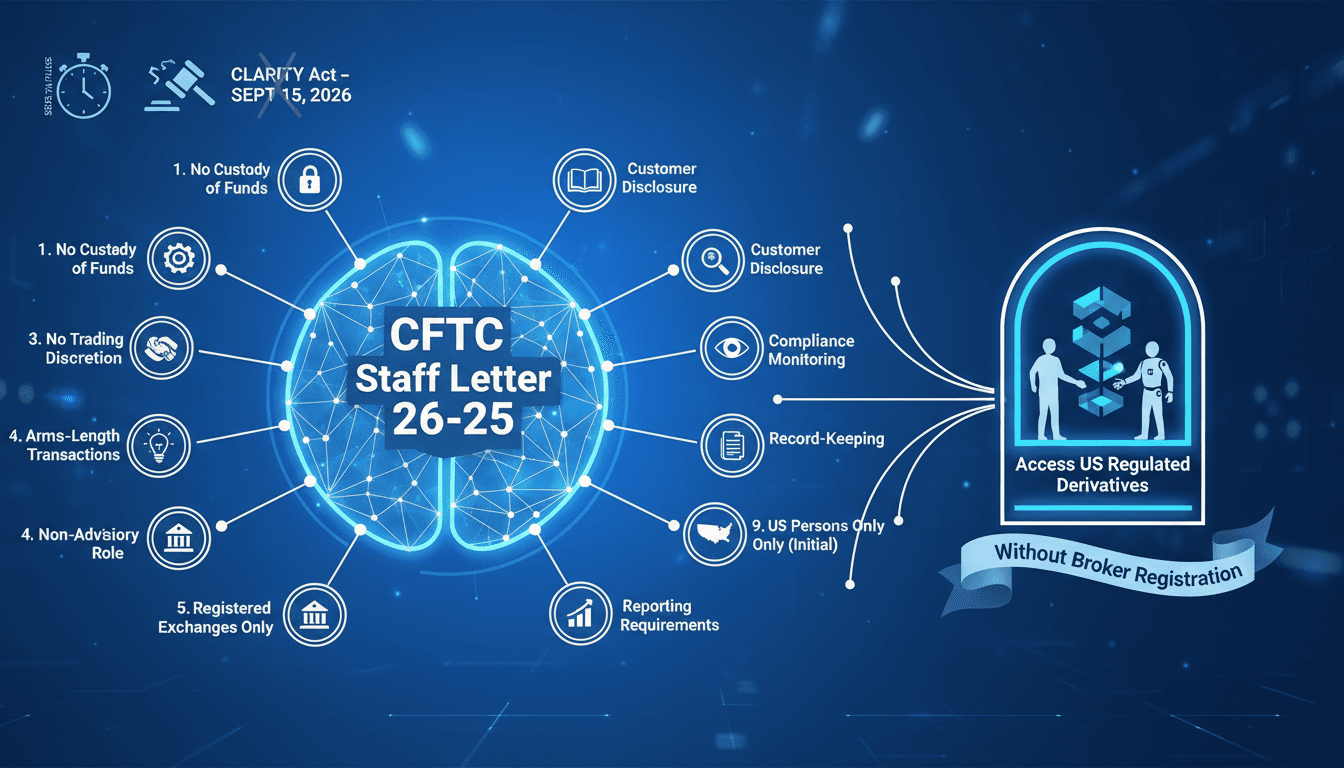
- Qualifying providers are now exempt from registering as brokers, provided they meet ten specific conditions.
- This development follows stalled legislative efforts like the CLARITY Act and aims to clarify the regulatory landscape for non-custodial software in derivatives markets.
The context you actually need
- The relief builds on a previous letter issued in March 2026, which was limited to Phantom Technologies, indicating a growing recognition of the need for regulatory clarity in the software space.
- The CFTC's action comes amid legislative inaction, particularly the Senate's failure to advance the CLARITY Act, highlighting the agency's proactive stance in crypto regulation.
- The new framework allows for enhanced access to U.S. regulated derivatives markets, potentially increasing participation from global players who utilize compliant software interfaces.
What's really happening
The CFTC's Staff Letter 26-25 represents a pivotal regulatory shift aimed at fostering innovation in the derivatives market while ensuring compliance with existing laws. By expanding no-action relief to a broader range of passive trading software providers, the CFTC is responding to industry demands for clarity and flexibility in a rapidly evolving market landscape.
This regulatory change is particularly significant given the backdrop of stalled legislative efforts like the CLARITY Act, which sought to provide a comprehensive framework for digital assets and trading technologies. The CFTC's proactive approach indicates a willingness to adapt to technological advancements and market needs, particularly in the context of non-custodial and non-discretionary trading interfaces.
The ten conditions outlined in the letter impose strict guidelines on how these software providers can operate. For instance, they must ensure that their platforms do not engage in order handling or custody, thereby maintaining a clear separation between the software and the trading activities of users. This structure is designed to mitigate risks associated with broker registration while allowing for greater market access.
Moreover, the timing of this announcement coincides with other regulatory measures, such as the SEC's temporary exemption for tokenized stock trading on permissioned automated market makers (AMMs). This alignment suggests a coordinated effort among regulatory bodies to create a more conducive environment for innovation in financial markets.
As a result, market participants, including wallet providers and software developers, may now pursue compliance with the new framework to facilitate derivatives access without the burdensome requirement of broker registration. This could lead to an influx of new players in the derivatives space, enhancing competition and potentially lowering costs for end-users.
However, the implications of this regulatory shift extend beyond U.S. borders. While there is no immediate regulatory impact identified for Dubai residents or UAE-based entities, the enhanced global access to U.S. regulated derivatives via compliant software interfaces could indirectly affect international trading dynamics. As more players enter the market, the competitive landscape may shift, prompting local firms to adapt to maintain their market positions.
Who feels it first (and how)
- Software developers: They can now create compliant trading interfaces without the burden of broker registration.
- Derivatives traders: Increased access to U.S. markets may lead to more competitive pricing and options.
- Crypto-related firms: They can leverage this regulatory clarity to expand their offerings in derivatives and prediction markets.
- Global market participants: Enhanced access to U.S. regulated derivatives could attract international players, impacting local markets.
What to watch next
- Compliance developments: Monitor how quickly software providers adapt to the ten conditions set by the CFTC, as this will indicate the effectiveness of the new framework.
- Market participation rates: Watch for changes in the number of participants in U.S. derivatives markets, as increased access could lead to a surge in trading activity.
- Legislative responses: Keep an eye on any new legislative efforts or adjustments to existing laws that may arise in response to this regulatory shift.
The CFTC has issued Staff Letter 26-25, expanding no-action relief to passive trading software providers.
Increased participation in U.S. derivatives markets from both domestic and international players.
The long-term impact of this regulatory change on global trading practices and local market dynamics.
Frequently Asked Questions
- Why it matters?
- This move by the CFTC signals a significant shift in how passive trading software can operate within U.S. regulatory frameworks, potentially influencing global trading practices.
- What happened (in 30 seconds)?
- On September 17, 2026, the CFTC issued Staff Letter 26-25, broadening no-action relief for passive trading software providers. Qualifying providers are now exempt from registering as brokers, provided they meet ten specific conditions. This development follows stalled legislative efforts like the CLARITY Act and aims to clarify the regulatory landscape for non-custodial software in derivatives markets.
- What's really happening?
- The CFTC's Staff Letter 26-25 represents a pivotal regulatory shift aimed at fostering innovation in the derivatives market while ensuring compliance with existing laws. By expanding no-action relief to a broader range of passive trading software providers, the CFTC is responding to industry demands for clarity and flexibility in a rapidly evolving market landscape. This regulatory change is particularly significant given the backdrop of stalled legislative efforts like the CLARITY Act, which s
- Who feels it first (and how)?
- Software developers: They can now create compliant trading interfaces without the burden of broker registration. Derivatives traders: Increased access to U.S. markets may lead to more competitive pricing and options. Crypto-related firms: They can leverage this regulatory clarity to expand their offerings in derivatives and prediction markets. Global market participants: Enhanced access to U.S. regulated derivatives could attract international players, impacting local markets.
- What to watch next?
- Compliance developments: Monitor how quickly software providers adapt to the ten conditions set by the CFTC, as this will indicate the effectiveness of the new framework. Market participation rates: Watch for changes in the number of participants in U.S. derivatives markets, as increased access could lead to a surge in trading activity. Legislative responses: Keep an eye on any new legislative efforts or adjustments to existing laws that may arise in response to this regulatory shift.
Covers blockchain, cryptocurrency news, project analysis, and market insights.
"Cointelegraph is a leading crypto-focused media outlet known for timely news, analysis, and educational content related to blockchain and digital assets."
— A47 Editor
CFTC expands regulatory relief for passive trading software providers
The Commodity Futures Trading Commission (CFTC) has expanded regulatory relief for passive trading software providers, facilitating easier access for crypto wallets and applications to offer regulated derivatives and prediction markets without the ne...
Covers Bitcoin plus altcoin news, market updates, and educational resources.
"Bitcoin.com provides news, market data, and guides focused on Bitcoin and the wider crypto industry."
— A47 Editor
CFTC Gives Crypto Wallet Developers a New Regulatory Escape Hatch
The U.S. Commodity Futures Trading Commission (CFTC) has introduced new regulatory provisions that provide crypto wallet developers, such as Phantom Technologies, with an escape hatch from stringent regulations. This move aims to facilitate the growt...
Real-time updates, analysis, and reports on the blockchain and cryptocurrency sectors.
"Crypto News delivers real-time updates, analysis, and reports on the blockchain and cryptocurrency sectors."
— A47 Editor
CFTC grants broker registration relief to crypto developers
The Commodity Futures Trading Commission (CFTC) has granted conditional broker-registration relief to passive software providers, allowing crypto developers to offer tools related to regulated derivatives trading under a no-action position with ten s...